




Antique Gul Motif Rug
An antique gul motif rug brings rich Central Asian tribal geometry into a room through deep medallions and traditional wool weave.
Antique Gul Motif Rug
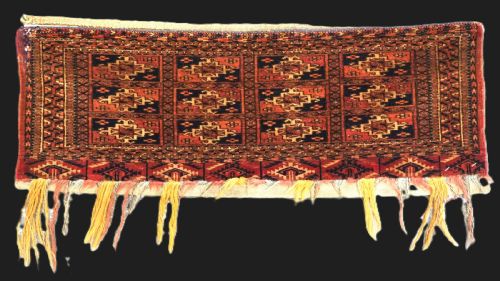
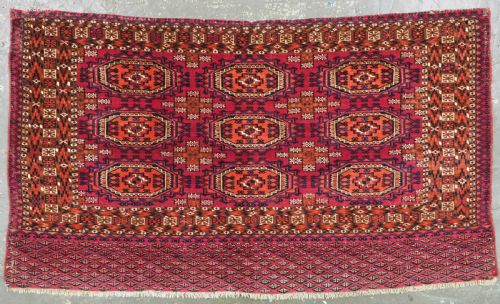
An antique gul motif rug showcases repeating octagonal or gabled medallions known as guls, which identify the tribal and regional origins of the weaving. These pieces span nomadic and village workshops across Central Asia, Persia, and Afghanistan.
The selections here frequently comprise smaller utility items such as torbas and mafrash faces alongside full carpets and runners. Turkmen, Kurdish, and Baluch aesthetics dominate the groupings.
Production dates range from the mid-nineteenth century through the early decades of the twentieth century. Each specimen carries the characteristic palette and structural nuances of its specific tribal group.
Distinguishing quality variations
Knot density and structural crispness define the upper tier of these tribal weavings, particularly visible in fine Turkmen Torba and carpet examples. Precision in drawing the complex geometric gul medallions separates master work from standard village production.
The integrity of the pile and the completeness of original borders or backing structures influence the standing of each piece. Superior examples retain full handle and saturated natural dye tones without excessive restoration.
Antique Gul Motif Rug Retail Price Guide 2026
Typical asking prices for gul motif rug among the pieces listed under this phrase on Sellingantiques today, from the lower quarter to the upper quarter. They describe what is for sale here now, not the wider market.
Listings span from eighteen-sixty to nineteen-thirty, incorporating wool, hand-spun wool, and natural dyes across Turkmen, Kurdish, and Afghan tribal traditions.
The Antique Gul Motif Rug Glossary
- Gul
- A repeating octagonal or medallion motif used extensively in Central Asian tribal rug design. Each specific pattern often denotes a particular clan or tribe.
- Torba
- A small storage bag or trapping produced by Turkmen nomads, typically featuring wide horizontal bands of gul motifs. These were used inside tents for domestic storage.
- Mafrash
- A rectangular storage sack or bedding bag woven in nomadic communities. The face panels are frequently preserved as collector items.
- Abrasch
- Variations in colour shading across the field of a rug caused by changes in dye batches or hand-spun wool. This tonal shift is a natural characteristic of traditional vegetable dyeing.
- Pile
- The vertical or slanted loops of yarn that form the usable surface of a woven rug. Hand-spun wool pile provides durability and tactile depth.
Antique Gul Motif Rug: Frequently Asked Questions
What is a gul motif?
A gul is a repeating octagonal medallion found on Central Asian and tribal rugs. These motifs serve as clan or regional identifiers.
Weavers arranged them in symmetrical rows across the field to create the characteristic geometric rhythm of the textile.
How do I care for an antique rug?
Vacuum gently without a beater bar and keep the textile away from direct sunlight to protect the natural dyes. Professional cleaning by a specialist in antique wool is recommended.
Rotate the rug periodically to ensure even wear in high-traffic interior spaces.
Where were these rugs made?
These pieces originate from nomadic and village communities across Central Asia, Persia, and Afghanistan. Tribal groups such as the Tekke, Yomud, Ersari, and Kurds produced them.
Production took place within domestic or tribal environments rather than large urban manufactories.
How are different tribes identified?
Tribal attribution relies on the specific drawing of the gul, border arrangements, and the structural palette. Each group utilised distinct geometric vocabulary and colour combinations.
Examining the weave structure and wool preparation further confirms the regional origin.