



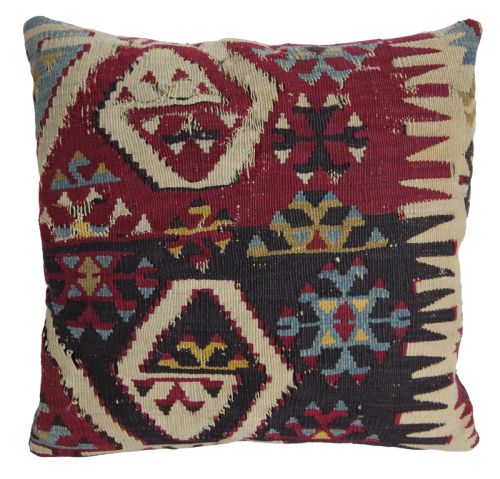


Oriental Rug Cushion Cover
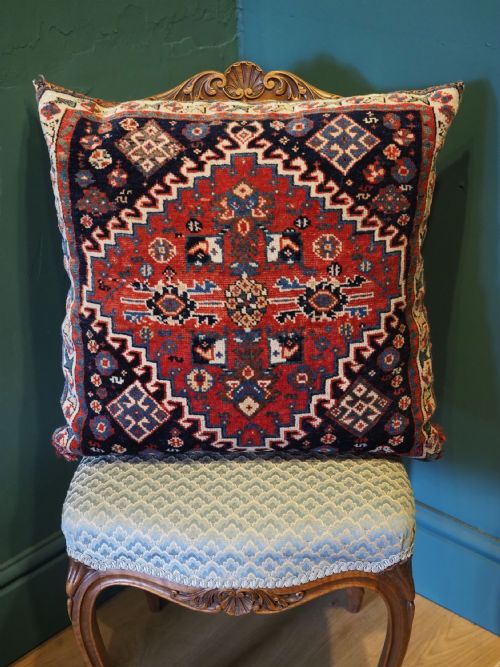
An oriental rug cushion cover brings tactile warmth and nomad history into a room, fashioned from genuine tribal weaving.
Oriental Rug Cushion Cover
An oriental rug cushion cover transforms utilitarian nomadic weavings into furnishings, utilising fragments of bags and saddle covers created across Persia, Anatolia and Central Asia. These textiles originate from tribal groups including the Qashqai, Turkmen, Baluch and Shahsevan, dating from the mid-nineteenth century through the early twentieth century.
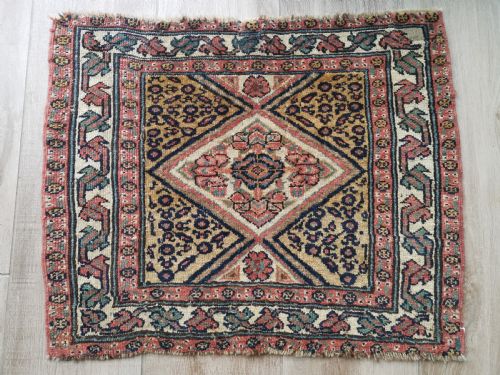
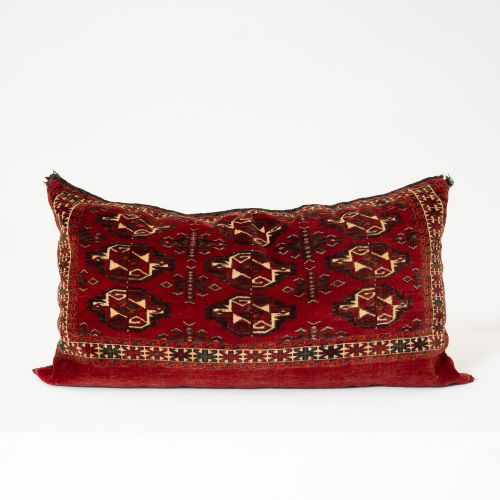
The most common form encountered on this page is the adapted bag face or saddlebag fragment, backed to form a cushion. Collectors also find kilim cushions constructed from flatwoven textiles alongside complete storage bags retaining their original backs.
Assessing quality in tribal fragments
Quality rests upon the fineness of the knotting or flatweave, the integrity of the design and the vibrancy of the natural dyes. Pieces retaining crisp tribal motifs, such as guls, boteh designs or animal figures, demonstrate superior execution.
Condition plays a role, though minor wear is expected in genuine nineteenth-century utility items. The balance between the survival of the original pile and the stability of the textile determines the overall merit of the conversion.
Listings span periods from the mid-nineteenth century through the 1920s, featuring wool, cotton, and natural vegetable dyes.
The Oriental Rug Cushion Cover Glossary
- Torba
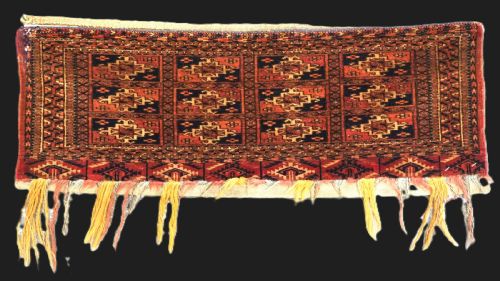
- A small Turkmen storage bag used inside a tent, often featuring characteristic gul medallions. These are frequently adapted into cushion covers.
- Soumak
- A flatweave technique utilising a wrapping stitch that produces a thicker, sturdier fabric than standard kilim. It often displays intricate bird or dragon motifs.
- Bag face
- The decorative front panel of a nomadic storage sack or saddlebag, salvaged for use as a textile cushion.
- Gul
- A medallion pattern repeated across Turkmen and other Central Asian carpets and bags, serving as a tribal identifier.
- Boteh
- An almond-shaped or paisley motif representing a floral shoot or cypress tree, common in Persian tribal weaving.
Oriental Rug Cushion Cover: Frequently Asked Questions
What is an oriental rug cushion cover?
An oriental rug cushion cover is a decorative home accessory made by repurposing authentic antique tribal weavings, such as saddlebag faces and storage sacks.
These textiles are lined and backed to create durable floor or sofa cushions while preserving historical nomadic patterns.
How do I care for an antique wool cushion?
Care involves gentle vacuuming with the suction lowered and avoiding direct, harsh sunlight to protect the natural vegetable dyes.
Professional textile cleaning is recommended when necessary rather than home washing.
How are different tribal styles identified?
Tribal styles are identified by distinct colour palettes, structural techniques and characteristic motifs unique to specific nomadic groups.
For instance, Tekke Turkmen pieces feature repeating guls, while Shahsevan work often displays Soumak weaving with bird designs.
Are these cushions made from old rugs?
They are constructed from historical nomadic textiles dating from the nineteenth and early twentieth centuries rather than modern factory-made carpets.
Many utilise fragments of utilitarian bags, torbas and saddle covers originally woven by tribal populations.