


Antique Tribal Bag Face
An antique tribal bag face represents the woven front of a nomadic storage piece, prized by collectors for its concentrated design and tribal artistry.
Antique Tribal Bag Face
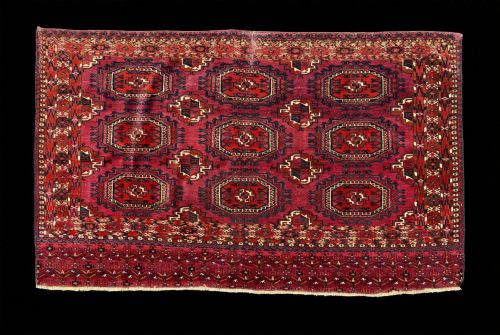
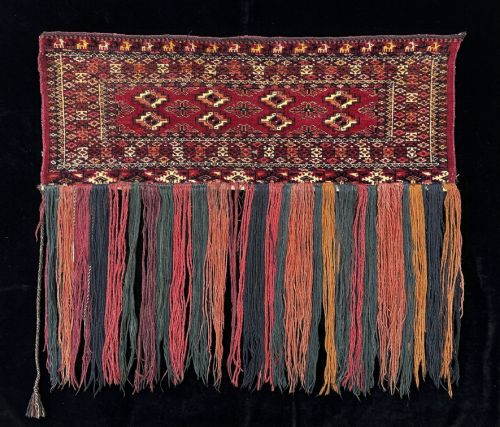
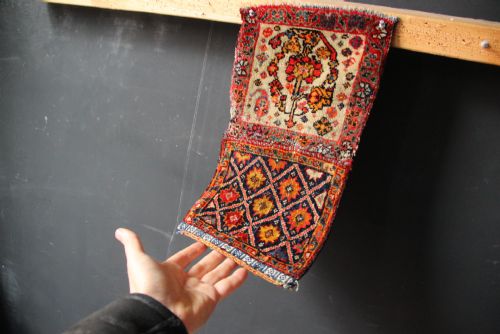
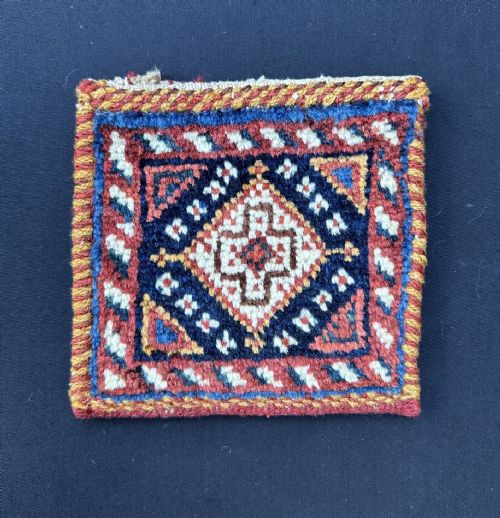
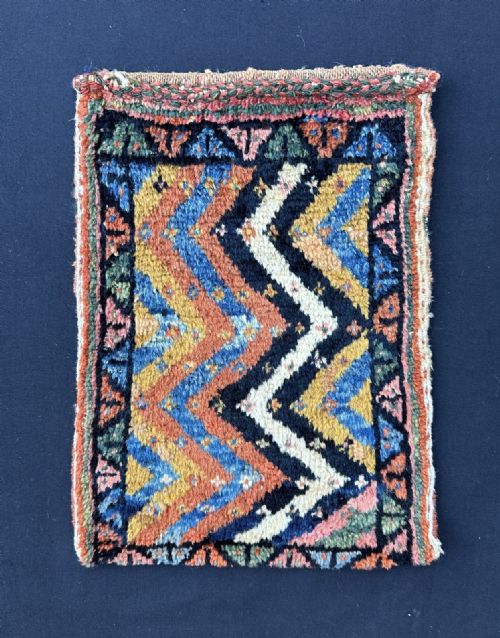
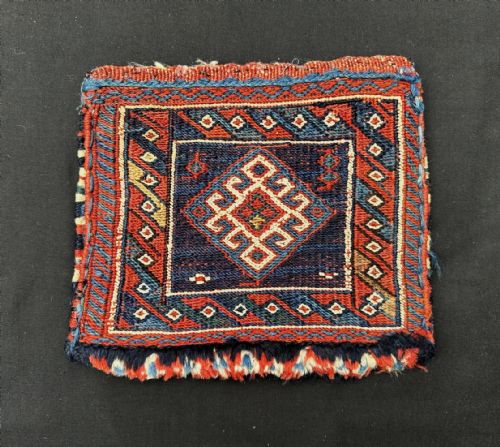
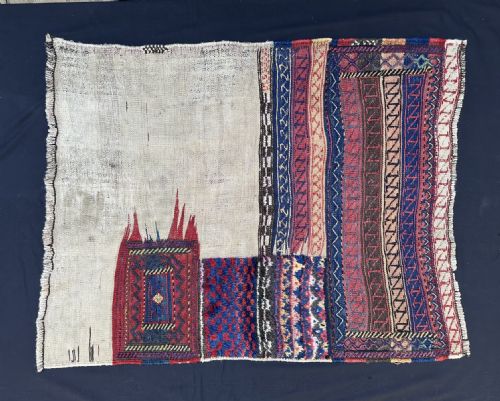
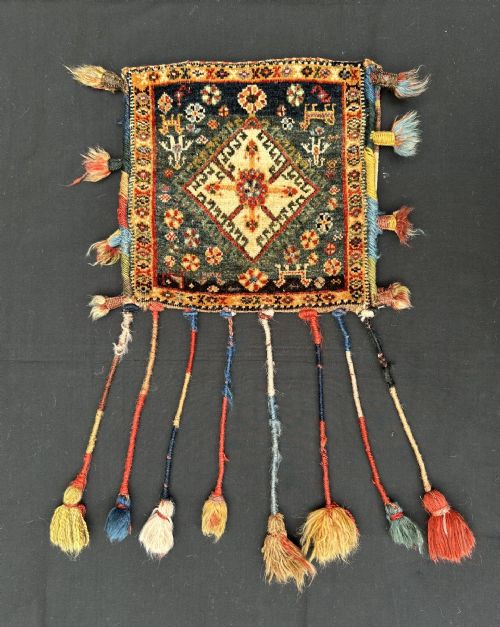
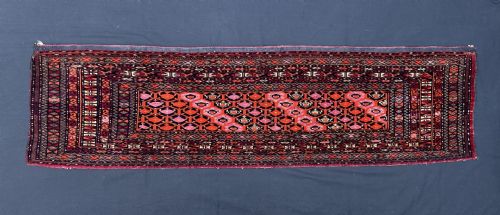
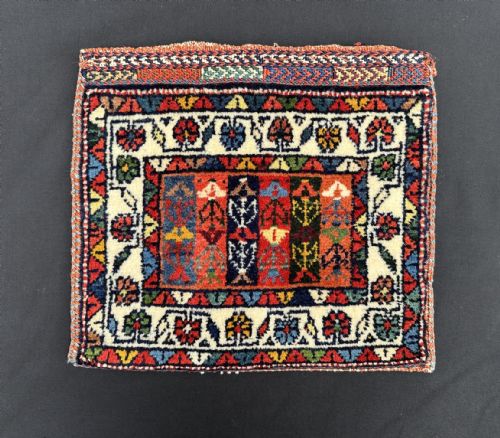
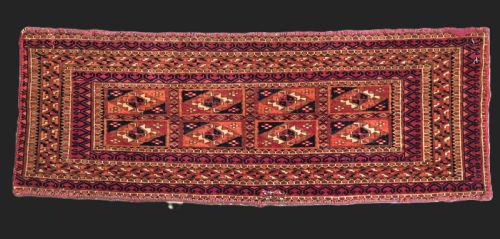
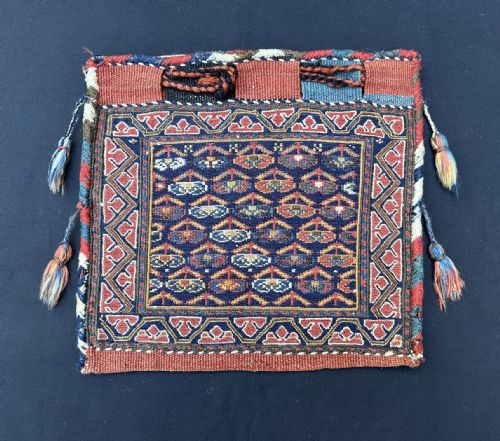
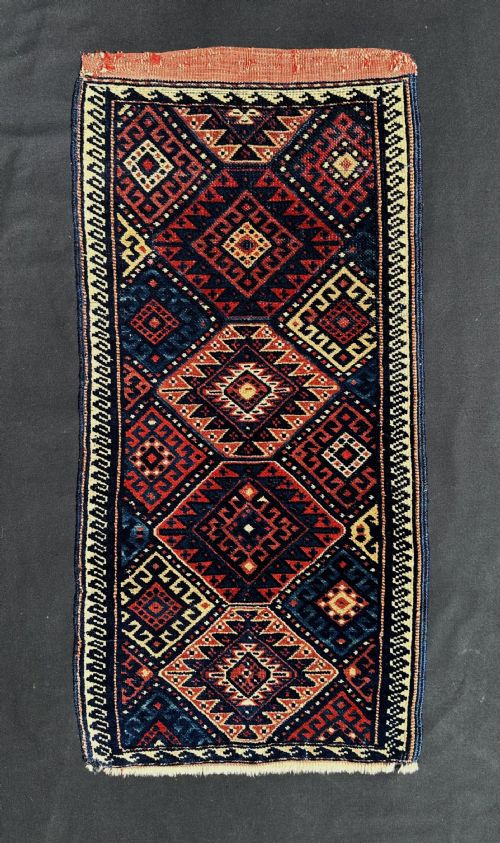
An antique tribal bag face is the surviving decorative front of a utilitarian carrier, such as a saddlebag, storage pouch, or tent hanging, produced by nomadic and village weavers across Persia, Central Asia, and the Caucasus. These textile fragments display the concentrated tribal iconography, distinctive border arrangements, and regional colour palettes that weavers condensed into smaller formats. A buyer searching this category encounters numerous Turkmen torba and chuval faces, alongside Persian Qashqai, Baluch, and Lori-Bakhtiari examples.
The selections on this page span the nineteenth and early twentieth centuries, capturing domestic utility items that were separated from their original woven backs over generations of use. Common formats include rectangular torba faces made for tent storage, nearly square chuval faces, small vanity bags, and smaller chanteh pouches. Each piece reflects the specific tribal weaving traditions of groups like the Tekke, Saryk, Yomut, and Ersari tribes, as well as various confederacies of the Persian highlands.
Materials and construction
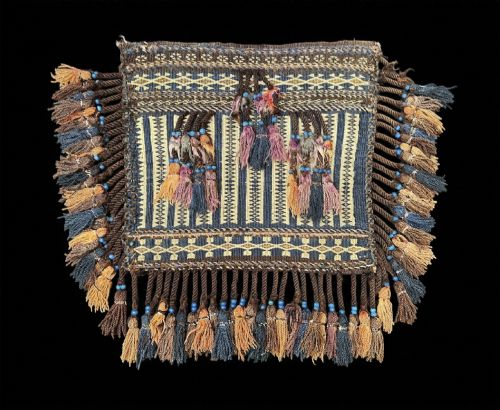
Weavers constructed these pieces predominantly using hand-spun wool for the pile and foundations, supplemented occasionally by cotton for structural warps or wefts and silk highlights for specific motifs. Natural dyes derived from plants and minerals provide the saturated reds, indigos, ivories, and browns that define the palette. Glass beads also appear on specific Central Asian items as additional ornamentation.
The technical execution relies on dense pile knotting or flatweave structures such as soumak and tapestry weave, depending on the tribal group. The exposed edges often retain remnants of original side corduroy finishes or plain weave structures where the face joined the back of the complete container.
Antique Tribal Bag Face Retail Price Guide 2026
Typical asking prices for tribal bag face among the pieces listed under this phrase on Sellingantiques today, from the lower quarter to the upper quarter. They describe what is for sale here now, not the wider market.
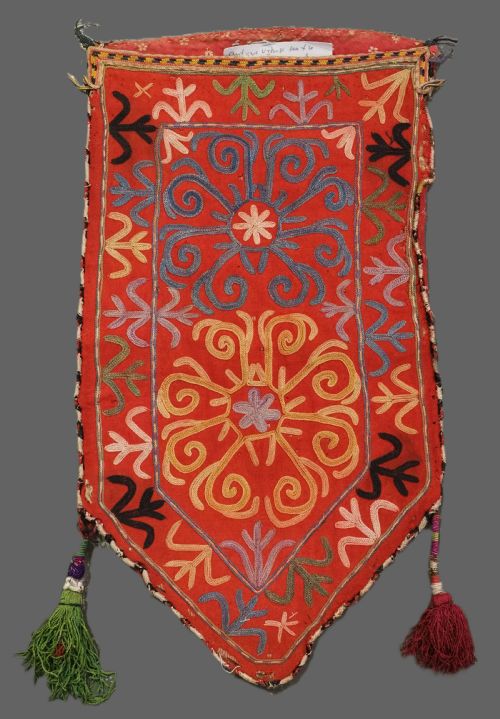
Some Yomut spindle bags and Uzbek bag faces preserve traces of daily nomadic life, down to the glass beads sewn on for good fortune.
Assessing quality in nomadic textiles
The quality of an antique tribal bag face rests upon the density and precision of the weave, the clarity of the drawing, and the vibrancy of the dye palette. Finer knots per square inch allow intricate secondary motifs, such as guls and hooked medallions, to maintain sharp outlines against the ground field.
Another measure of quality is the integrity of the wool and the depth of the natural dyes, which develop a rich patina over time. Pieces that retain balanced proportions, complete primary borders, and crisp structural edges command greater attention from experienced collectors.
The Antique Tribal Bag Face Glossary
- Torba
- A small horizontal storage bag produced by Turkmen and other Central Asian nomads. These pieces typically hung inside the felt tent for domestic storage.
- Chuval
- A large Turkmen tent bag used for household belongings and bedding. The faces often display repeating primary guls.
- Gul
- A medallion or repeating floral motif characteristic of Central Asian rug and bag design. Each tribal group utilised distinct forms of these motifs.
- Chanteh
- A small Persian or tribal vanity bag or container used for personal items. They frequently feature concentrated geometric designs.
- Khorjin
- A traditional double saddlebag used for transport on animals. Surviving fragments often represent only one half of the original pair.
Antique Tribal Bag Face: Frequently Asked Questions
How were these bag faces used?
Nomadic families utilised these bags inside portable dwellings to store clothing, bedding, and smaller household possessions. They hung against the lattice walls or served as container compartments.
Over time, wear caused the structural backs to degrade, leaving the durable woven faces to survive as independent decorative objects.
How do I identify Turkmen bag faces?
Turkmen bag faces typically display repeating octagonal or guls motifs in deep madder red, brown, and ivory wool. Tribes such as the Tekke, Saryk, Yomut, and Ersari each employed distinct border designs and knotting structures.
Examining the specific gul shape and secondary filler ornaments reveals the exact tribal origin.
How should I display a bag face?
Many collectors mount these textile fragments onto neutral fabric backings for wall hanging, allowing the complete design to remain visible. Others utilise them as small decorative cushions or place them on flat surfaces.
Protecting the wool from direct sunlight and avoiding excessive weight preserves the integrity of the natural fibres.