
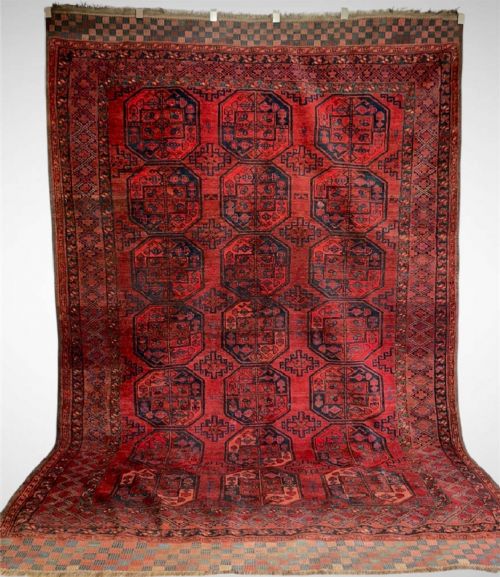


Antique Ersari Carpet
An antique ersari carpet brings the rich madder reds and geometric tribal artistry of Central Asia into a room.
Antique Ersari Carpet
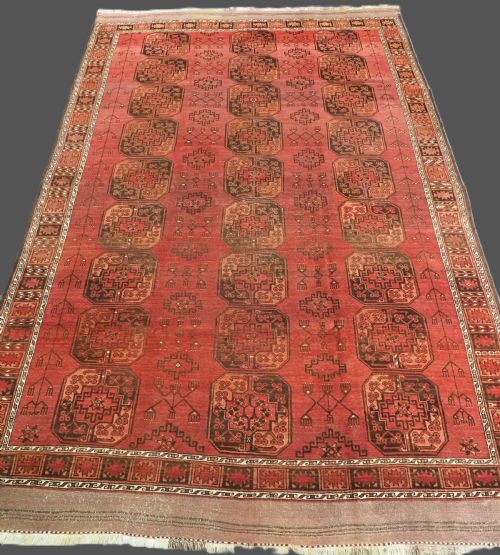
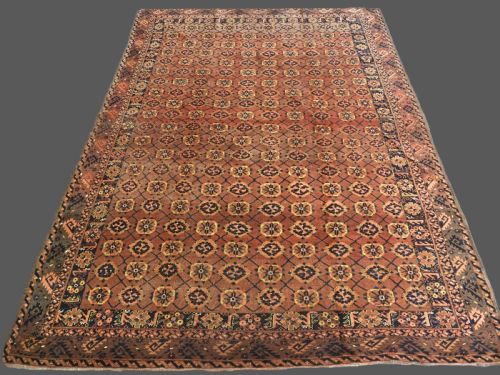
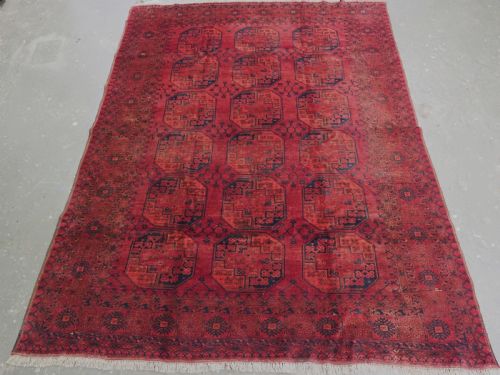
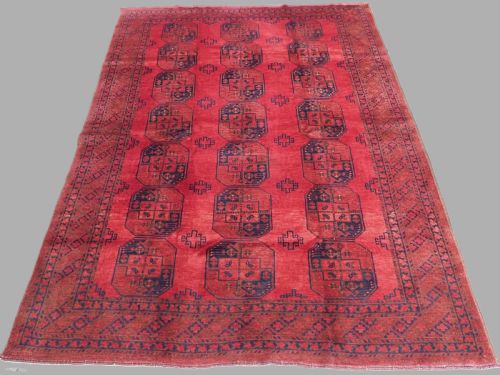
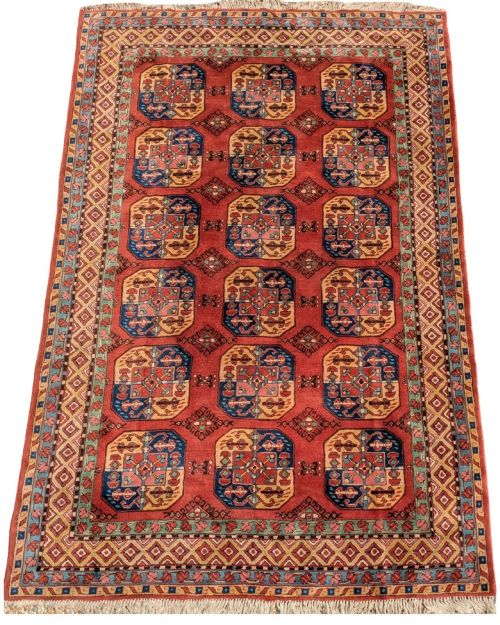
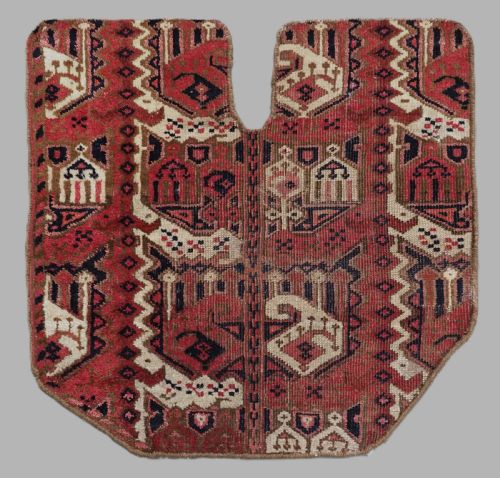
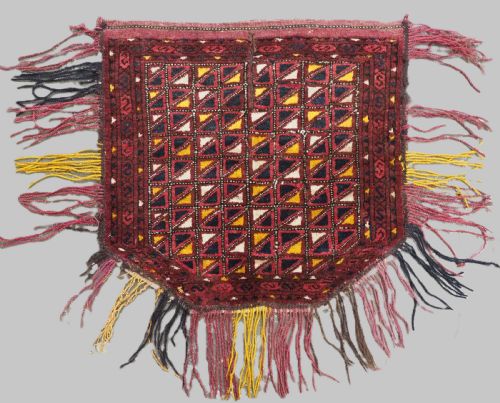
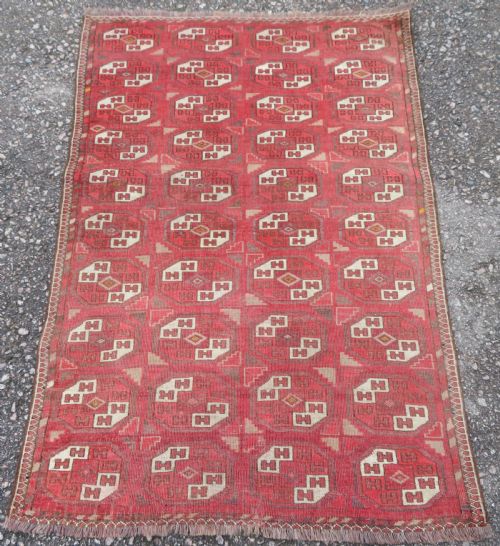
An antique ersari carpet is a tribal textile originating from the Turkmen groups residing near the Amu Darya region and northern Afghanistan. These pieces range from large main floor carpets down to smaller village formats, torba faces, chuval faces, and ensi rugs.
The most common formats met here are room-sized main carpets and village rugs dating from the mid nineteenth century through to the early twentieth century. They present distinctive regional weaving traditions tied closely to nomadic and settled tribal life.
Makers utilised traditional formats designed for domestic utility within yurt or village dwellings, translating centuries of inherited motifs into durable floor coverings.
Materials and construction
These textiles rely entirely on wool foundations and surface piles, often described as soft and glossy. Weavers sourced natural dyes to achieve deep red, plum, rose madder, and warm brown hues.
Natural dyestuffs interact with the wool fibres over generations to produce varied depth of colour across the surface. The pile is knotted tightly onto woolen warps andwefts, creating a resilient structure designed for heavy domestic use.
Antique Ersari Carpet Retail Price Guide 2026
Typical asking prices for ersari carpet among the pieces listed under this phrase on Sellingantiques today, from the lower quarter to the upper quarter. They describe what is for sale here now, not the wider market.
Some tent bags started life storing flour before ending up on a London living room floor.
Qualities that distinguish individual pieces
The distinction between standard village pieces and finer examples rests upon the precision of the drawing and the complexity of the gul arrangements. Larger, more strongly defined guls combined with balanced proportions elevate a piece.
Depth and variation within the natural dyes create visual movement across the red field, separating flat monochromatic surfaces from richer examples. Handle and wool quality also shift, with softer, glossier pile indicating careful selection of materials.
The Antique Ersari Carpet Glossary
- Gul
- A primary octagonal medallion motif repeated across Turkmen carpets. These secondary and primary patterns identify specific tribal groups and design lineages.
- Ensi
- A rug traditionally utilised as a tent door hanging by Turkmen tribes. They typically feature a quartered field design separated by a candelabra central axis.
- Chuval
- A large tent bag face woven by tribal groups for storage inside a yurt. They often display square or rectangular formats with repeating guls.
- Torba
- A smaller storage bag face produced for household utility. These pieces duplicate the design vocabulary of larger main carpets in a compact scale.
- Beshir
- A sub-group of Ersari weavers associated with specific geometric and sometimes ikat-inspired design elements. Their output often diverges from standard repetitive guls.
Antique Ersari Carpet: Frequently Asked Questions
What is an ersari carpet?
An ersari carpet is a handmade textile woven by the Ersari tribe of Turkmen and Afghan origin. These rugs utilise wool and natural dyes to form enduring geometric floor coverings.
They are distinguished by deep red fields and repetitive tribal guls rather than floral court designs.
How do I date an antique ersari carpet?
Dating relies upon wool texture, dye saturation, and structural wear consistent with nineteenth and early twentieth century production. Earlier pieces generally display deeper madder red tones and finer wool handling.
Village examples from later decades often show slightly brighter palettes and simplified drawing.
Where were ersari carpets made?
These textiles originated in Central Asia, specifically along the middle Amu Darya river basin and northern Afghanistan. The weavers belonged to nomadic or settled Turkmen tribal confederations.
Local access to specific sheep breeds and regional plants influenced the final wool handle and natural dye palette.
How should I care for an antique wool carpet?
Protect the textile by placing it in low-traffic areas or utilising a breathable rug underlay to prevent shifting. Regular gentle vacuuming without a rotating brush bar keeps dust from settling into the wool pile.
Professional cleaning should be undertaken sparingly by specialists familiar with antique natural-dyed wool.