

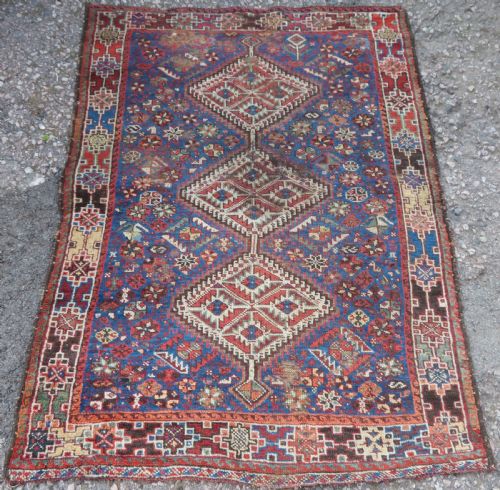
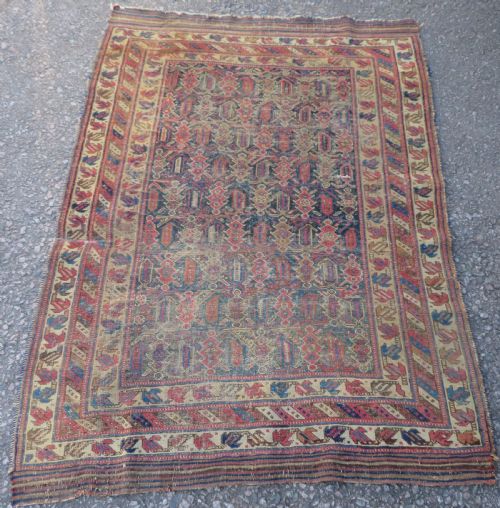
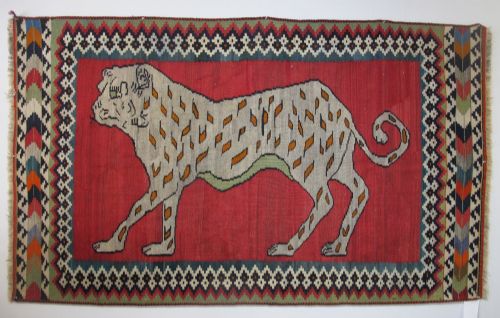
Nomadic Persian Carpet
A nomadic persian carpet brings the bold tribal artistry and rich village heritage of nineteenth- and early twentieth-century weavers straight into your interior.
Nomadic Persian Carpet
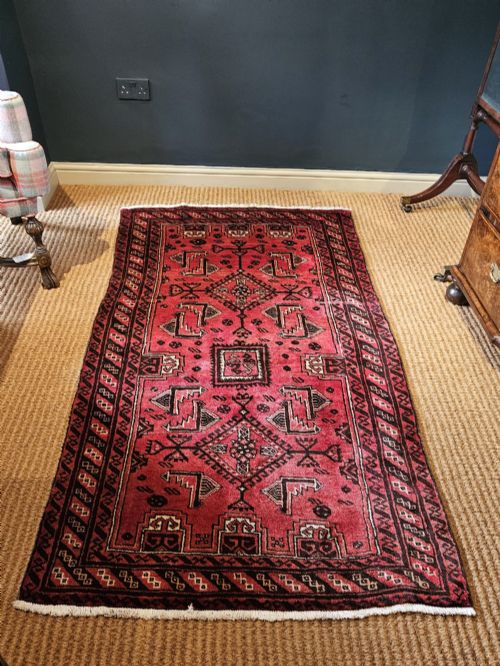
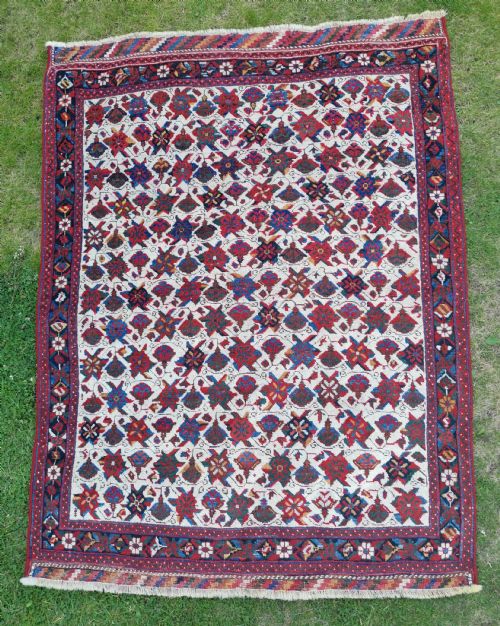
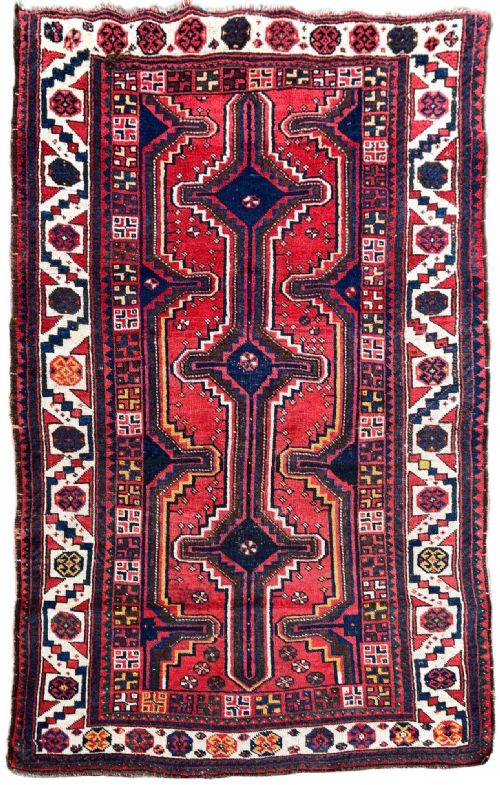
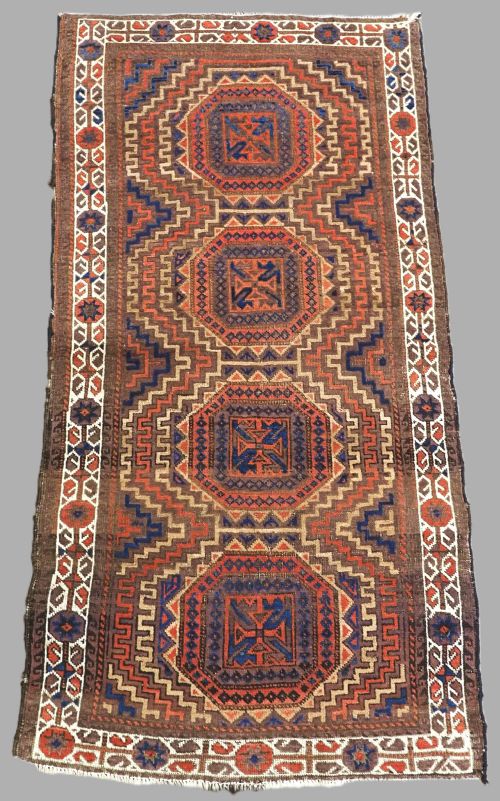
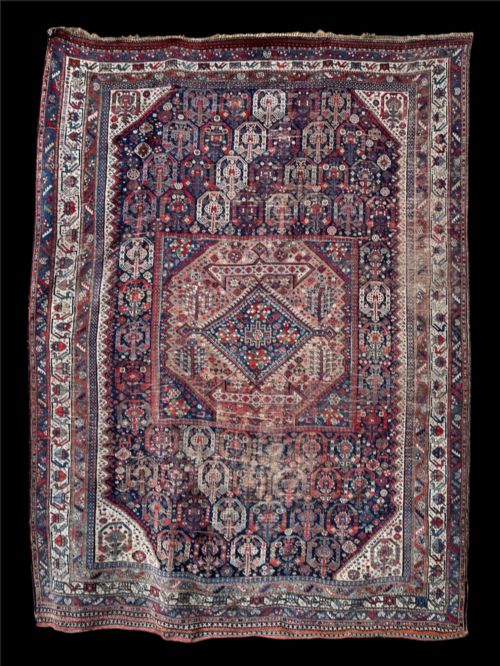
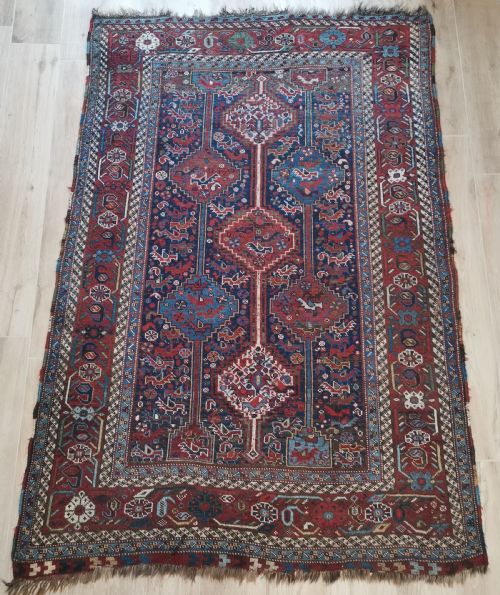
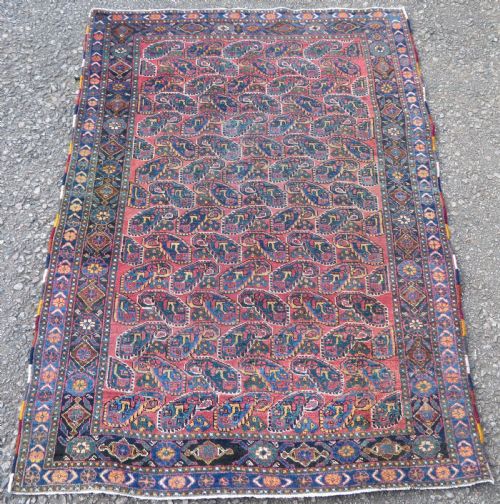
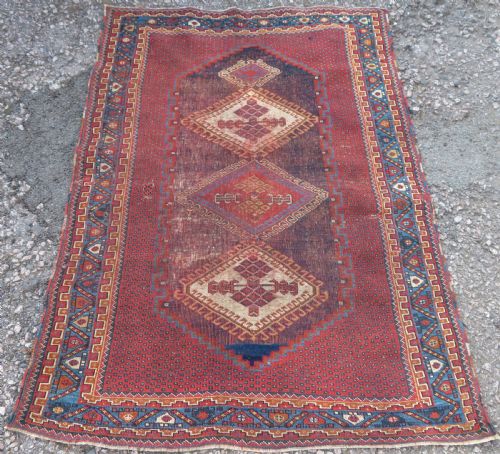
A nomadic persian carpet represents the textile traditions of tribal groups such as the Khamseh, Afshar, Qashqai, Baluch, and Kurdish peoples. These floor coverings and small textiles include formats like area rugs, runners, saddle bags, and prayer rugs woven for daily use rather than formal court display.
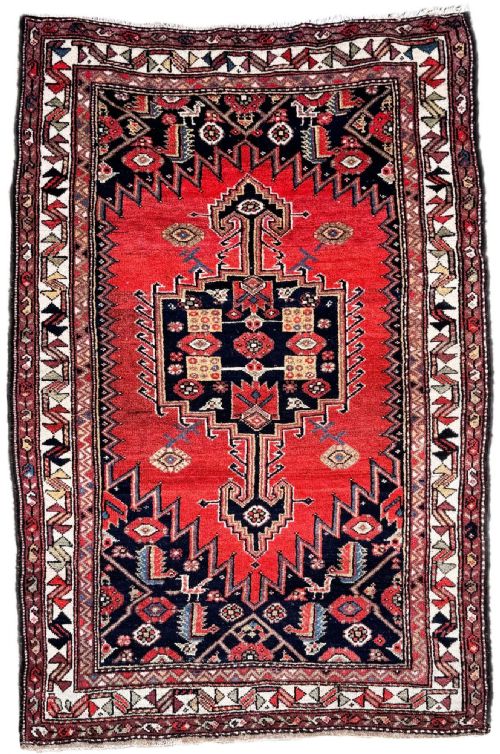
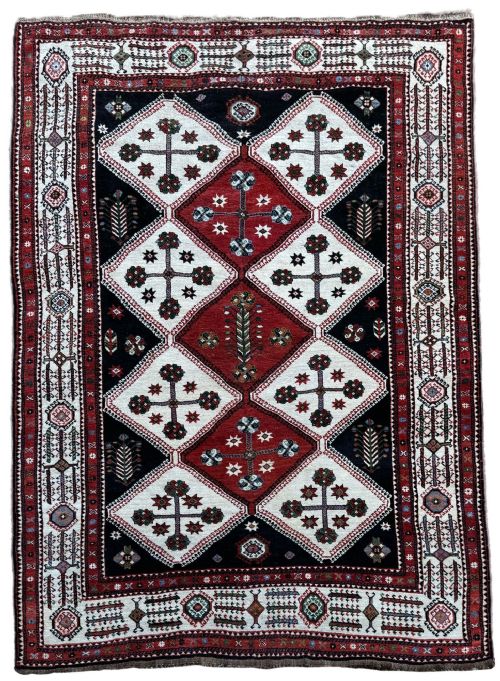
You will most frequently encounter nineteenth-century and early twentieth-century examples on this page, spanning periods from the 1870s through to the 1940s. The designs typically rely on geometric medallions, repeating guls, or stylized animal and plant motifs rooted in regional tribal identity.
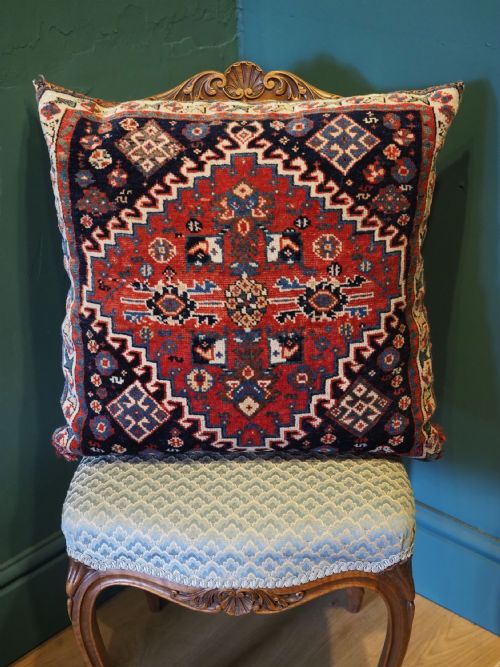
The materials reflect a pastoral lifestyle, utilising hand-spun wool and natural dyes that produce deep, saturated tones. Pieces range from large main carpets down to compact items like salt bags and cushion covers, all showing the direct hand of independent weavers.
How they were made
The construction of these textiles relies heavily on hand-spun wool combined with cotton foundations, utilising traditional upright looms set up in camps or villages. Weavers bound the materials tightly by hand, creating resilient structures designed to withstand constant relocation and heavy daily wear.
Colour comes from natural dyes extracted from local plants and minerals, yielding nuanced shades that settle softly into the wool over decades. The physical act of hand weaving ensures that minor irregularities in line and symmetry remain visible across the surface of every rug.
Nomadic Persian Carpet Retail Price Guide 2026
Typical asking prices for nomadic persian carpet among the pieces listed under this phrase on Sellingantiques today, from the lower quarter to the upper quarter. They describe what is for sale here now, not the wider market.
Some weavers playfully tucked tiny misplaced animal figures into the geometric borders of their carpets just to test if anyone was paying attention.
What varies in quality
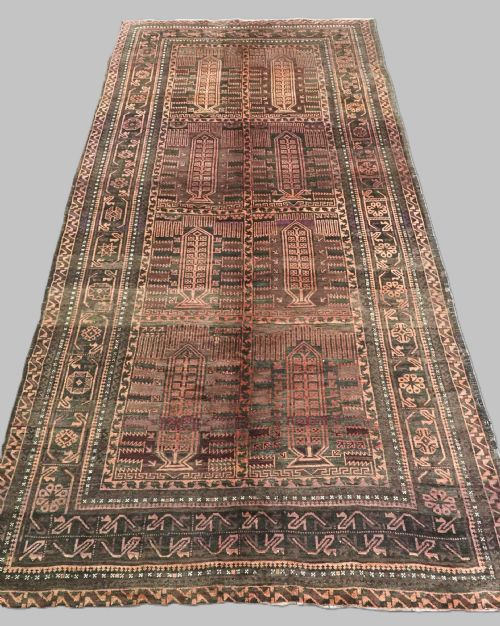
Quality in these tribal pieces rests on the precision of the hand-weaving technique, the density of the knotting, and the clarity of the geometric or pictorial motifs. Finer examples display tighter structures and crisper delineation of patterns like the classic pencil box design or large guls.
The selection and stability of natural dyes also determine the upper tier of the range, where harmonious colour palettes endure without muddying. Furthermore, the handling of wool preparation and spinning dictates the tactile weight and longevity of the textile.
Baharlu Tayefeh·Yaqoub Khani Tribe
The Nomadic Persian Carpet Glossary
- Gul
- A repeating octagonal or medallion motif commonly found in tribal weaving across Central Asia and Persia. This emblem often identifies specific tribal groupings.
- Prayer Rug
- A smaller format rug featuring a mihrab or niche design used historically for daily Islamic prayers. These pieces usually orient the user in a specific direction during ritual use.
- Kilim
- A flat-weave textile produced without pile by tightly interweaving warp and weft threads. This technique yields a lightweight, reversible cloth with sharp geometric patterns.
- Saddle Bag
- A utilitarian dual-pouch container woven for transport on pack animals, often featuring intricate face designs. Surviving panels are frequently separated and kept as small decorative cushions.
- Warp
- The vertical threads stretched tightly on the loom that form the structural skeleton of the rug. Weft threads are subsequently passed horizontally through these foundational strands.
Nomadic Persian Carpet: Frequently Asked Questions
How do I identify a tribal rug?
Tribal rugs are distinguished by their geometric patterns, asymmetric layouts, and deep connection to specific regional groups like the Qashqai or Baluch. The motifs often reflect local flora, fauna, and ancestral folklore rather than formal court designs.
You will also notice the use of hand-spun wool and natural dyes that give these pieces an organic, textured appearance. Examining the back of the rug reveals the irregular hand-knotting characteristic of nomadic production.
How should I care for wool rugs?
Proper care involves regular, gentle vacuuming without a beater bar to remove embedded dust without damaging the hand-spun wool pile. Keeping the rug out of direct, harsh sunlight helps protect the natural dyes from premature fading.
If cleaning is necessary, professional specialist washing is essential to preserve the integrity of the natural dyes and wool foundation. Avoid harsh chemical treatments or soaking at home.
What is a prayer rug used for?
A prayer rug is traditionally woven with a distinct arch or niche shape known as a mihrab, which points toward Mecca during daily devotions. These portable textiles provided a clean, personal space for ritual prayer.
In modern interiors, their compact size and focused compositional design make them ideal for hanging on walls or placing in smaller entryways.