




Tribal Rug Fragment
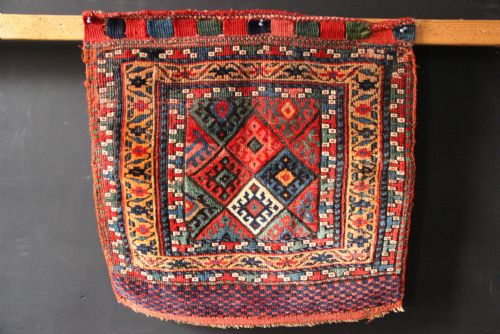
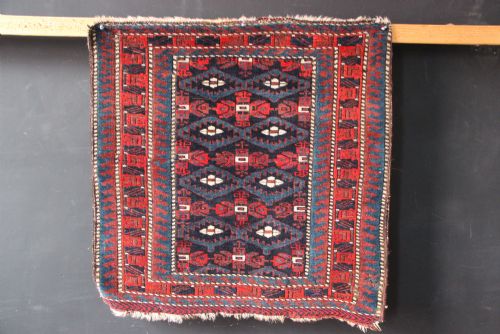
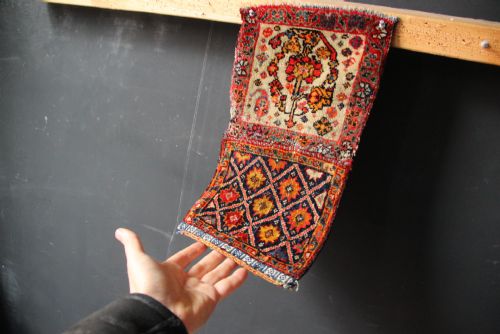
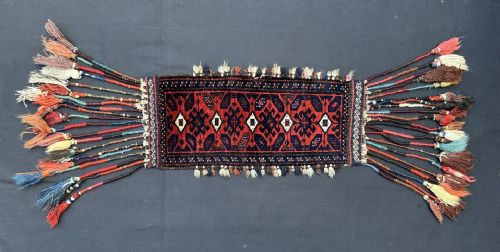
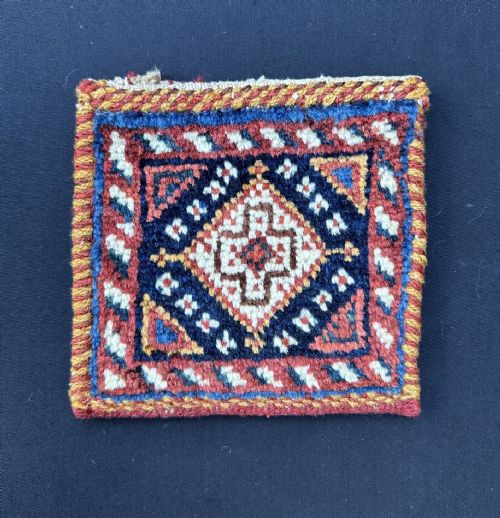
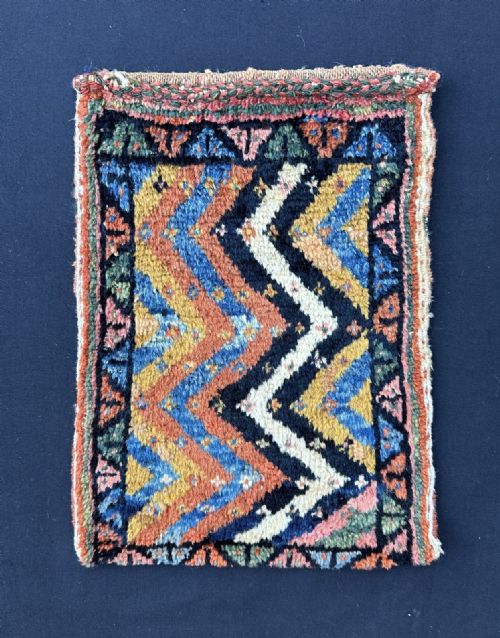
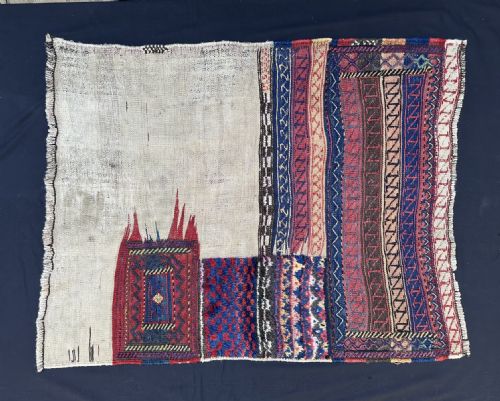
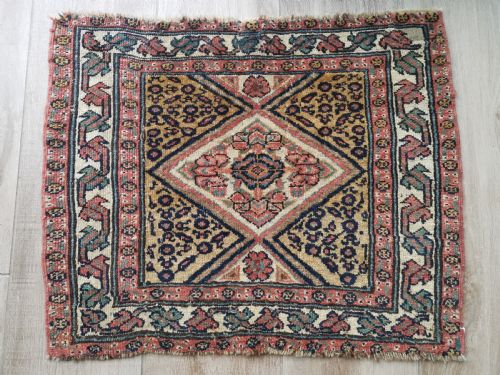
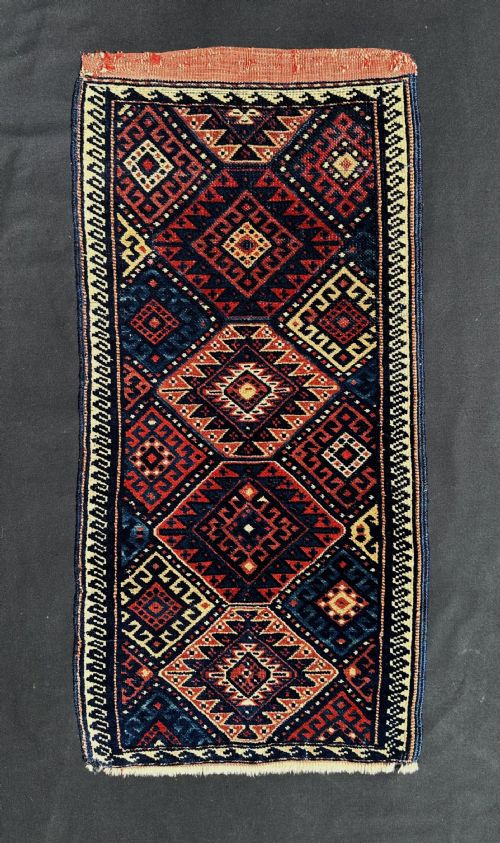
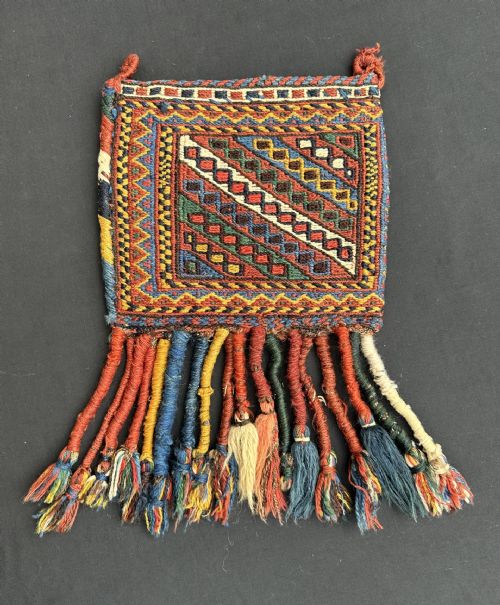
When you search for a tribal rug fragment, you find nomadic weavings and bag faces originating from Persia, the Caucasus, and Central Asia.
Tribal Rug Fragment
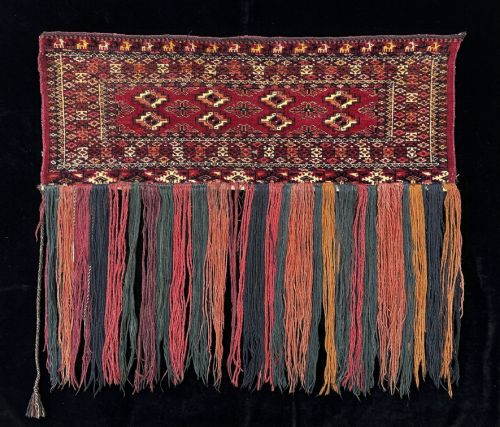
A tribal rug fragment is a surviving portion of a larger nomadic textile, such as a torba, chuval, or saddlebag face, created for practical use within nomadic households.
The selections available range from nineteenth-century Persian bagfaces produced by Lori-Bakhtiari, Qashqai, and Afshar tribes to Central Asian Turkmen and Caucasian pieces.
Buyers encounter these works preserved as independent panels, pillow bag-faces, and mounted wall displays originating from regions spanning Khorassan to the Trans-Caspian steppes.
Materials and Construction
These textiles rely on hand-spun wool and cotton foundations, occasionally incorporating silk or linen elements within specific regional traditions.
Weavers utilised natural dyes to achieve deep palettes, employing hand-knotted pile alongside flatweave techniques such as sumac.
Tribal Rug Fragment Retail Price Guide 2026
Typical asking prices for tribal rug fragment among the pieces listed under this phrase on Sellingantiques today, from the lower quarter to the upper quarter. They describe what is for sale here now, not the wider market.
Listings span the nineteenth century, featuring wool, cotton, silk, and natural dyes across Persian and Turkmen traditions.
Factors of Quality
Quality rests in the precision of the weave, the clarity of the drawing, and the condition of the remaining wool pile.
Examples display varying degrees of complexity in tribal motifs like güls, boteh, and geometric field designs.
The Tribal Rug Fragment Glossary
- Torba
- A small Turkmen storage bag or hanging sack, frequently woven with characteristic guls.
- Chuval
- A large Turkmen tent-storage bag used for household belongings and bedding.
- Gul
- A medallion pattern or repeating floral gnomon native to Turkmen and Central Asian carpet weaving.
- Sumac
- A flatweave technique involving wrapping supplementary weft threads around warp threads to create a textured surface.
- Boteh
- A stylised floral motif resembling a pear or almond, commonly found in Persian tribal designs.
Tribal Rug Fragment: Frequently Asked Questions
What is a tribal rug fragment?
A tribal rug fragment is a surviving portion of a larger nomadic weaving, such as a storage bag or saddlebag face.
These pieces preserve historical tribal artistry intended for everyday nomadic life.
How were these bags used?
Nomadic tribes utilised these woven containers inside tents for storing clothing, household goods, and personal items.
Many functioned as saddlebags or bedding sacks designed for transport during seasonal migrations.
How do I display a fragment?
Fragments are often mounted on fabric backings or frames to protect the edges and allow wall hanging.
Proper mounting distributes the weight evenly across the wool and cotton structure.
How do I identify different tribes?
Identification relies on specific structural characteristics, colour palettes, and repeating motif styles unique to regions like Persia or Central Asia.
Distinct tribal weaving signatures differentiate Turkmen torbas from southern Persian bagfaces.