

Wool Turkmen Wall Hanging
A wool turkmen wall hanging brings the geometric brilliance of Central Asian nomadic weaving directly into modern domestic interiors.
Wool Turkmen Wall Hanging
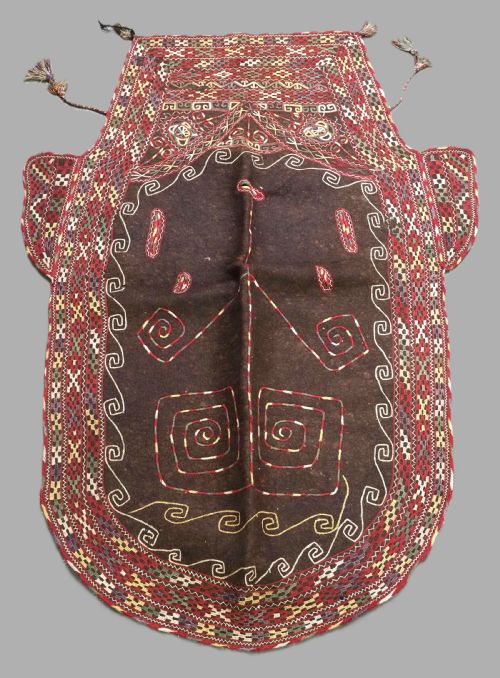
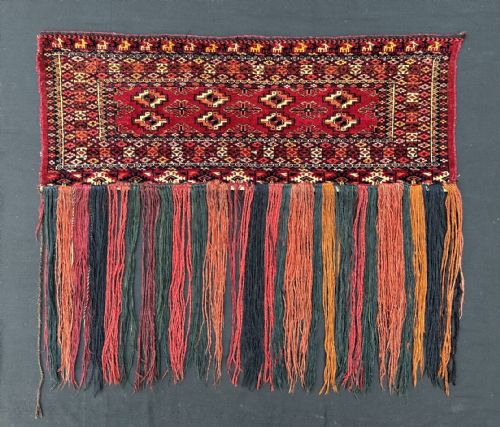
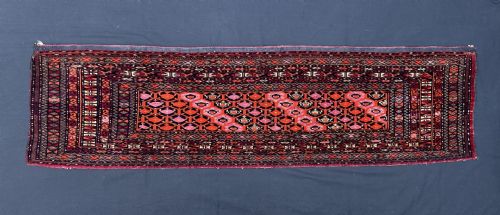
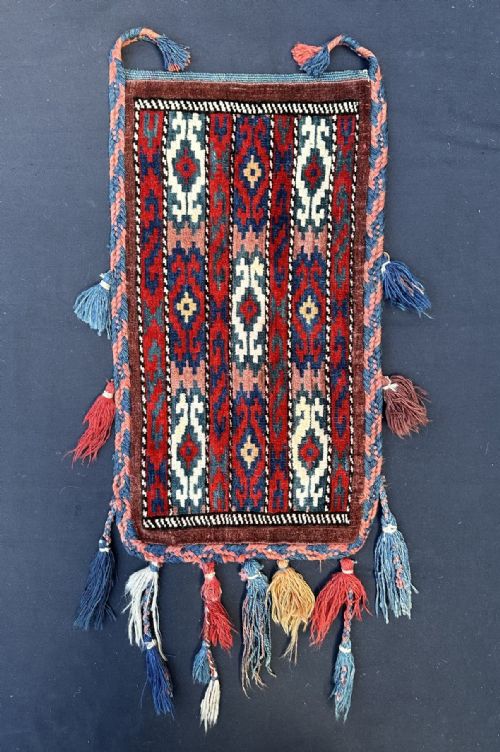
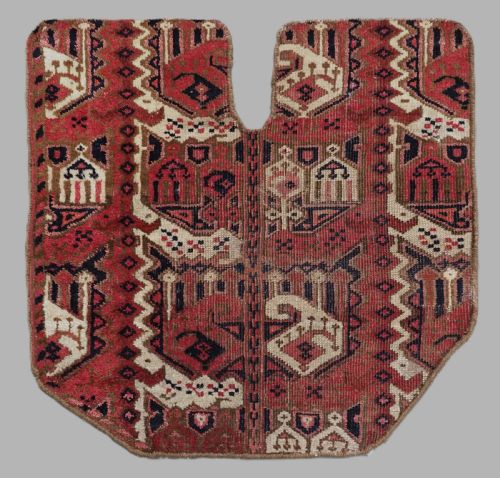
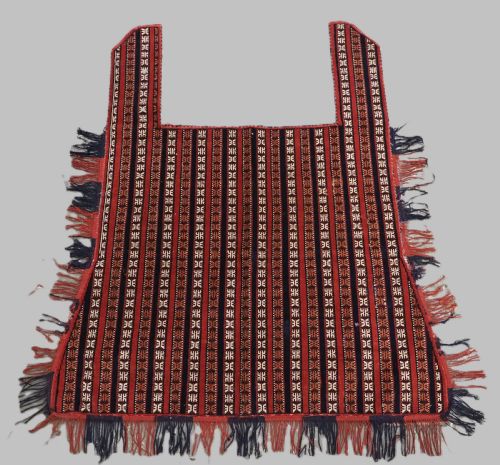
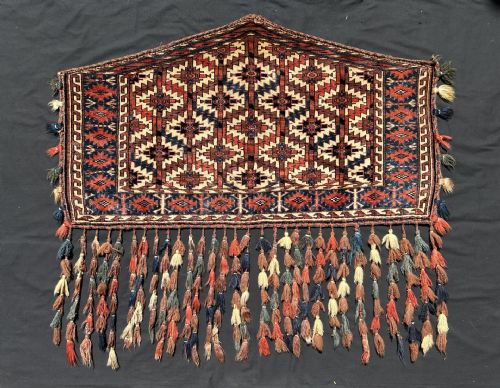
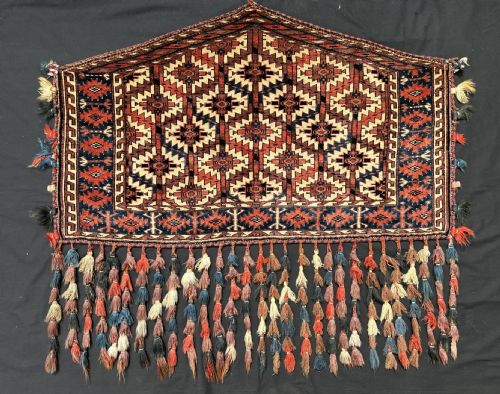
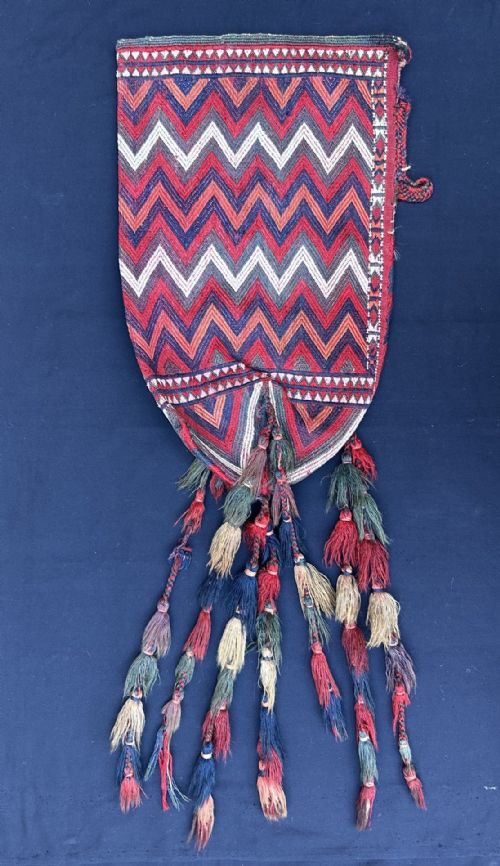
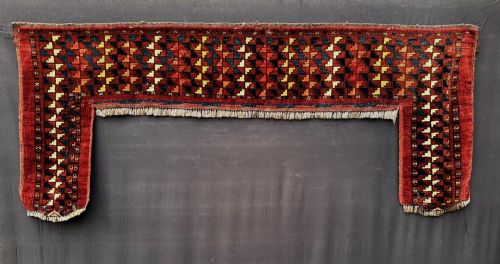
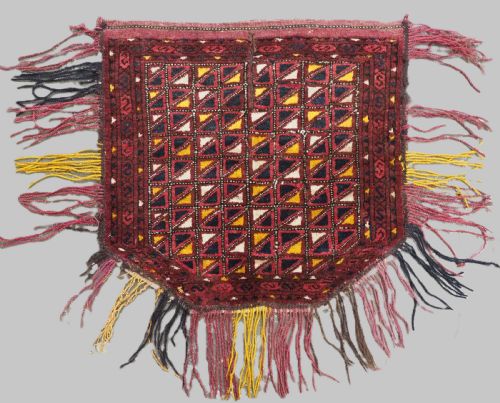
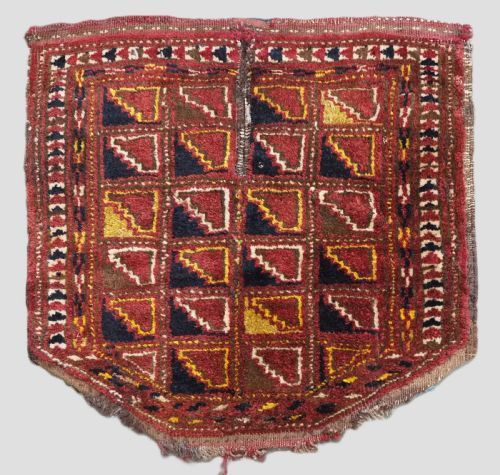
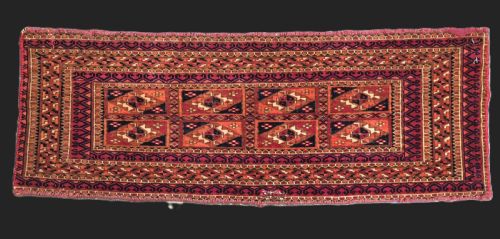
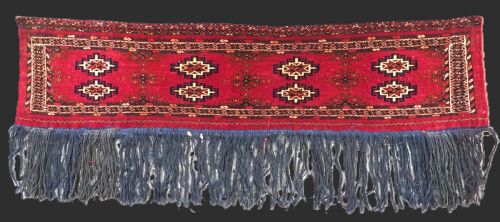
When searching for a wool turkmen wall hanging, collectors encounter specialised domestic textiles originally created for nomadic or tribal utility rather than static display. The selection here comprises functional items repurposed for vertical exhibition, including asmalyks, torbas, chuvals, and saddle covers produced across Turkmenistan.
The objects stem from distinct tribal groups such as the Yomut, Tekke, Ersari, Saryk, and Salor, each maintaining specific visual traditions. Dates span the nineteenth and early twentieth centuries, reflecting a period of traditional pastoral production before industrial dyes and standardised manufacturing transformed local output.
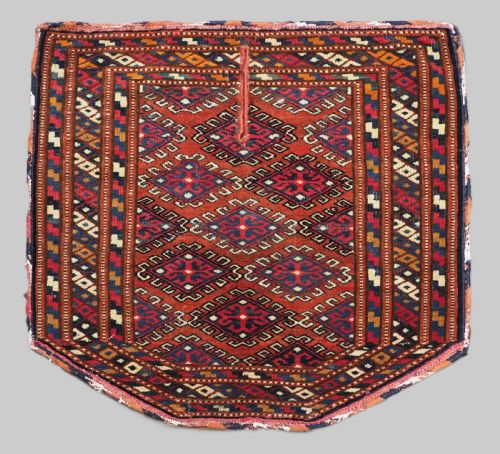
Most examples function visually through repeating primary motifs known as guls, arranged across rich backgrounds dominated by deep madder reds. These formats translate effectively to modern wall mounting, retaining the dense pile and structural integrity intended for camel flanks or tent storage.
Materials and construction
Makers relied primarily on hand-spun wool for the foundational warps, wefts, and dense knotted piles, sometimes incorporating cotton or felted wool. Silk thread and cotton thread appear as supplementary materials, frequently deployed for delicate embroidery highlights and structural reinforcement.
Natural dyes provide the enduring palette, yielding deep terracotta, ivory, and brown tones derived from regional plants and minerals. Artisans combined pile-weaving techniques with flatweave structures, embroidered felts, and plain weave backs to produce durable, multi-textured domestic furnishings.
Listings feature works spanning from the eighteenth century to the early twentieth century, highlighting the transition of nomadic weaving traditions.
Assessing quality
The finesse of a piece depends heavily on knot density and the precision of the drawing within the primary guls. Exceptional examples demonstrate rigorous symmetry, crisp secondary ornaments, and an absence of distortion across the field.
The vibrancy and stability of natural dyes dictate the visual impact of the textile, with superior works retaining deep, saturated tones that show subtle abrash. Furthermore, the survival of original side cords, complete backs, and tassels elevates the historical integrity of the piece.
The Wool Turkmen Wall Hanging Glossary
- Asmalyk
- A ceremonial camel trapping shaped as a pentagon or polygon, traditionally hung on the flanks of a bride's wedding mount. These pieces display some of the most elaborate tribal iconography.
- Torba
- A small storage bag used within the nomad tent, woven with a flat back and a patterned face. They were suspended from the lattice walls to hold household goods.
- Chuval
- A large tent bag designed for bedding and bulky possessions, typically featuring multiple rows of primary guls. Surviving fragments and complete faces remain highly sought after.
- Gul
- A repeating primary medallion motif used by Central Asian weavers to identify specific tribes and clans. Each tribal group utilised distinct variations of these octagonal or geometric forms.
- Abrash
- Natural tonal variation within a single field of colour, caused by changes in dye batches or hand-spun wool lots. This characteristic confirms the use of traditional dyeing methods.
Wool Turkmen Wall Hanging: Frequently Asked Questions
How were these textiles used originally?
Nomadic communities utilised these woven items as functional elements of daily camp life and ceremonial transport. They served as camel trappings during weddings, storage bags inside tents, and protective covers for saddles.
Over decades, their structural durability and striking geometry led collectors to mount them on walls as textile art. This repurposing preserves fragile tribal weaving traditions for contemporary interiors.
Which tribes made these pieces?
Weavers from various Turkmen confederations produced these works across the Trans-Caspian steppes and river oases. Prominent groups include the Yomut, Tekke, Ersari, Saryk, and Salor.
Each tribe adhered to strict visual vocabularies, utilising specific structural formats and colour palettes that allow experienced eyes to identify the makers.
How do I date a piece?
Dating relies on assessing the materials, dye types, and structural wear visible across the textile. Pieces from the nineteenth century typically display hand-spun wool, saturated natural dyes, and older structural formats.
Later works from the early twentieth century often incorporate subtle shifts in chemical dye usage or standardised weaving structures. Comparing motif rendering against documented examples helps narrow the production window.
Can these hang safely on walls?
Mounting these textiles vertically is a standard practice that protects them from floor traffic and heavy wear. Specialists generally use non-damaging methods such as hand-sewn cotton sleeves paired with weight-distributing support rods.
Keeping them away from direct sunlight prevents the natural dyes from fading over time.