




Framed Chinoiserie Artwork
Framed chinoiserie artwork brings decorative scenes of exotic birds, figures, and gardens into interiors through silk, paper, and glass panels.
Framed Chinoiserie Artwork
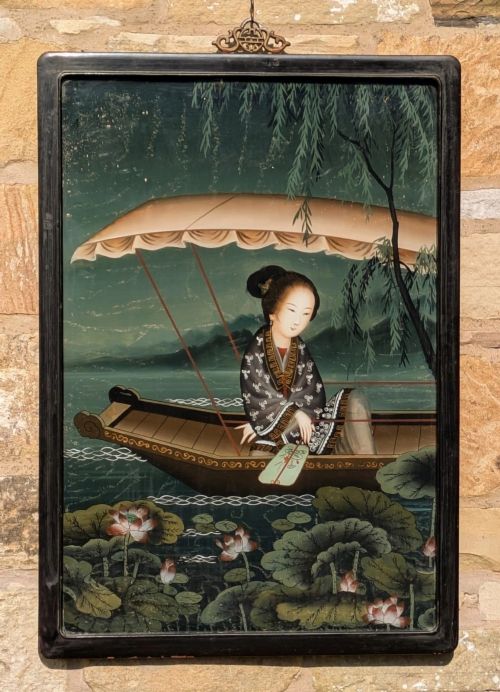
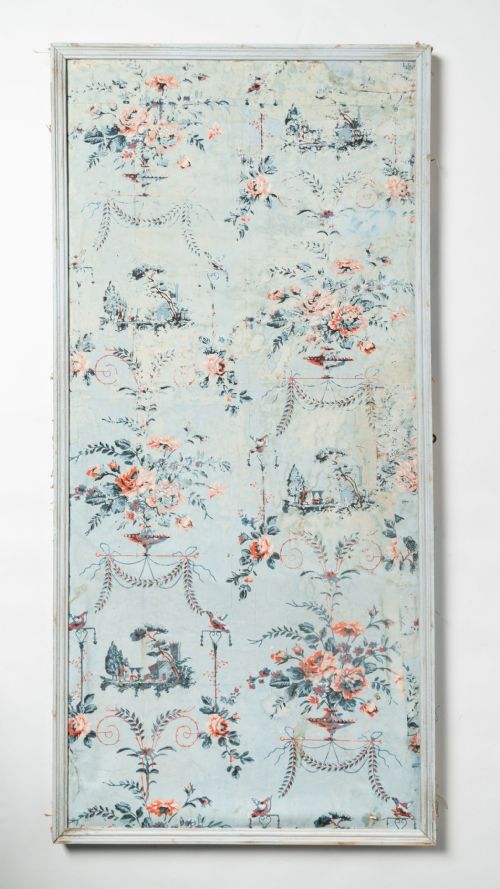
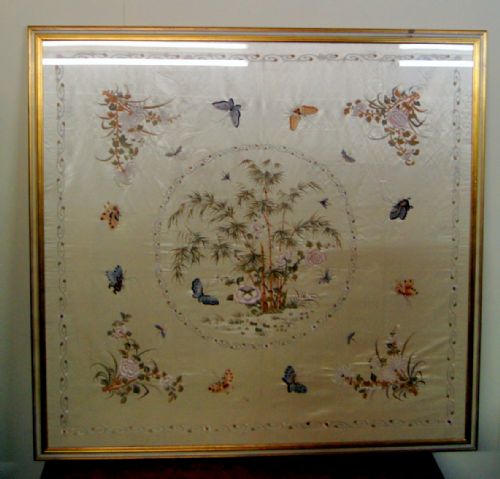
When you search for framed chinoiserie artwork, you encounter wall pieces ranging from nineteenth century watercolours on silk to embroidered panels depicting garden birds and mandarin ducks. The selection includes reverse paintings on glass, wallpaper panels, and pastel drawings, often originating from Chinese export workshops or later European interpretations.
You are most likely to meet nineteenth century examples on this page, including reverse painted mirror-glass pictures and embroidered textiles housed in period frames. These works capture traditional motifs through diverse media such as oil paint, pastel, and gold leaf on paper or canvas.
How they were made
Makers utilised delicate materials such as silk, paper, and glass, applying pigment, watercolour, oil paint, and gold leaf by hand. Textile pieces rely on intricate hand embroidery to render garden scenes and figures with fine detail.
Glass panels often employ reverse painting techniques, where artists painted directly onto the rear surface to achieve a glossy finish when viewed from the front. Paper and canvas supports received pastels or watercolours, frequently secured behind protective glass within wooden frames.
Periods represented span from the eighteenth century, through Regency and the nineteenth century, up to nineteen forty and nineteen sixty.
What varies in quality
The standard of execution separates masterworks from simpler decorative pieces, particularly in the precision of brushwork on reverse glass paintings and the density of stitching in embroidered silk panels. Superior examples demonstrate refined handling of pigment and colour balance.
The integrity of the original framing and the preservation of delicate materials like silk and paper influence the standing of a piece. Works retaining their nineteenth century or Regency mounts show greater authenticity.
The Framed Chinoiserie Artwork Glossary
- Chinoiserie
- European artistic style reflecting Chinese motifs and decorative traditions. It dominated various periods including the Regency and nineteenth century.
- Reverse painting on glass
- Technique where the image is painted on the back of a glass sheet to be viewed from the front. This method creates a brilliant, reflective surface.
- Chinese Export
- Goods manufactured in China specifically for Western markets. These items often blend traditional Asian techniques with European tastes.
- Regency
- British stylistic period spanning the early nineteenth century. Pieces from this era often feature neoclassical lines alongside exotic influences.
Framed Chinoiserie Artwork: Frequently Asked Questions
What periods do these artworks come from?
The pieces span several eras, starting from the eighteenth century through the Regency period and the nineteenth century, extending into nineteen hundred and the mid twentieth century.
Most items seen here date from the nineteenth century, reflecting both Chinese export trade production and later European decorative arts.
What materials are used in these works?
Makers employed a variety of supports including silk, paper, canvas, and glass. Pigments, pastels, watercolours, oil paint, and gold leaf provide the colour.
Textile works feature hand embroidery on silk panels, while glass pieces utilise reverse painting techniques.
How should I hang framed chinoiserie artwork?
These works suit interior wall display, particularly in reception rooms or hallways where their decorative qualities can be appreciated. Protect silk and paper pieces from direct sunlight to preserve the pigments.
Ensure wall fixings are secure, as some glass panels and large nineteenth century wall hangings carry significant weight.
What subjects appear in these artworks?
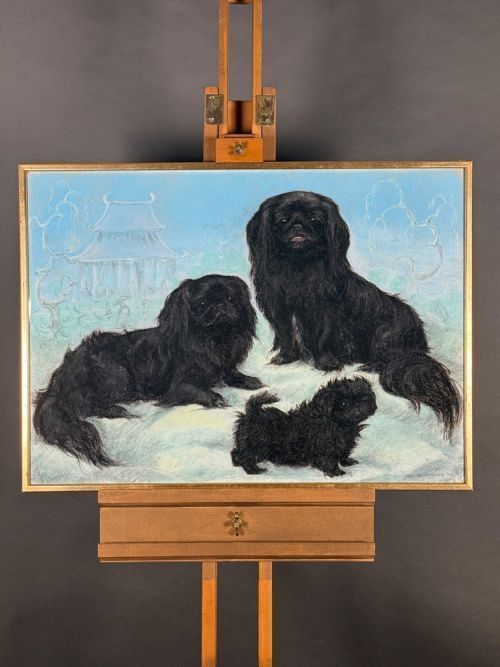
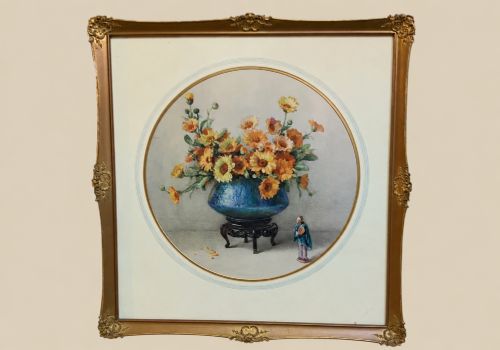
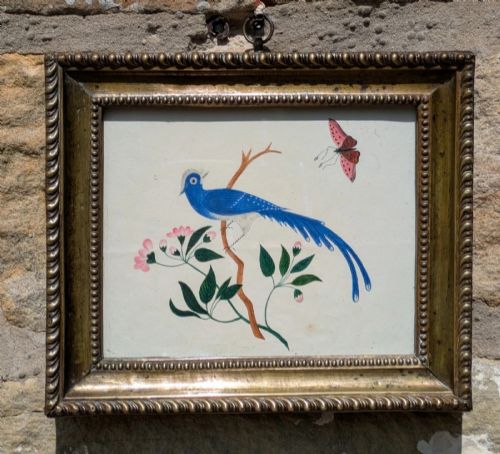
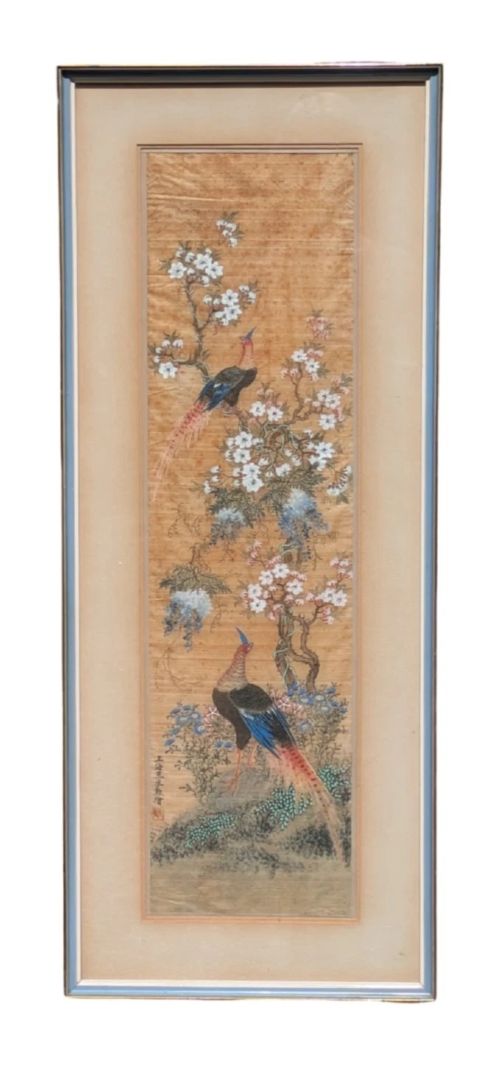
Common subjects include exotic birds such as mandarin ducks, garden scenes, still lifes with flowers and Chinese objects, and studies of animals like Pekingese dogs.
Many panels depict traditional figures and landscapes derived from Qing dynasty and Chinese export aesthetic traditions.