




Antique Chinese Textile
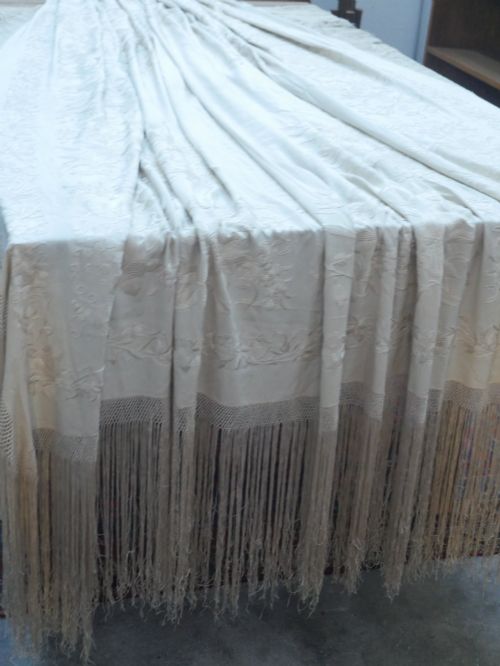
These antique chinese textile pieces are woven and embroidered works that bring centuries of intricate needlework and craftsmanship directly into a room.
Antique Chinese Textile
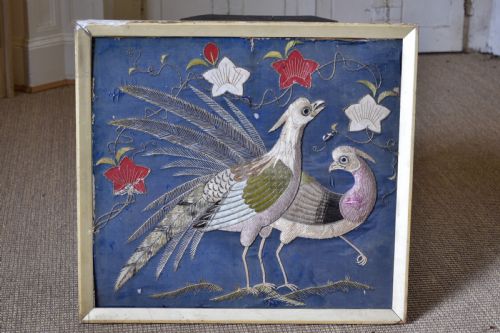
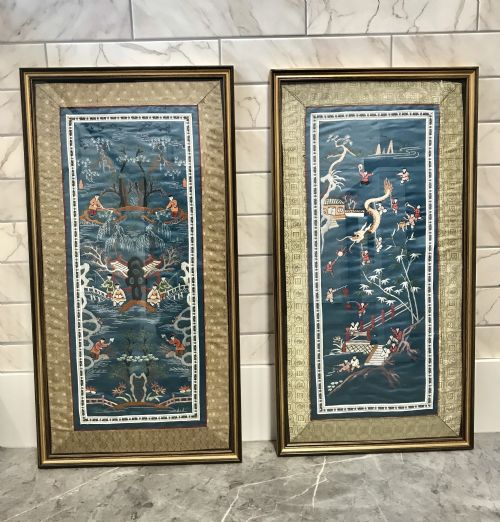
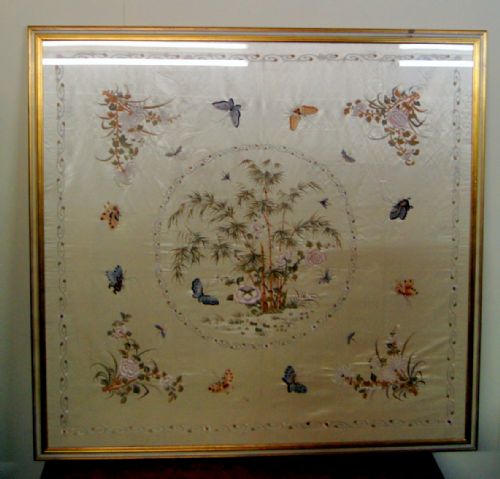
An antique chinese textile encompasses various hand-stitched silk panels, rank badges, rugs, and framed paintings produced during the Qing dynasty and the nineteenth century. Buyers on this page most frequently encounter framed embroidered silk panels featuring figures, dragons, trees, and garden birds alongside wool carpets from regions like Ningshia and Khotan.
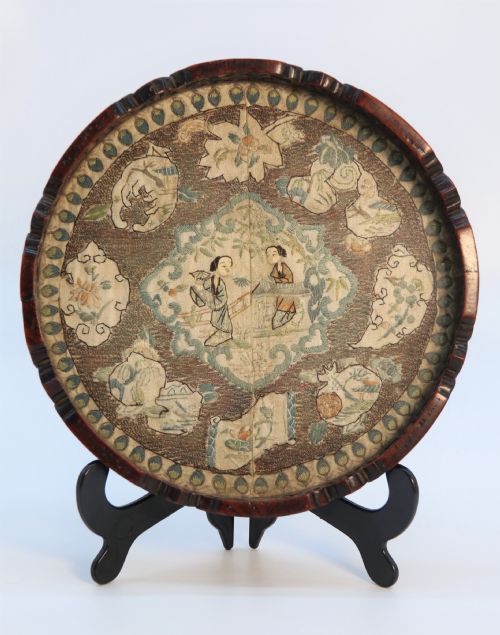
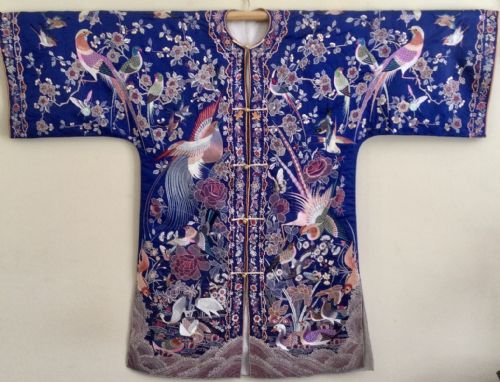
The selection ranges from small child's robes and painted silk portraits to carved hardwood trays inset with embroidered fabric and pillar rugs. These works reflect both domestic decorative arts and the rich courtly traditions of historical China.
How they were made
Artisans utilised fine silk grounds combined with metallic thread, pigment, and cotton to construct these elaborate panels and garments by hand. Many examples incorporate intricate hand-sewn embroidery depicting detailed flora, fauna, and narrative scenes.
Carpets and textile fragments from Northern China and East Turkestan involve dense wool knotting or weaving techniques mounted on sturdy organic foundations. Structural elements such as trays and frames frequently employ carved hardwood and glass.
Mandarin ducks embroidered on antique panels secretly remind everyone of lifelong marital fidelity.
What varies in quality
The standard of execution in the needlework separates ordinary decorative items from exceptional works of textile art. Density of stitches, complexity of the metallic thread work, and the finesse of painted details on silk dictate the visual power of each piece.
Condition of the delicate fabrics and integrity of the original framing or mounting also determine the standing of an object. Pieces retaining vibrant pigments and complete embroidered motifs command closer attention from collectors.
The Antique Chinese Textile Glossary
- Qing Dynasty
- The final imperial dynasty of China, lasting from sixteen forty-four until nineteen twelve. This era produced the vast majority of surviving embroidered robes, rank badges, and court textiles.
- Rank Badge
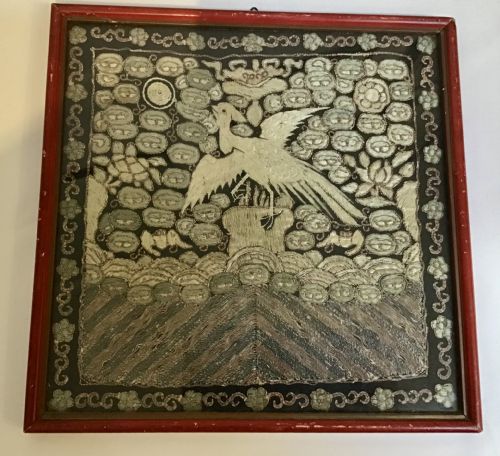
- A square textile insignia sewn onto the robes of civil officials and military officers to denote their precise hierarchy. These badges typically depict specific birds or animals.
- Khotan Rug
- A hand-knotted carpet originating from the oasis city in East Turkestan. These rugs display distinct regional motifs influenced by both Chinese and Central Asian designs.
- Chinoiserie
- A European artistic style reflecting Chinese motifs and techniques. While distinct from native works, it shares stylistic influences seen in certain decorative pieces.
Antique Chinese Textile: Frequently Asked Questions
How do I care for antique silk?
Keep textile art out of direct sunlight to prevent the silk threads and natural pigments from fading over time. Ensure framed pieces remain sealed securely behind glass to protect the fragile fibres from atmospheric dust and moisture.
Avoid hanging delicate embroideries in damp environments or areas with fluctuating room temperatures. Gentle dusting of the exterior frame is all that is normally required for routine maintenance.
What is a rank badge?
A rank badge is a square embroidered textile patch worn on the front and back of official court robes during the imperial dynasties. They served to identify the exact social or military standing of the wearer through specific animal and bird symbols.
Civil officials displayed birds while military officers wore quadrupeds, each grade corresponding to a distinct creature. Today these badges survive primarily as framed standalone panels.
Where were pillar rugs used?
Northern Chinese pillar rugs wrapped around structural columns in temples, palaces, or wealthy residences. Their elongated dimensions accommodated the specific vertical architecture of traditional buildings.
These carpets frequently feature dragons or floral patterns designed to be viewed as they wrapped around a round post. Surviving examples now typically hang flat as wall art.
How to date these textiles?
Dating relies primarily on stylistic analysis of the motifs, the structural materials, and the specific embroidery techniques employed. Pieces associated with the Qing dynasty often exhibit characteristic colour palettes and formal compositions.
Documentation regarding provenance and comparison with dated examples in museum collections assist in confirming the period. Minor variations in weave and dye methods further help narrow the era of production.