




Framed Chinese Textiles
Framed Chinese textiles bring intricate silk needlework and Qing Dynasty elegance straight to your walls.
Framed Chinese Textiles
Framed Chinese textiles comprise hand-sewn panels, rank badges, embroidered robes, and painted silk works protected behind glass. These pieces originate from the nineteenth and early twentieth centuries, capturing traditional craftsmanship through needle and pigment.
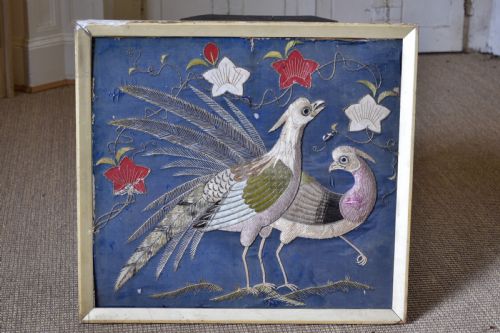
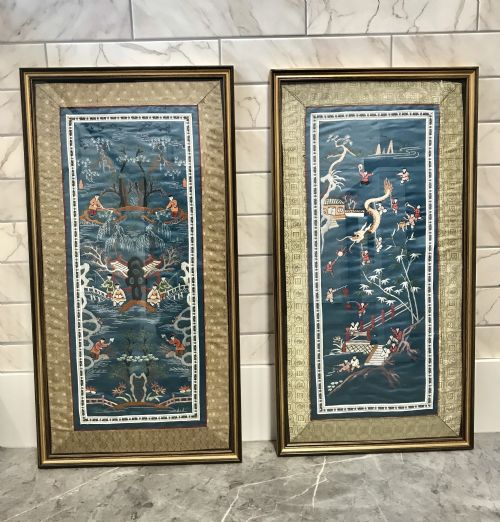
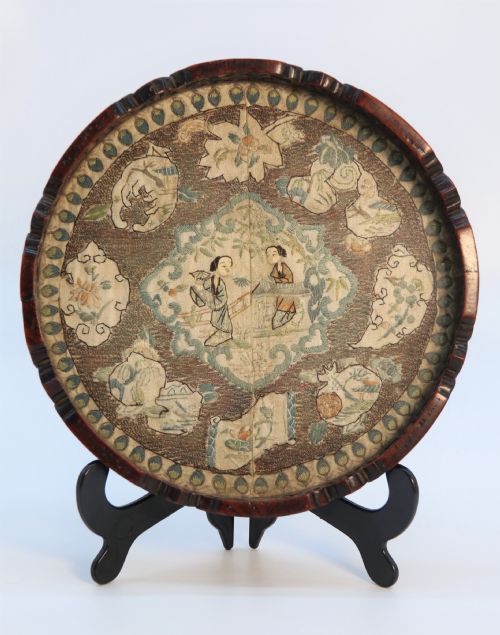
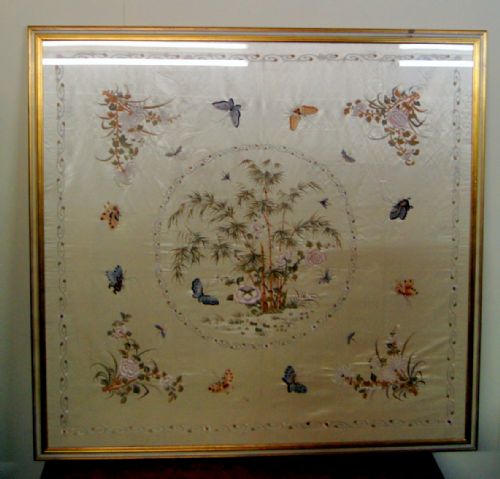
The version most commonly encountered on this page is the silk embroidery panel, often depicting figures, dragons, trees, and flowers. Buyers also discover framed hardwood trays and textile fragments arranged for wall display.
Originating from periods including the Qing Dynasty and early twentieth-century workshops, these works showcase distinct cultural motifs and textile traditions. Each item offers a glimpse into historical Asian decorative arts.
How they were made
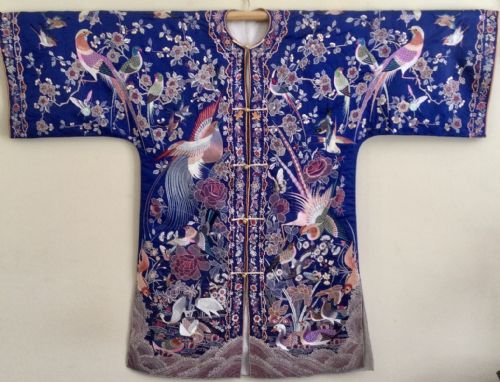
Artisans employed fine silk as the primary ground material, working intricate designs with metallic thread, additional silk threads, and pigment. These textiles required immense patience and steady hands to execute detailed figures, birds, and floral patterns.
Makers set many of these delicate embroidered panels and paintings behind glass to protect the fragile fibres from dust and handling. Frames fashioned from carved hardwood frequently housed these textiles, turning portable garments and hangings into rigid wall art.
Object types on this page include textile art, wall art, framed textiles, trays, rugs and carpets, showcasing diverse historical Chinese craftsmanship.
What varies in quality
The refinement of the hand sewing dictates the distinction between standard and exceptional examples, where tight, even stitches define superior needlework. The complexity of the iconography, such as detailed dragons or garden birds, separates ordinary decorative items from masterworks.
The condition of the silk ground and the preservation of the pigments or metallic threads heavily influence the character of the piece. Intact framing, particularly original carved hardwood surrounds, adds physical integrity and historical context to the textile.
The Framed Chinese Textiles Glossary
- Qing Dynasty
- The last imperial dynasty of China, lasting from sixteen forty-four to nineteen twelve. Pieces from this era often feature traditional imperial symbols like dragons and meticulous silk embroidery.
- Rank badge
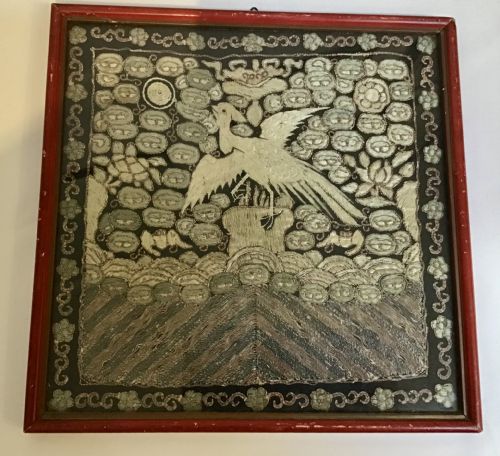
- A square embroidered patch worn on the robes of Qing Dynasty officials to denote their social standing. These badges display specific birds or animals corresponding to civil or military hierarchy.
- Chinoiserie
- A European artistic style reflecting Chinese motifs and techniques. Items of this nature borrow heavily from Eastern aesthetics.
- Silk
- A natural protein fibre spun by silkworms, utilised extensively in Chinese needlework. It provides a smooth, lustrous background that catches the light.
Framed Chinese Textiles: Frequently Asked Questions
What periods do these textiles come from?
The pieces span the nineteenth century up through the nineteen-twenties, incorporating Qing Dynasty traditions and subsequent eras. Makers of this time utilised traditional hand-sewing techniques on silk grounds.
Collectors encounter various forms, from rank badges and child's robes to painted silk and framed panels. Each item reflects the prevalent artistic styles of its specific decade of origin.
How should I display framed textiles?
Hang these pieces away from direct sunlight to protect the fragile silk fibres and pigments from fading. Maintaining stable indoor humidity prevents the organic materials and wooden frames from degrading over time.
Ensure the glass protecting the textile does not press directly against the embroidery surface. Proper framing preserves the structural integrity of the delicate needlework.
What motifs appear on these panels?
Common imagery includes traditional figures, dragons, trees, and flowers stitched meticulously with silk and metallic thread. Garden birds and mandarin ducks also feature prominently in many nineteenth-century compositions.
These subjects carried specific cultural meanings and auspicious symbols within Chinese society. Artisans rendered them with high precision to display both technical skill and symbolic value.
Are all these items traditional wall art?
While most items function as wall art through dedicated framing, some pieces originated as functional objects or garments. Examples include embroidered child's robes, textile fragments, and carved hardwood trays inset with silk panels.
Creators repurposed these various textile forms to suit decorative display behind glass. This practice allows fragile historical garments and fragments to be safely enjoyed in modern interiors.