





Qing Dynasty Embroidery
Qing dynasty embroidery brings intricate silk needlework and traditional Chinese motifs into your rooms through framed panels, robes, and carved screens.
Qing Dynasty Embroidery
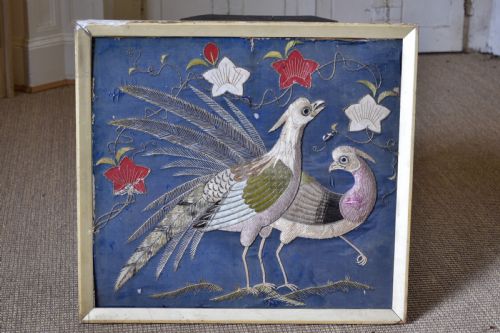
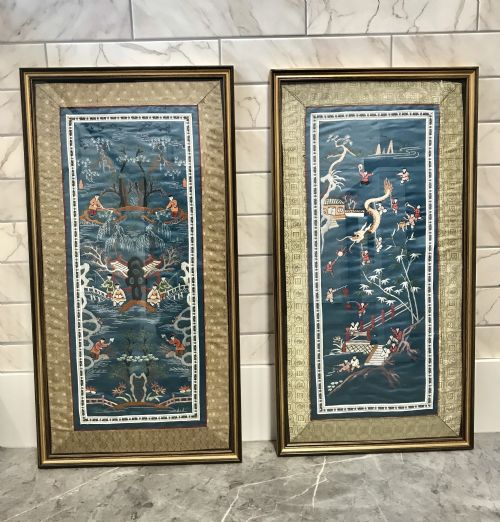
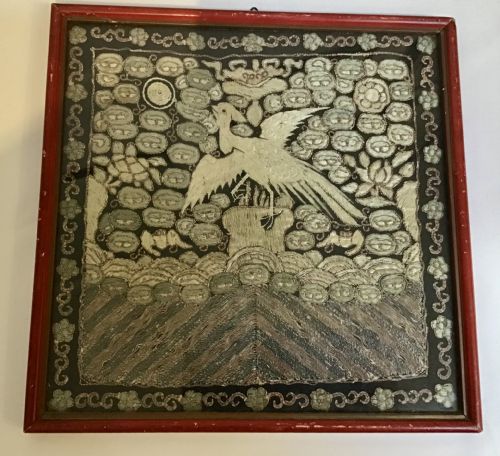
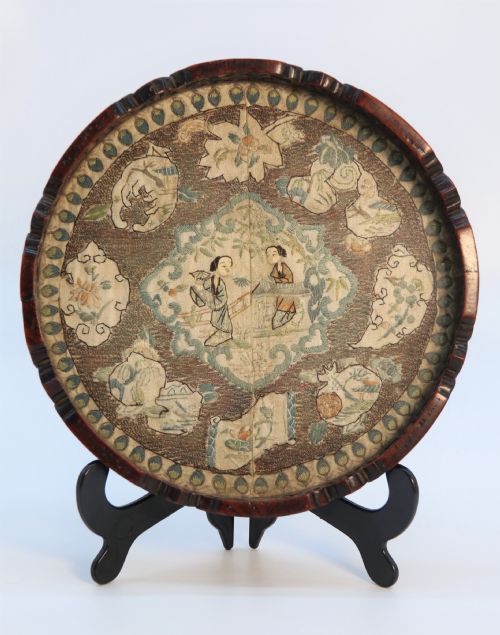
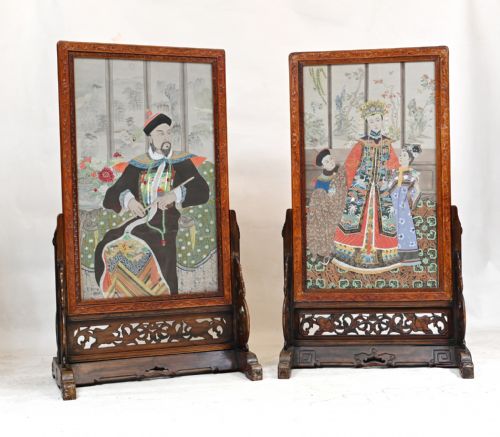
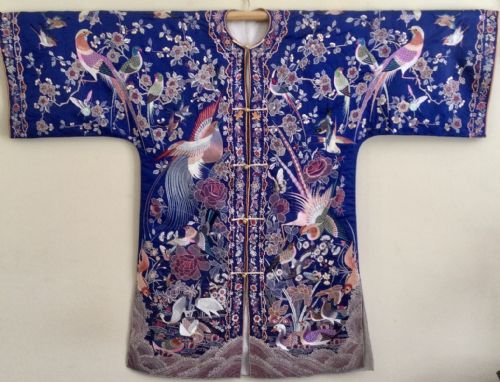
When you search for qing dynasty embroidery, you encounter textile art created during the Qing period and later interpretations in traditional Chinese styles. The pieces on this page range from framed panels and rank badges to child's robes and decorative table screens.
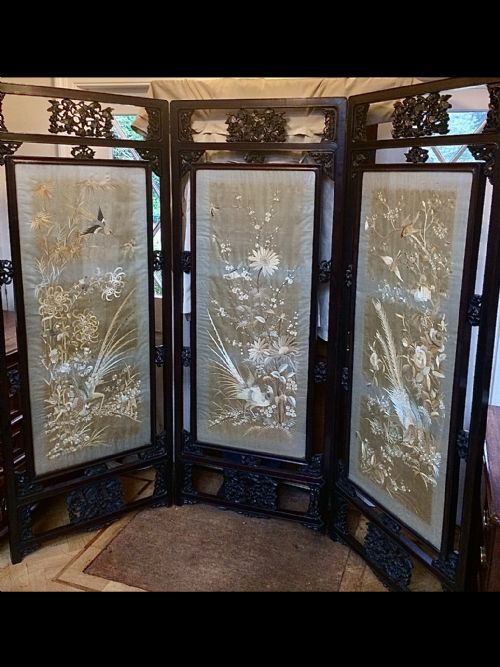
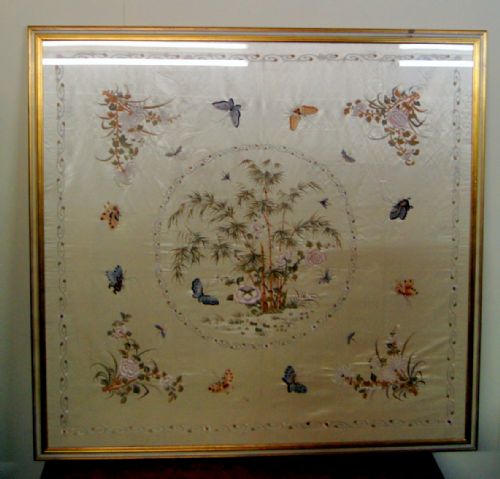
You are most likely to meet 19th-century works featuring silk needlework under glass, alongside framed wall art depicting figures, dragons, trees, and garden birds. These textiles often incorporate metallic thread and are mounted within hardwood frames or carved stands.
How they were made
Artisans worked primarily with fine silk fabrics and threads, frequently integrating metallic thread to highlight specific details within dragons, flowers, and foliage. Hand-sewing techniques produced dense, pictorial surfaces on panels, robes, and rank badges.
Many of these textiles are set within carved hardwood, gilt wood, or glass housings, including specialised items like firescreens, folding screens, and serving trays. The frames and stands often feature intricate woodworking that complements the textile art.
Mandarin ducks stitch their way across these panels as miniature symbols of lifelong devotion, quietly outlasting the dynasties that commissioned them.
What varies in quality
The refinement of the needlework largely determines the distinction between standard and superior examples, particularly in the rendering of figures, garden birds, and intricate floral motifs. Finer pieces demonstrate exceptional density and precision in the hand-sewn execution.
The sophistication of the mounting also influences the overall standard, separating simple framed panels from elaborately carved hardwood table screens and firescreens. The integration of fine joinery and secondary materials like gilt wood elevates the complete object.
The Qing Dynasty Embroidery Glossary
- Rank badge
- A square embroidered patch worn on the robes of Qing dynasty officials to denote their civil or military status. These badges typically depict specific birds or animals corresponding to the wearer's exact grade.
- Table screen
- A decorative panel supported by a carved stand, designed to sit upon a desk or table rather than partition a room. They frequently combine silk embroidery with hardwood framing.
- Metallic thread
- Fine threads made from beaten metal or metal-wrapped cores used in needlework to add shimmer and delineation to garments and panels. They appear frequently in traditional Chinese dragon and floral designs.
- Firescreen
- A standing piece of furniture featuring a decorative panel placed before a fireplace when not in use. In this context, the screen encloses a silk embroidered textile within a carved hardwood frame.
Qing Dynasty Embroidery: Frequently Asked Questions
What subjects appear on qing dynasty embroidery?
Needlework from this period frequently depicts figures, dragons, trees, flowers, garden birds, and mandarin ducks. These motifs carry traditional symbolic meanings associated with status, nature, and auspicious fortune.
Rank badges also display specific animals or birds that identified the official rank of the original wearer during the Qing dynasty.
How were these silk panels originally displayed?
Textiles were worn as garments such as child's robes, mounted as rank badges on official clothing, or framed as wall art. Many were also incorporated into functional items like table screens, firescreens, and trays.
Framing under glass served to protect delicate silk threadwork from dust and handling while allowing the detailed needlework to remain visible.
How do I care for antique silk embroidery?
Protect silk textiles from direct sunlight to prevent the fading of natural and metallic threads over time. Keep them behind glass where possible to shield the delicate hand-sewn fibres from atmospheric moisture and handling.
Dust wooden frames and carved stands gently with a dry cloth, avoiding harsh chemical cleaning products near the historic fabric.