





Carved Wood Serving Tray
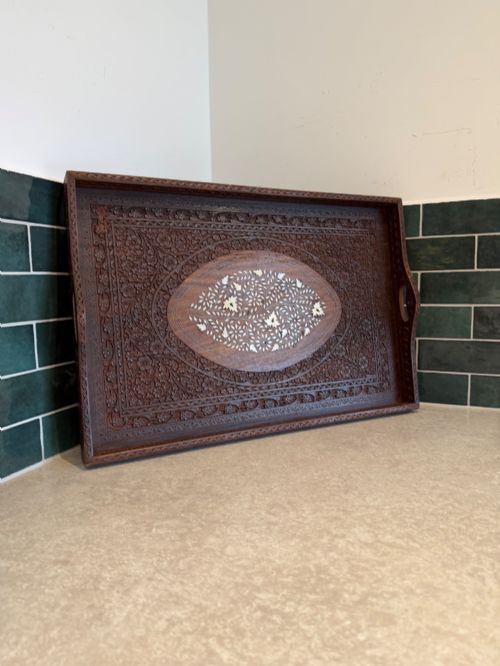
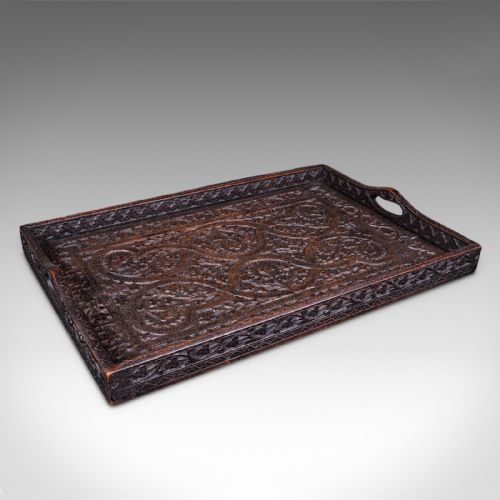
A carved wood serving tray brings tactile warmth and carved detail to the table, uniting practical service with traditional craftsmanship.
Carved Wood Serving Tray
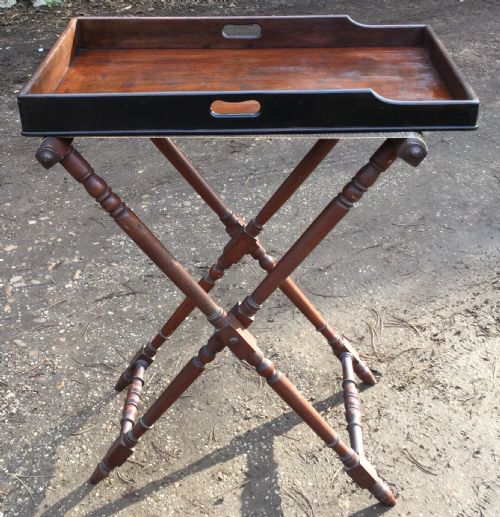
A carved wood serving tray encompasses forms ranging from traditional butler trays on folding stands to rotating lazy susans and galleried platters. These pieces serve practical functions in domestic hospitality while displaying intricate surface ornamentation.
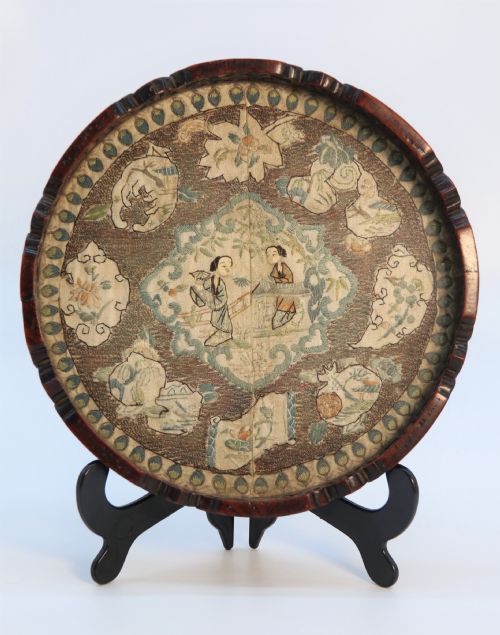
The materials span mahogany, oak, walnut, teak, and exotic hardwoods, often paired with bone inlay, cotton webbing, or silk embroidery behind glass. Styles stretch from Georgian mahogany and Victorian afternoon tea platters to Anglo-Indian, Kashmiri, Art Deco, and Meiji period Japanese designs.
Buyers frequently encounter Victorian and nineteenth-century examples alongside specific regional specialisms like Kashmiri walnut or Anglo-Indian teak. The form bridges utilitarian kitchenware and decorative occasional furniture.
Materials and construction methods
Construction relies on solid hardwoods such as mahogany, oak, walnut, and teak, selected for durability and stability during daily use. Cabinetmakers shaped these timbers into galleried edges, scalloped profiles, and folding stands.
Carving techniques define the surface decoration, ranging from deep relief foliage on Kashmiri walnut to precise geometric patterns on Anglo-Indian teak and oriental motifs on Chinese hardwood. Some pieces incorporate textile elements like silk embroidery protected beneath glass or cotton webbing.
Listings feature eighteenth-century Georgian designs, nineteenth-century Victorian butler trays, and twentieth-century Art Deco pieces.
Assessing quality in carved wooden trays
Quality rests in the crispness of the hand-carving and the selection of timber grain, where denser hardwoods hold sharper detail. The integration of structural elements, such as galleried edges, jointing on folding stands, and the smooth action of rotating lazy susans, determines execution standards.
Material embellishments distinguish finer works, particularly where bone inlay is precisely fitted or silk embroidery is cleanly preserved. The integrity of the finish and the preservation of the original surface patina separate standard production from superior pieces.
The Carved Wood Serving Tray Glossary
- Butler tray
- A portable wooden tray with hinged or fixed sides, frequently set upon a folding wooden stand for serving drinks or meals.
- Galleried tray
- A tray featuring a raised border or railing around its perimeter to prevent items from sliding off the surface.
- Lazy Susan
- A rotating tray placed on a table or countertop to assist in moving food easily between diners.
- Meiji
- A period of Japanese history spanning the late nineteenth and early twentieth centuries, known here for detailed tea ceremony trays.
- Tazza
- A shallow ornamental plate or tray raised on a pedestal stem, seen in period oak serving pieces.
Carved Wood Serving Tray: Frequently Asked Questions
How do I care for a carved wooden tray?
Clean wooden surfaces with a soft, dry cloth to remove dust and maintain the polish.
Avoid exposing antique hardwoods to excessive moisture or direct heat sources to prevent warping.
Were these trays used for tea service?
Many nineteenth-century examples functioned specifically as afternoon tea platters or butler trays for carrying cups and teapots.
Their raised edges and sturdy hardwood construction supported heavy ceramic vessels during domestic service.
What is an Anglo-Indian tray?
These pieces combine traditional British tray forms with intricate carving techniques executed by Indian artisans during the nineteenth century.
They typically utilise dense timbers like teak and feature elaborate floral or foliate relief work.
How do I date an antique wooden tray?
Dating relies on identifying the timber species, joinery methods, and stylistic indicators such as Georgian galleried borders or Victorian carving motifs.
Comparing the object to documented nineteenth-century forms helps narrow the period of manufacture.