



Chinese Silk Textile Art
Chinese silk textile art brings extraordinary hand needlework and painted panels into the home, offering rich colour and intricate traditional imagery.
Chinese Silk Textile Art
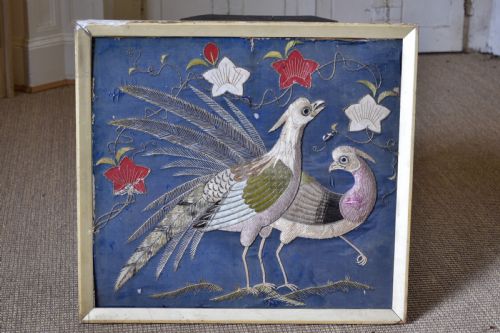
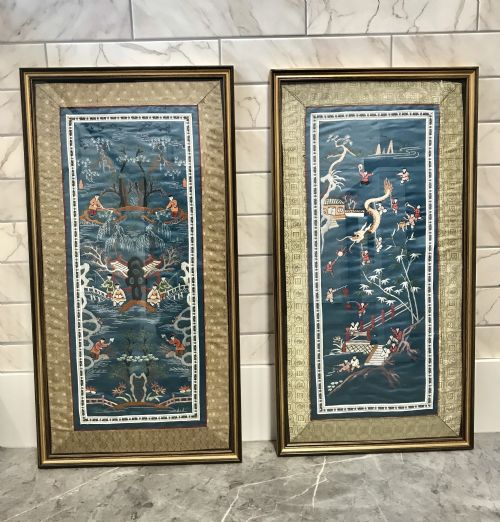
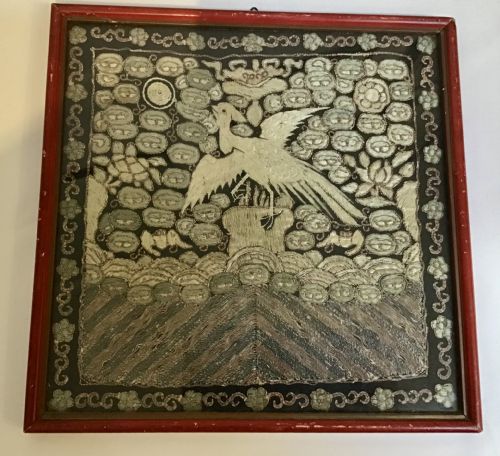
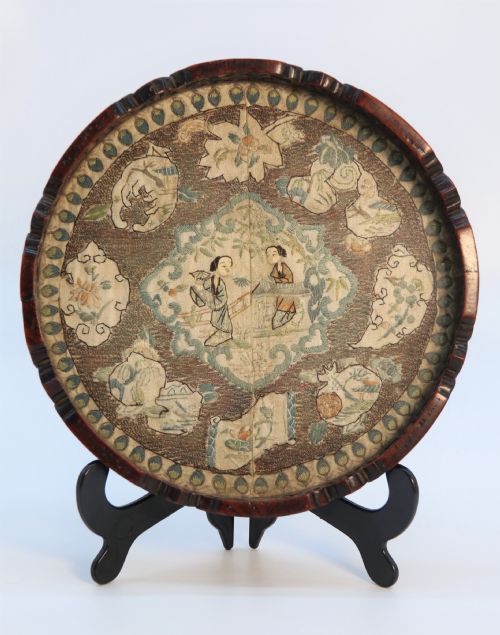
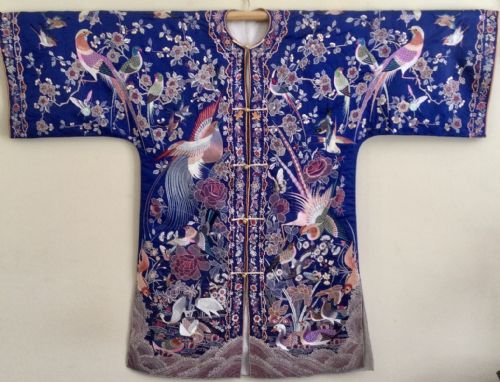
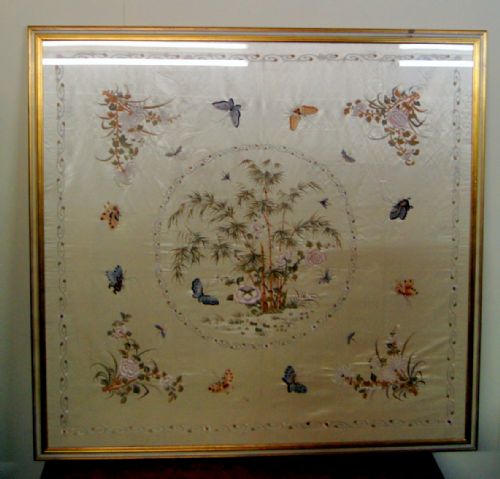
When you search for chinese silk textile art, you encounter a distinct variety of framed embroideries, painted panels, rank badges, and functional trays spanning the nineteenth and early twentieth centuries. These pieces encompass Qing Dynasty traditions as well as later interpretations, capturing classical motifs like dragons, figures, garden birds, and mandarin ducks.
How they were made
These works rely fundamentally on fine silk grounds embellished with detailed hand sewing, supplementary metallic thread, and subtle pigment painting. Artisans combined delicate threadwork with painted details to create depth within scenes of trees, flowers, and wildlife.
Framed pieces and functional objects incorporate supportive structural materials including wood, hardwood, and gilt wood, frequently protected beneath glass. Carved hardwood frames and specialised trays demonstrate how fragile textiles were integrated into durable domestic furnishings.
The listings on this site span the nineteenth century up to nineteen twenty, utilising silk, glass, wood, metallic thread, pigment, and hardwood.
What varies in quality
Superior examples of chinese silk textile art distinguish themselves through the precision of the hand sewing and the complexity of the rendered figures or flora. High-grade works exhibit exceptional density in the stitching and sophisticated handling of metallic thread, whereas simpler pieces rely on basic compositions.
The integration of the textile into its original mounting or housing also dictates overall merit. Finely preserved items protected under glass or housed within carved hardwood trays retain their structural integrity and visual vibrancy far better than compromised examples.
The Chinese Silk Textile Art Glossary
- Rank badge
- A square embroidered patch indicating official civil or military status during the imperial era. These badges display specific birds or animals corresponding to the wearer's exact rank.
- Qing Dynasty
- The final imperial dynasty of China, lasting from sixteen forty-four to nineteen twelve. Pieces from this period exhibit traditional court iconography and precise hand needlework.
- Mandarin duck
- A traditional symbol of fidelity and enduring affection frequently depicted in pairs on classical textiles. Artisans used these birds to ornament domestic panels and robes.
- Chinoiserie
- European artistic interpretation of Chinese decorative motifs and styles. This aesthetic influenced how certain imported or inspired works were framed and displayed in Western interiors.
Chinese Silk Textile Art: Frequently Asked Questions
What subjects appear on these textiles?
The compositions frequently feature classical imagery including dragons, figures, garden birds, mandarin ducks, trees, and flowers. These traditional motifs carry specific symbolic meanings rooted in imperial and domestic culture.
Artisans rendered these subjects using meticulous hand sewing, metallic thread, and pigment painting on fine silk grounds. Every panel tells a distinct visual story from its period of origin.
How were rank badges used?
Rank badges were worn on the front and back of official court robes to designate the precise civil or military standing of the wearer. Their intricate needlework and specific animal or bird symbols communicated immediate social hierarchy.
Today, these badges survive primarily as framed wall art. They offer collectors a direct connection to imperial court traditions.
How do I protect antique silk?
Antique silk requires careful placement away from direct sunlight to prevent the fading of natural pigments and threads. Maintaining stable indoor humidity levels also protects the delicate fibres from degradation.
Many pieces arrive under glass, which provides essential defence against dust and handling. Keeping them in stable environments ensures the longevity of the hand-sewn details.
Are these works hand sewn?
The vast majority of traditional pieces rely on meticulous hand needlework executed by skilled artisans. Fine silk threads and metallic accents were applied directly to silk grounds to build intricate textures.
Close inspection reveals the subtle variations characteristic of individual human handwork. This distinguishes antique textile art from later machine-made reproductions.