




Carved Hardwood Tray
A carved hardwood tray brings rich grain and intricate regional handiwork into a room, serving equally as a display surface or a functional platter.
Carved Hardwood Tray
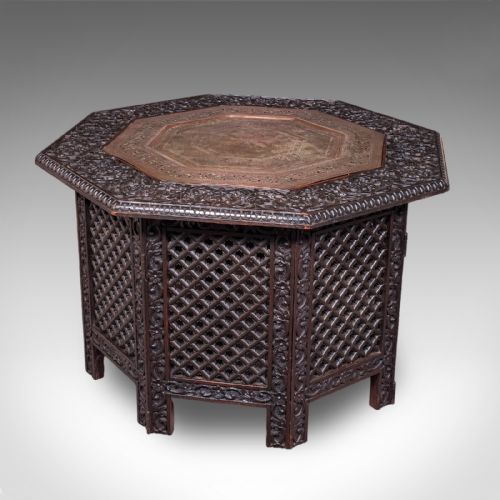
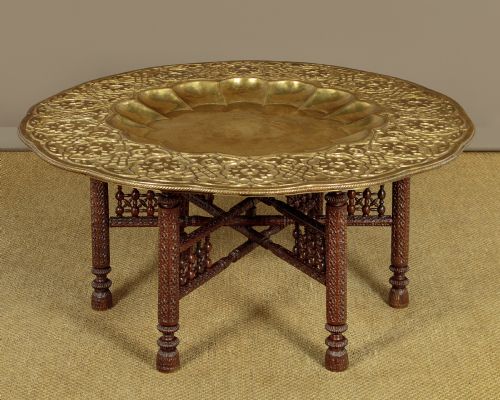
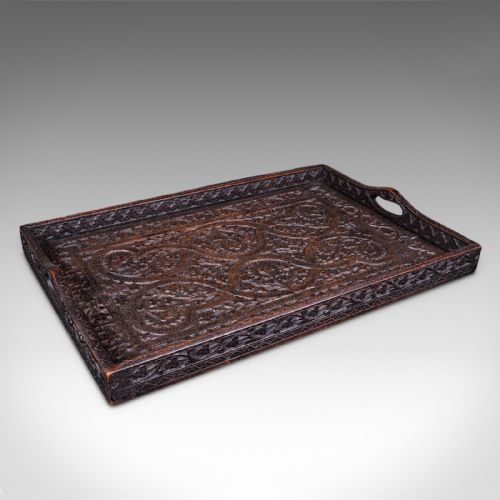
When you search for a carved hardwood tray, you encounter a distinct cross-section of nineteenth and early twentieth-century decorative arts. The selection spans Anglo-Indian afternoon tea platters, Chinese export table tops, and folding occasional pieces that reflect diverse global craftsmanship.
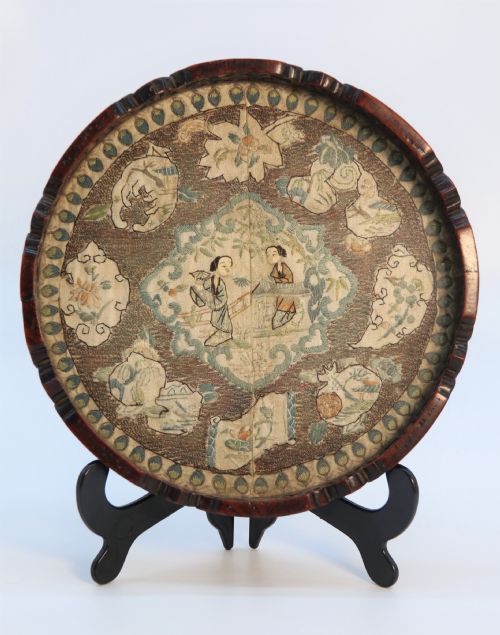
Most examples you meet on this page date from the Victorian era up through the nineteen-twenties. These objects often combine dense timber frames with inset metal surfaces or delicate textile panels beneath glass.
The forms range from handheld rectangular serving trays to large folding table units supported by intricately carved wooden bases. Many pieces bridge the gap between portable servingware and low occasional furniture.
Materials and construction methods
Makers utilised dense timbers such as teak, rosewood, and hongmu, allowing for deep relief carving and structural stability. These dark woods provided a robust canvas for complex floral, geometric, and figural motifs executed by regional artisans.
Many trays incorporate contrasting materials within the timber framework, including hammered copper, polished brass, bone inlay, and silk embroidery under glass. Folding bases and removable platter tops demonstrate clever joinery designed for portability and storage.
Several trays come with hidden folding legs, proving that Victorian travellers and hosts appreciated portable furniture long before modern camping gear existed.
Judging quality and execution
The distinction between standard domestic production and superior execution lies in the depth and sharpness of the hand carving. Crisp undercut foliage and well-defined figurative details indicate a master hand rather than hurried commercial output.
Material selection also dictates overall quality, particularly the choice of dense, heavy hardwoods and the integration of secondary elements like hand-beaten metal insets or intricate bone work. The structural integrity of folding mechanisms and the tightness of timber joints further separate ordinary examples from exceptional ones.
The Carved Hardwood Tray Glossary
- Anglo-Indian
- Descriptive term for nineteenth-century decorative items produced in India under British colonial influence, combining local craftsmanship with European forms.
- Hongmu
- A traditional Chinese term denoting dense, dark hardwoods used for fine furniture and decorative objects.
- Occasional table
- A small, versatile table designed for sporadic use rather than primary seating or dining.
- Serving tray
- A flat, shallow vessel with raised edges used for carrying food, drinks, or small items.
Carved Hardwood Tray: Frequently Asked Questions
How were carved hardwood trays used historically?
These pieces functioned primarily for serving afternoon tea or displaying decorative objects in nineteenth-century drawing rooms. Many versions also doubled as removable table tops resting on collapsible folding stands.
Larger variants served as low occasional tables in colonial and domestic interiors, offering a portable surface that could be stored away when not needed.
How do I care for antique hardwood trays?
Keep wooden surfaces nourished with appropriate natural waxes and avoid placing pieces in direct sunlight or near heat sources. Excessive temperature changes can cause the dense timbers to shrink or split.
Clean inset metal panels or glass-covered silk sections gently with dry or barely damp cloths, avoiding harsh chemical cleaners that might damage nineteenth-century finishes.
Are these trays sturdy enough for daily use?
Most pieces remain structurally sound for gentle everyday tasks like holding drinks or books. However, folding bases and intricate relief carving require thoughtful handling to prevent accidental impact damage.
Heavier items with inset copper or brass tops benefit from balanced weight distribution across the surface to protect the underlying wooden frame and joints.
How can I tell the regional origin apart?
Anglo-Indian examples typically feature dense overall floral carving in teak or rosewood, sometimes accompanied by brass or copper insets. Chinese pieces often showcase distinct regional wood choices like hongmu, along with specific motifs or silk embroidery panels.
Folding bases associated with Chinese export items often utilise specific geometric interlocking designs that differ from Indian stand constructions.