




Framed Chinese Silk Embroidery
Framed Chinese silk embroidery brings intricate needlework and vibrant metallic threads into your home, offering a glimpse of traditional craftsmanship through delicate depictions of nature and figures.
Framed Chinese Silk Embroidery
When you search for framed chinese silk embroidery, you encounter a variety of textile art pieces designed for display on walls or tabletops. These items range from standalone wall art panels to practical household objects repurposed behind glass.
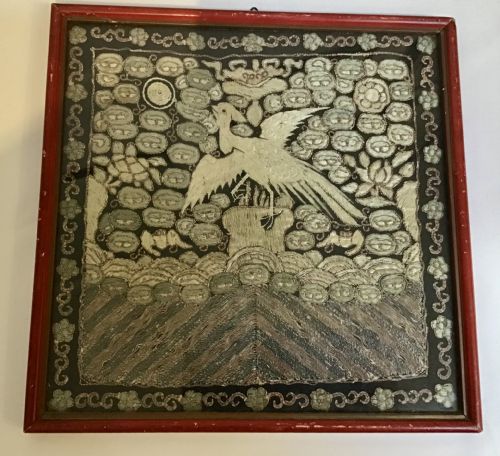
The pieces you meet most often on this page originate from the nineteenth and early twentieth centuries, spanning the Qing dynasty and subsequent traditional Chinese styles. They take the form of embroidered panels, rank badges, child's robes, and carved hardwood trays or table screens.
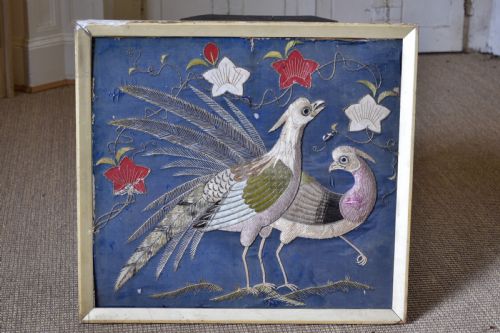
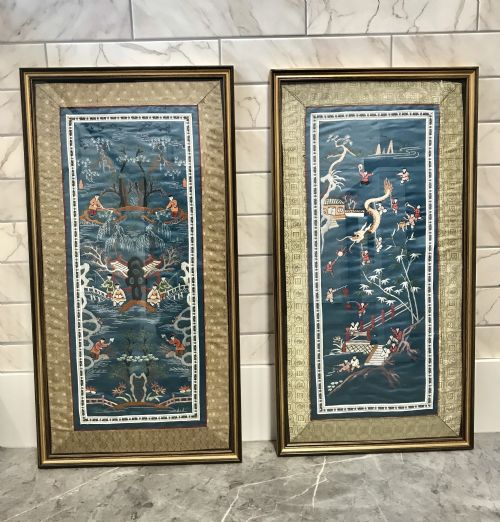
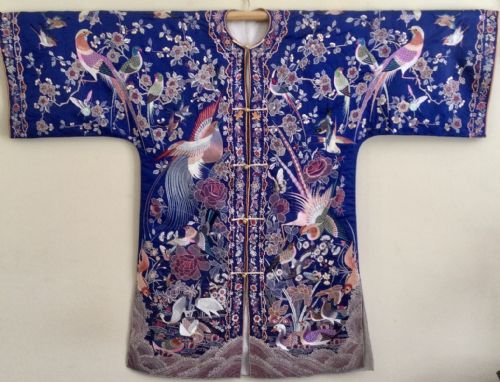
Makers utilised fine silk and metallic thread to create detailed scenes featuring figures, dragons, trees, and flowers. Garden birds and mandarin ducks also appear frequently, capturing traditional motifs within secure frames of wood or gilt wood.
Methods and materials
Artisans combined delicate silk threads with shimmering metallic thread, hand sewing intricate designs directly onto silk grounds. This needlework required immense precision to render complex subjects like figures, dragons, and foliage.
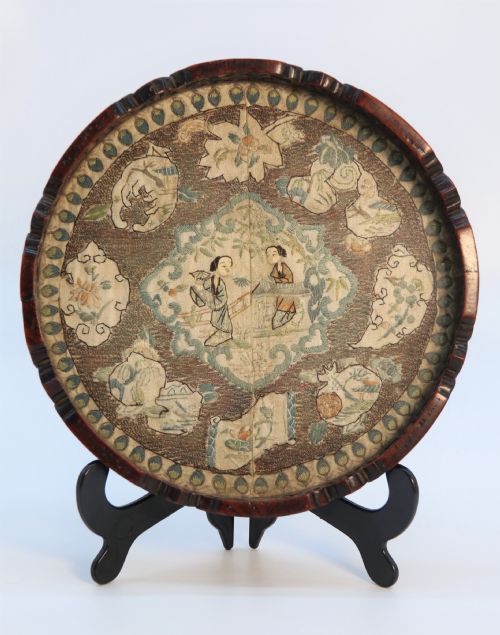
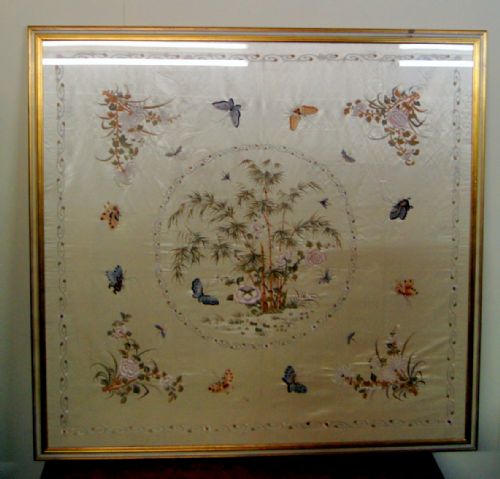
Many of these textiles found protection behind glass, set within custom wooden frames, carved hardwood trays, or structured table screens. These housings preserved the fragile stitches from dust and handling over generations.
Current listings feature pieces spanning the nineteenth and early twentieth centuries, utilising silk, glass, wood, and metallic thread.
Distinctions in quality
Quality rests upon the intricacy of the hand sewing and the complexity of the composition. Pieces executed to the highest standard display exceptionally fine stitches that render realistic feather details, floral petals, and facial expressions with remarkable clarity.
The physical setting contributes significantly to the overall merit of a piece. Finer examples feature intricately carved hardwood stands or robust gilt wood frames that complement the textile art rather than simply enclosing it.
The Framed Chinese Silk Embroidery Glossary
- Silk
- A natural protein fibre spun by silkworms, forming the foundational fabric and thread for these detailed needlework compositions.
- Metallic thread
- A specialised thread incorporating thin strips of metal or metal-wrapped cores, utilised to add shimmer and status to imperial or formal garments.
- Rank badge
- A square embroidered patch worn by officials during the Qing dynasty to denote civil or military rank, often repurposed later as framed wall art.
- Table screen
- A decorative panel supported by a carved stand, designed to sit on a desk or table rather than hang upon a wall.
Framed Chinese Silk Embroidery: Frequently Asked Questions
What subjects appear on these embroideries?
Needlework from this tradition frequently depicts natural elements and symbolic creatures. Common subjects include garden birds, mandarin ducks, dragons, trees, and flowers.
Human figures also feature in various scenes, capturing narrative moments or courtly life. These motifs carried deep cultural significance during the Qing dynasty and later periods.
How were these textiles originally displayed?
Many textiles served as functional garments or insignia before finding new life as decorative objects. Items like rank badges and robes were often worn to display social standing.
Over time, makers mounted these panels behind glass or within carved hardwood frames and table screens to preserve and showcase the fine hand sewing.
How do I care for framed silk art?
Protect these pieces by keeping them away from direct sunlight, which can fade delicate silk and metallic threads. Maintaining a stable indoor environment prevents moisture damage to the fabric and wooden frames.
Cleaning should be handled with extreme care, avoiding chemical sprays or water. Dust the glass gently with a dry, soft cloth.
How can I tell the age of a piece?
Dating relies heavily on stylistic markers, materials, and framing techniques. Nineteenth-century examples often reflect Qing dynasty aesthetics through specific colour palettes and traditional motifs.
Examining the type of wood used in the frames or stands, along with the wear on the silk ground, helps establish the era of production.