
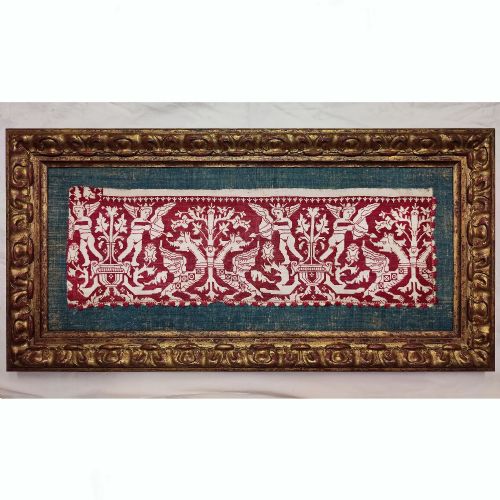


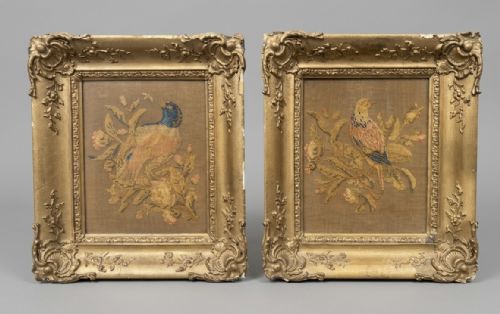


Gilt Framed Textile
These gilt framed textile pieces bring historic needlework and tapestry into domestic rooms with the bright lift of gold leaf.
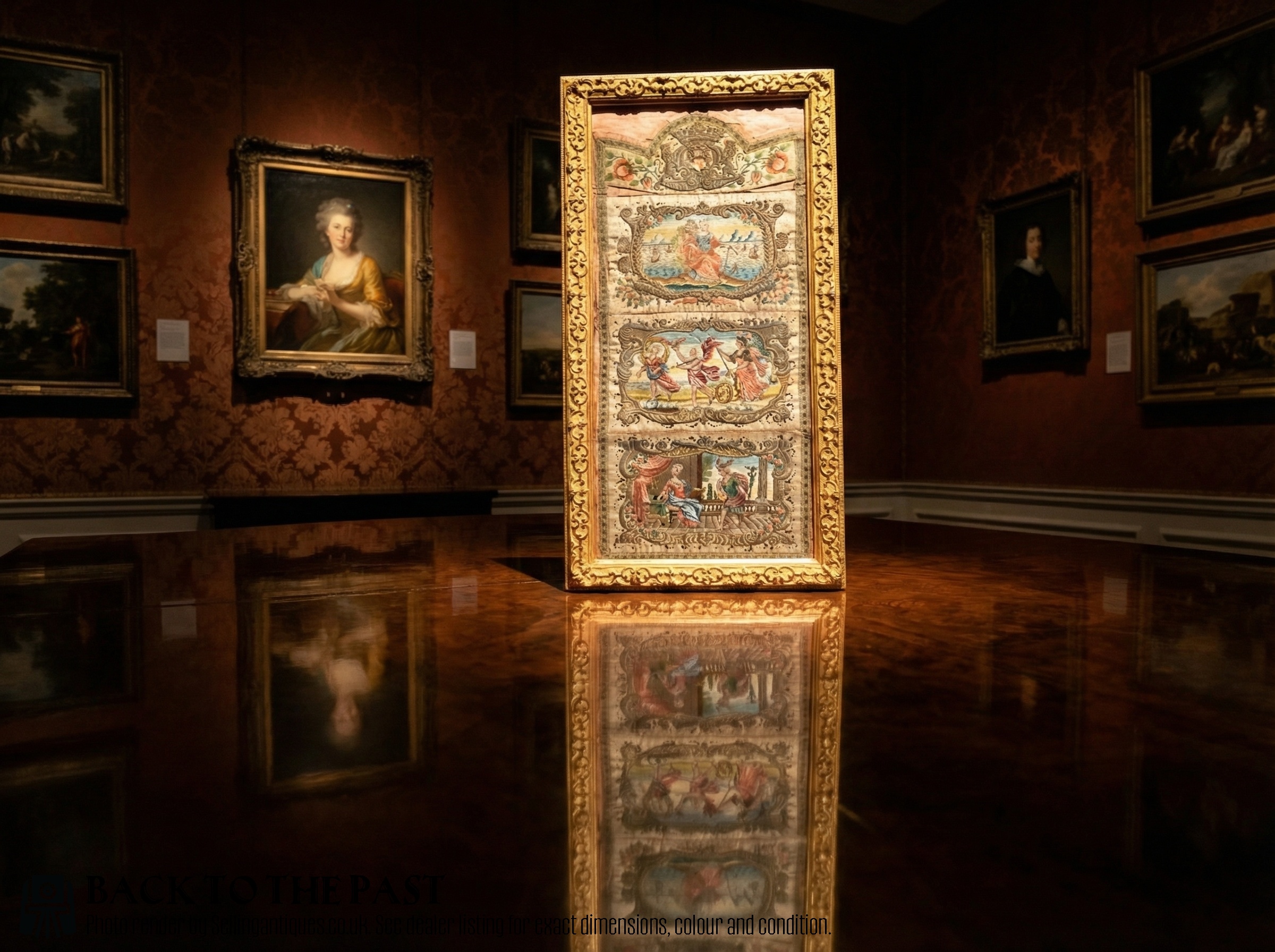
Gilt Framed Textile
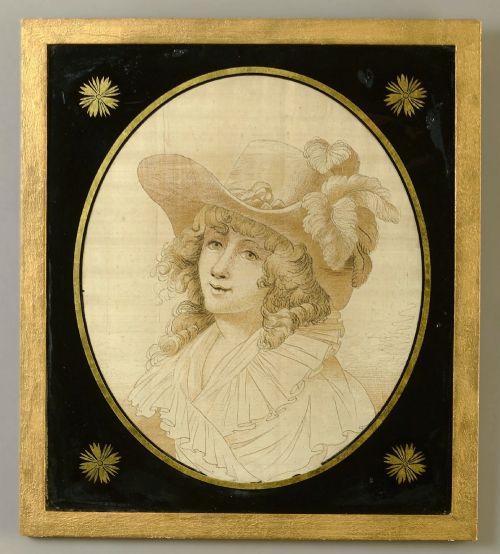
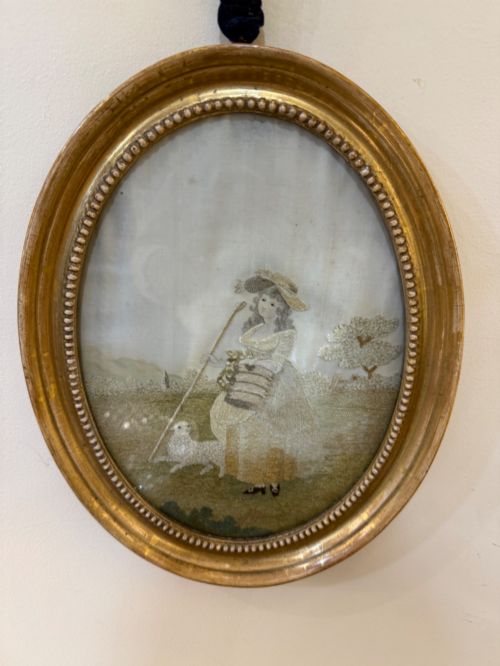
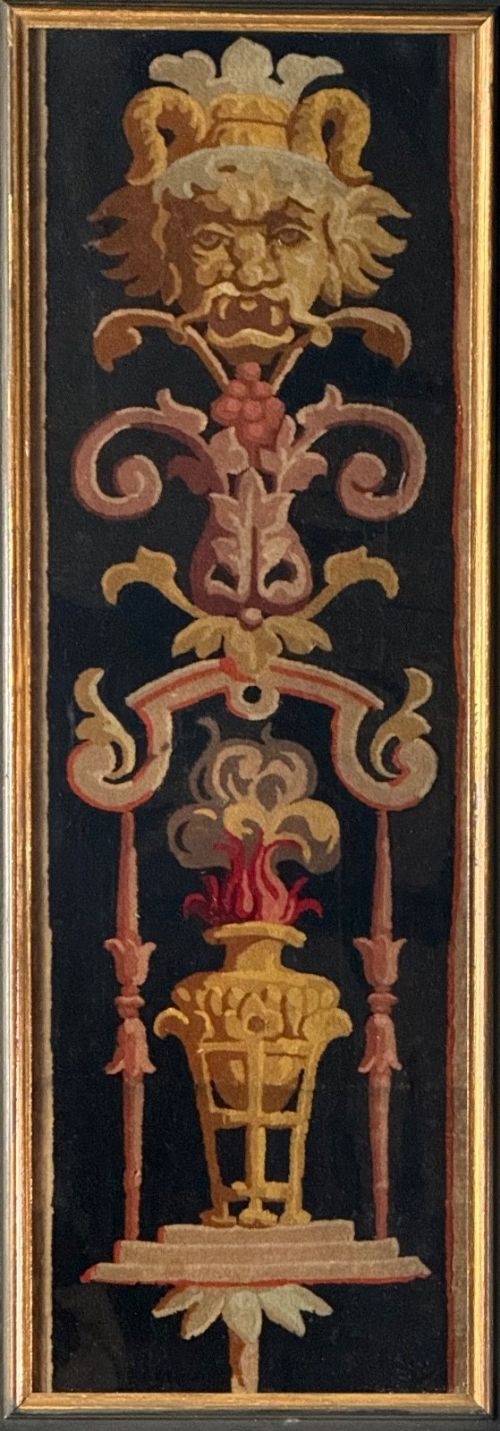
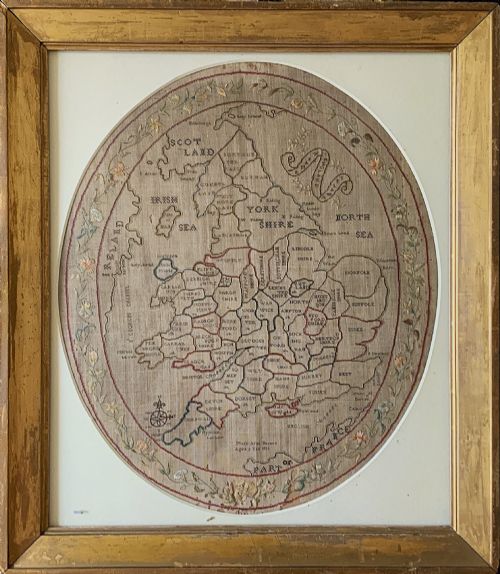
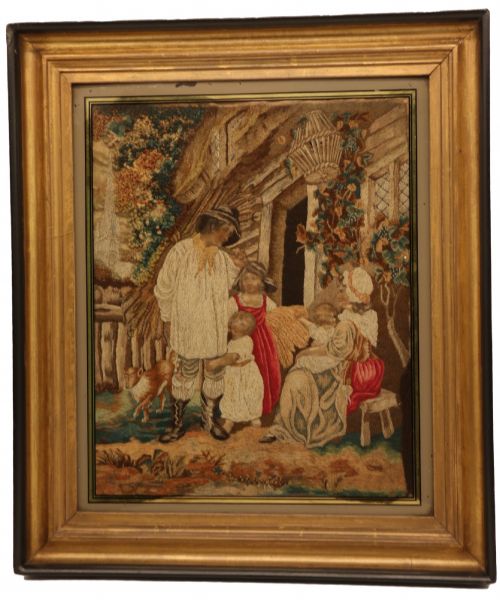
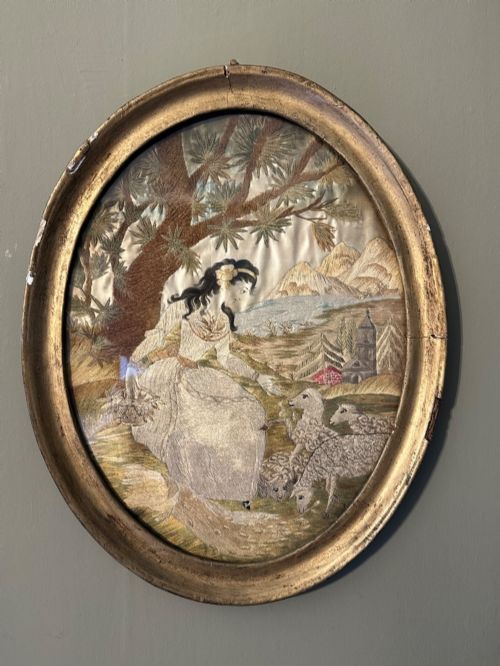
A gilt framed textile brings together historic needlework, embroidery, and tapestry encased behind glass within a gilded wooden border. When searching for a gilt framed textile, buyers encounter diverse forms ranging from eighteenth century silk portraits and map samplers to nineteenth century woolwork pictures and continental tapestries.
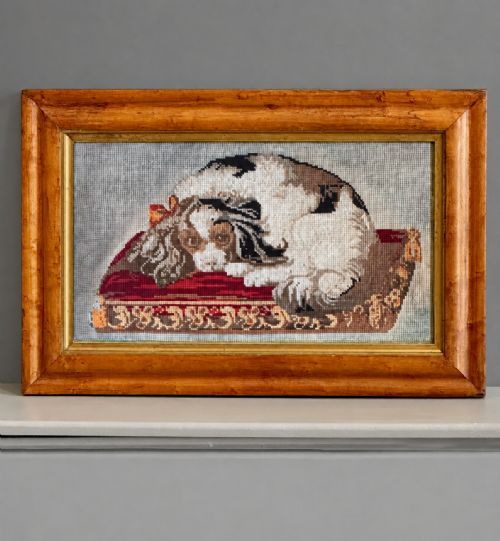
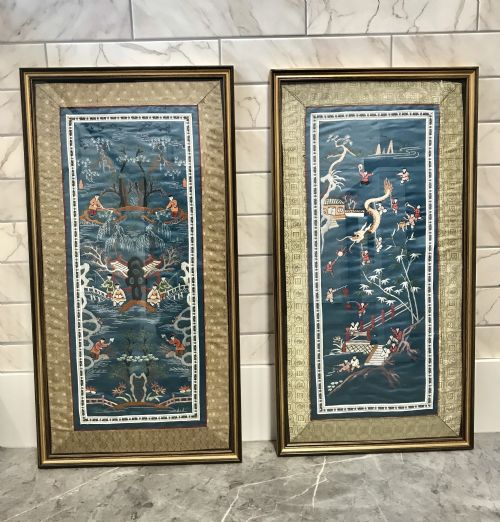
The selection spans centuries of handwork, drawing from Georgian, Victorian, and Regency eras alongside continental and Chinese workshops. Pieces vary from small domestic samplers stitched by young makers to large theatrical scenes and courtly maidens framed in burr maple or gilt wood.
How they were made
Needleworkers utilised silk, wool, linen, and metal thread on fine grounds, employing stitches such as Berlin work, crewel work, and beadwork. Hand painted details occasionally combined with silk embroidery to form pastoral scenes and historical portraits.
Frames were carved from wood and finished with gold leaf, sometimes incorporating verre églomisé glass panels to protect the delicate textile beneath.
Listings feature textile art spanning from the seventeenth century through to the twentieth century, utilising silk, wool, and gold leaf.
What varies in quality
Quality rests in the precision of the needlework and the preservation of the fabric against fading or moth damage. Finer silk threads, complex stitch variations, and original period gilt wood frames elevate a piece above standard domestic samplers.
The relationship between the textile and its mount matters; original frames that complement the exact period of the embroidery hold greater integrity than later replacements.
Bela Balogh
The Gilt Framed Textile Glossary
- Sampler
- A piece of needlework produced as a demonstration or test of skill in various stitches, frequently featuring alphabets, numbers, or maps.
- Verre églomisé
- A process of applying cold gilding and painting on the rear side of glass, often used for decorative borders on picture frames.
- Berlin work
- A style of counted-thread embroidery popular in the nineteenth century, worked in wool from hand-coloured paper charts.
- Crewel work
- Embroidery executed using wool yarn on a plain-weave fabric like linen, known for scrolling floral and pastoral designs.
- Giltwood
- Wood that has been coated with a thin layer of gold leaf or powder, forming the bright surrounds typical of these framed pieces.
Gilt Framed Textile: Frequently Asked Questions
How do I date a sampler?
Dates often appear stitched directly into the fabric alongside the maker's name and age, as seen on pieces by young makers in school.
Stylistic cues in the border design and the framing materials help confirm the period when inscriptions are absent.
Were these always framed?
Most textile works required protection from dust and handling, so framing usually happened shortly after completion.
Original frames of gilt wood or burr maple help preserve the delicate silk and wool threads over the centuries.
How should I hang a silk picture?
Silk and wool textiles suffer permanent fading when exposed to direct sunlight, requiring placement on shaded interior walls.
Keeping them away from damp environments protects the organic threads and the wooden gilt frames from structural damage.
What is Berlin work?
Berlin work is a type of wool embroidery stitched onto canvas using coloured paper charts that originated in Germany.
It became immensely popular during the nineteenth century for producing brightly coloured animal and pastoral scenes.