



Chinese Table Screen
A chinese table screen brings disciplined focal balance to a room, combining carved hardwood and detailed panels in miniature.
Chinese Table Screen
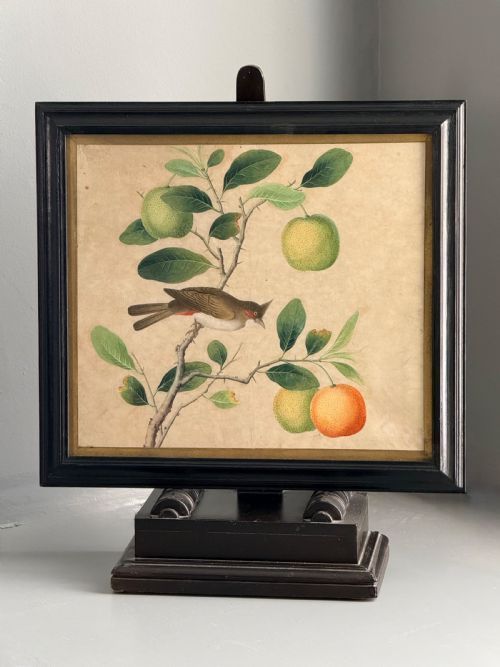
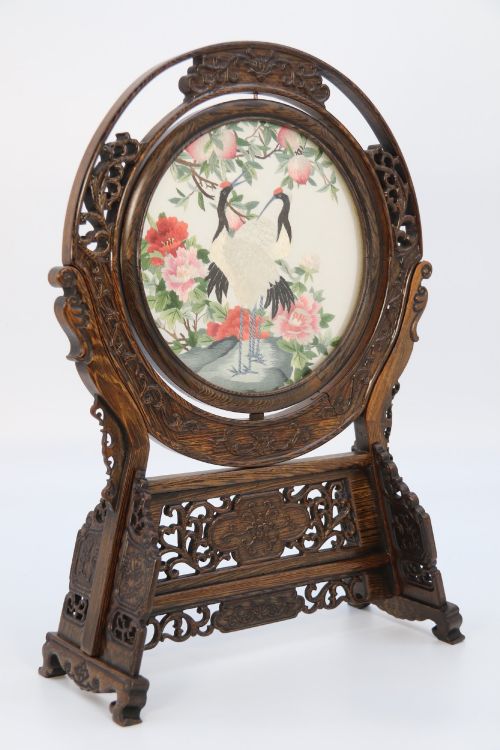
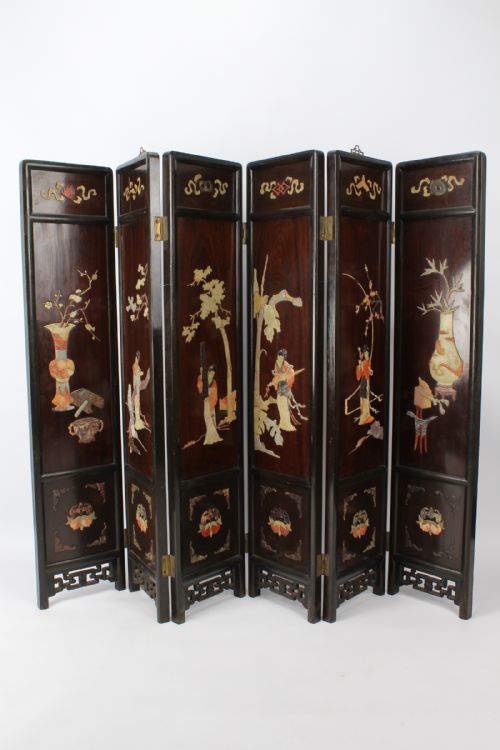
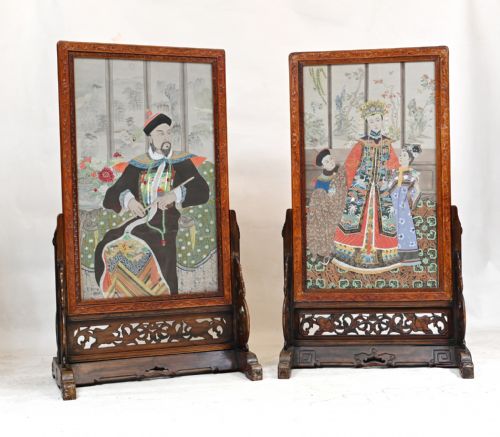
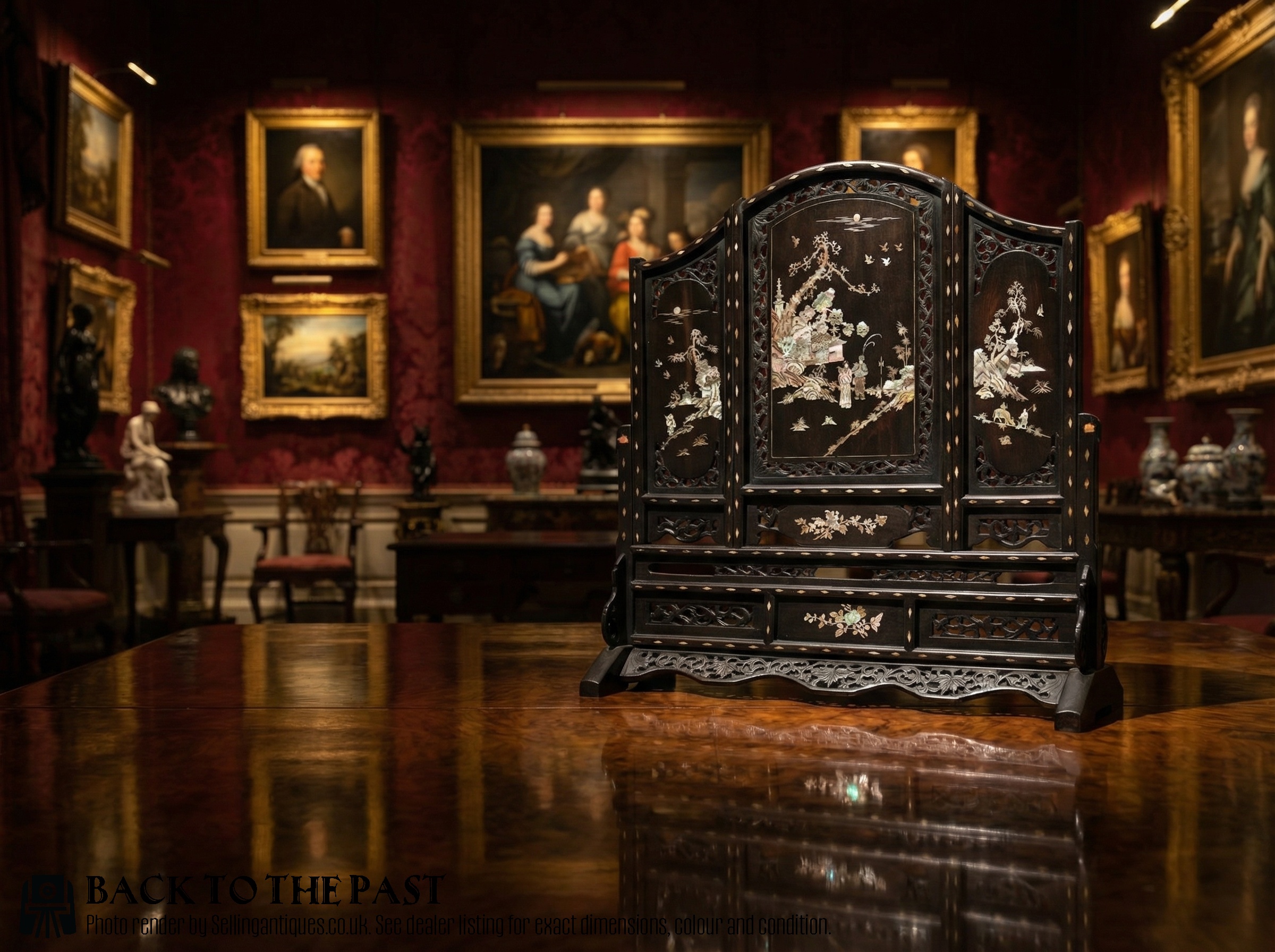
A chinese table screen sits on desks or side tables as a decorative object, taking forms from the 18th century through to the mid 20th century. You encounter hardwood frames holding panels of silk embroidery, gouache on pith paper, soapstone, and mother of pearl.
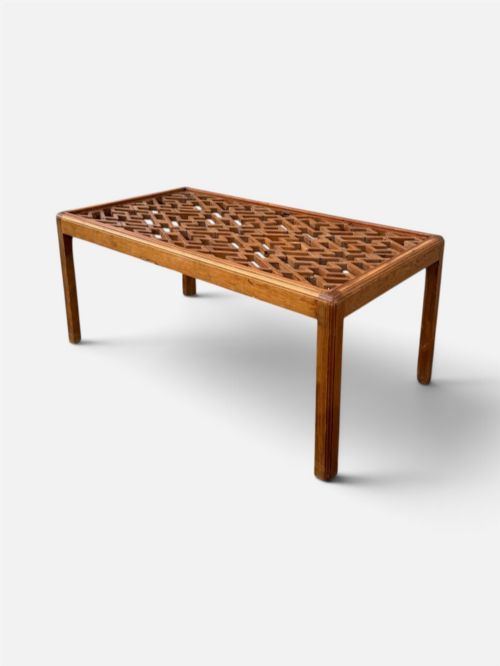
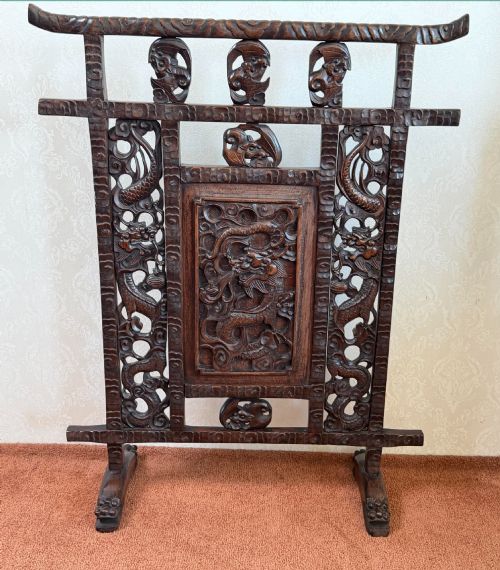
The objects on this page range from traditional table screens and rotating display stands to converted coffee tables and fire screens. Many pieces show the Qing dynasty influence or Chinese export style, alongside Republic period examples.
Hardwood is the dominant material for the stands and frames, often paired with glass, brass, and woven silk. Some pieces arrive as double-sided items mounted for rotation, while others present flat artwork or carved panels.
Materials and Construction
Carved hardwood forms the structural backbone for these screens, paired with intricate fretwork and mounted stands. Artisans worked dense timber to support delicate inserts without losing structural balance.
Panels utilise diverse artistic mediums, featuring hand-woven silk embroidery, gouache painting on pith paper, and carved soapstone or mother of pearl. These panels slot securely into channeled wooden frames or rotating axes.
Chinese Table Screen Retail Price Guide 2026
Typical asking prices for chinese table screen among the pieces listed under this phrase on Sellingantiques today, from the lower quarter to the upper quarter. They describe what is for sale here now, not the wider market.
The listings span multiple centuries, recording pieces from the 18th century, the 19th century, and through to the 1950s.
Judging Quality
The refinement of the woodwork dictates much of the quality, separating crisp, deep hand-carving from softer or machine-cut joinery. Superior stands show careful attention to proportions and tight joints on rotating axes.
Panel execution defines the upper tier, where needlework density in silk or precision in soapstone carving displays distinct artistry. Material purity, such as the clarity of glass or grade of hardwood, elevates the piece.
The Chinese Table Screen Glossary
- Pith paper
- A delicate material made from the pith of the tetrapanax papyrifer plant, commonly used for gouache paintings in the 18th and 19th centuries. It has a velvet-like texture that absorbs water-based pigments uniquely.
- Qing dynasty
- The final imperial dynasty of China, lasting from 1644 until 1912. Objects from this period frequently display formal traditional motifs and refined craftsmanship.
- Gouache
- An opaque water-based pigment used historically on pith paper and silk panels. It provides dense, flat areas of colour that retain their vibrancy over centuries.
- Fretwork
- Ornamental geometric openwork carved directly into wood panels or frames. This technique creates a light, patterned screen effect while maintaining the strength of the timber.
- Soapstone
- A talc-schist rock that is soft and easy to carve, frequently utilised for detailed sculptural panels and figures on screens. Its soapy texture allows for smooth, tactile surfaces.
Chinese Table Screen: Frequently Asked Questions
What is a chinese table screen?
A chinese table screen is a decorative desktop or tabletop object featuring a framed panel supported by a carved wooden stand. These pieces historically served both aesthetic and symbolic functions in scholar's studios and reception rooms.
Today, they function as sculptural interior objects, bringing traditional craftsmanship and textured materials like silk and hardwood into modern room schemes.
How were table screens used?
Originally placed on desks or tables, they blocked drafts, provided privacy, or served as backdrops for scholars and officials. Their miniature scale allowed them to mimic large architectural screen walls in a domestic setting.
Collectors now display them on sideboards, tables, or mantelpieces where both sides of the screen can be admired.
How do I date a table screen?
Dating relies on examining the timber species, the style of the carving, and the medium of the central panel. Qing dynasty and 18th-century pieces often show deeper patination and specific traditional motifs compared to 20th-century examples.
Secondary evidence such as mounting techniques, fasteners, and the condition of silk or pith paper panels also helps establish the era of manufacture.
Are all screens double-sided?
Not all screens feature decoration on both sides, though rotating stands typically showcase embroidered or painted scenes on front and back. Fixed panels frequently display finished artwork on the primary face only.
Examining the mounting hardware reveals whether a screen was engineered to swivel on a central axis or remain stationary within its base.
How do I care for silk panels?
Silk and pith paper panels require protection from direct sunlight to prevent fading and degradation of natural fibres. Keeping them away from excessive moisture and fluctuating humidity preserves the textile elements.
Dusting should be done gently with a soft brush, avoiding any liquids or chemical cleaning agents on fragile painted or embroidered surfaces.