



Chinese Relief Carved Panel
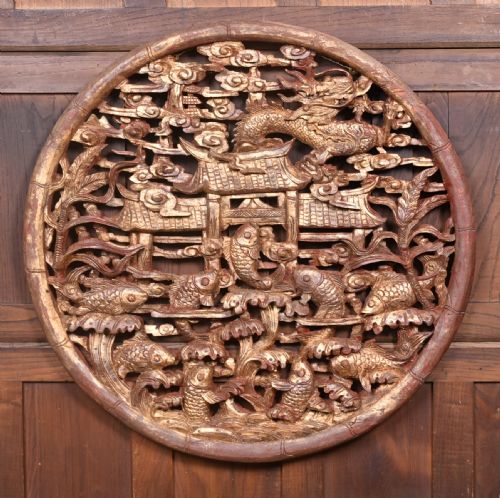
A chinese relief carved panel brings depth and historical narrative to an interior through meticulous hand-carvings of wood, lacquer, or stone.
Chinese Relief Carved Panel
A chinese relief carved panel is a decorative element originating from traditions spanning the Ming and Qing dynasties through the Victorian era.
Buyers encountering this search phrase most frequently find wooden wall plaques, temple panels, and decorative screens dating from the nineteenth century.
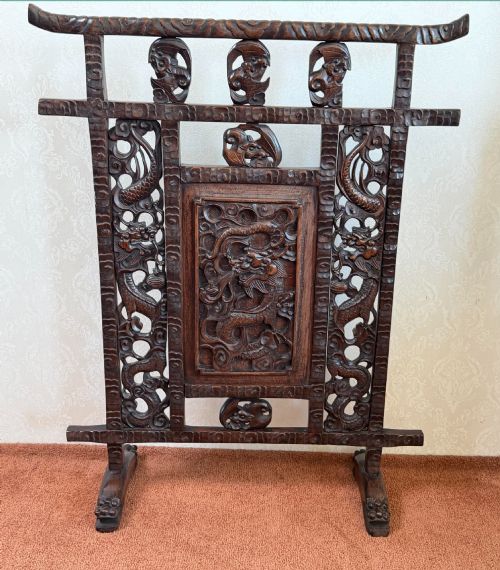
These items function primarily as architectural salvage or wall art, utilising traditional motifs such as dragons and scholar's themes.
Materials and Construction
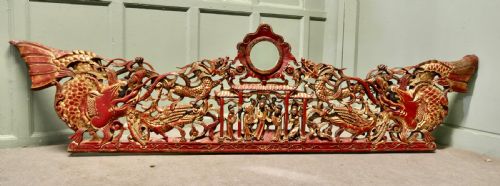
Artisans constructed these works using dense hardwoods and softer woods, frequently applying layers of lacquer or gold leaf to enhance the carved surfaces.
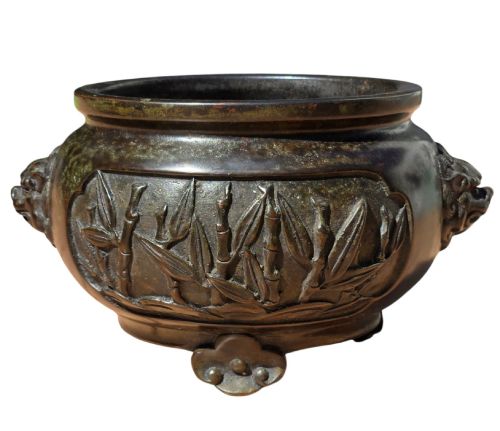
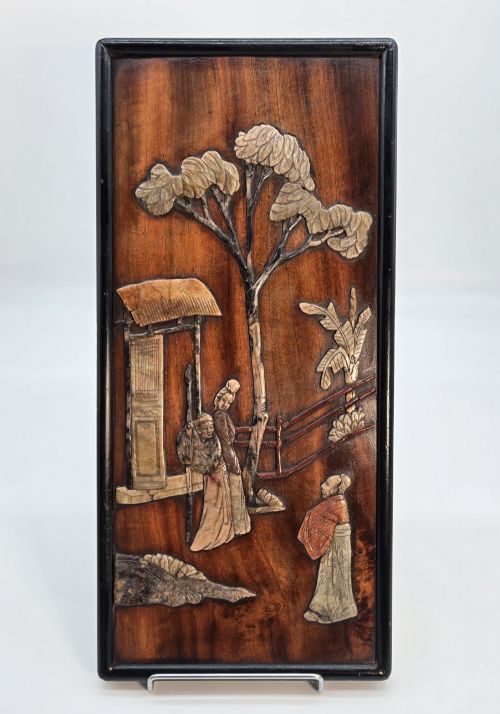
Relief techniques involved chiselling deep pictorial scenes into the timber, sometimes incorporating bronze elements or stone inlays for contrasting texture.
Listings span from the late sixteenth-century Ming period through to the early twentieth century, featuring hardwood, softwood, lacquer, and gold leaf.
Assessing Quality
Quality rests upon the crispness of the chisel work and the depth of the relief, distinguishing master carvers from standard regional production.
The preservation of original gilding and lacquer surfaces dictates the visual integrity and historical fidelity of each piece.
The Chinese Relief Carved Panel Glossary
- Relief
- A sculptural technique where elements remain attached to a solid background of the same material. It creates dimensionality on flat plaques and screens.
- Gilt Wood
- Timber treated with gold leaf or gold paint. This finish catches the light and denotes decorative importance.
- Qing Dynasty
- The last imperial dynasty of China, spanning from the seventeenth to the early twentieth century. Many surviving panels date from this prolonged era of craftsmanship.
- Ming Dynasty
- The ruling dynasty preceding the Qing, known for scholarly bronzes and early carved forms. Pieces from this period exhibit distinct archaic restraint.
Chinese Relief Carved Panel: Frequently Asked Questions
How were chinese relief carved panels used?
These panels originally served as architectural elements within temples, residential screens, and furniture inlays. They defined interior spaces and displayed cultural narratives.
Today, collectors mount them as wall art or display them as standalone decorative plaques within contemporary and traditional rooms.
What woods are typically found in these panels?
Carpenters utilised various regional timbers, ranging from durable hardwoods to softer woods depending on the intended function and status of the commission.
Surface treatments such as lacquer, gilding, or bronze accents frequently covered the underlying wood to protect the material and enrich the visual depth.
How do I date a carved wooden panel?
Dating relies on stylistic clues, tool marks left by the carver, and the wear patterns on lacquer or gold leaf finishes. Reference points include dynastic periods.
Examining the back of the panel and the construction joints provides further insight into the manufacturing era and regional workshop practices.
Can these wall plaques be hung easily?
Most panels arrive as architectural remnants or dedicated wall art designed for display. Custom hanging brackets suited to their weight are usually required.
Professional framing or mounting ensures the antique wood remains secure without causing structural stress to the carved surface.