


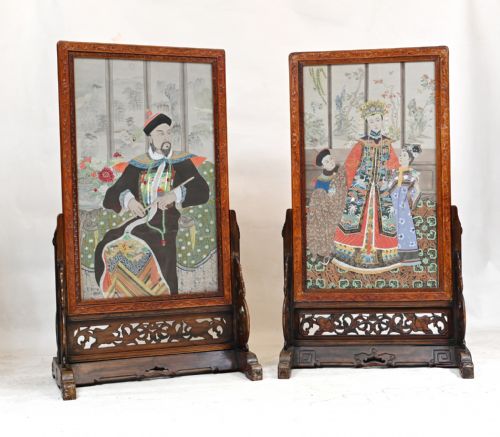


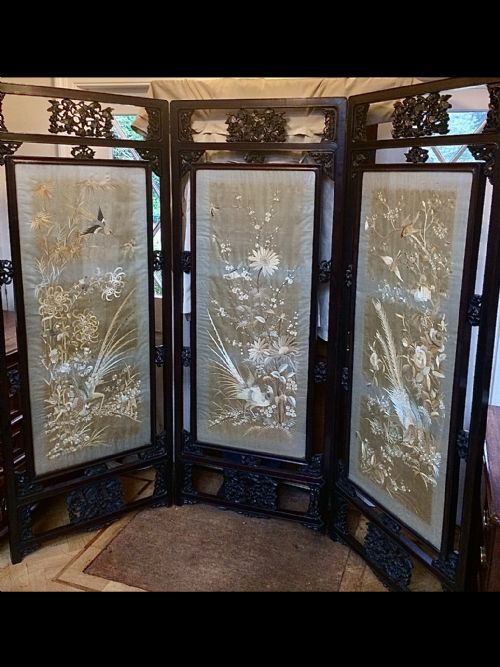


Carved Hardwood Screen
These carved hardwood screen examples range from intricate rotating table models to large room dividers, combining dense timber with silk embroidery, bone inlay, and brass.
Carved Hardwood Screen
A carved hardwood screen serves either as a substantial room divider with multiple folding panels or as a smaller table screen designed for display on surfaces rather than partitions.
The pieces appearing here span table screens, folding screens, firescreens, and room dividers originating predominantly from Chinese, Indian, Japanese, and Burmese workshops.
Examples frequently combine the wooden framework with silk embroidery, bone, glass, brass, or mother-of-pearl to create decorative panels suited to domestic interiors.
How they were made
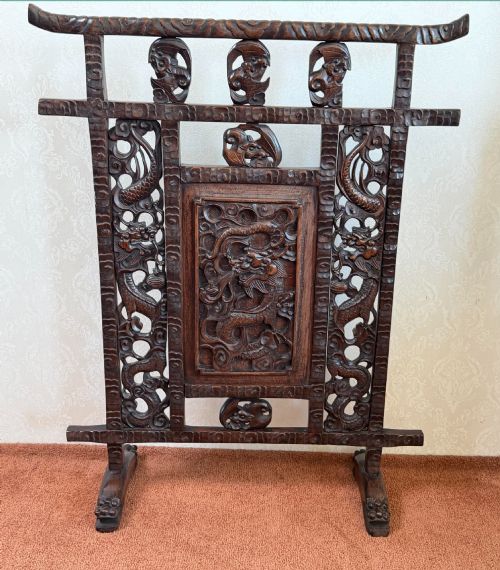
Artisans constructed the structural frames from dense timbers such as teak and padauk, executing deep relief carving depicting dragons, foliage, and traditional motifs.
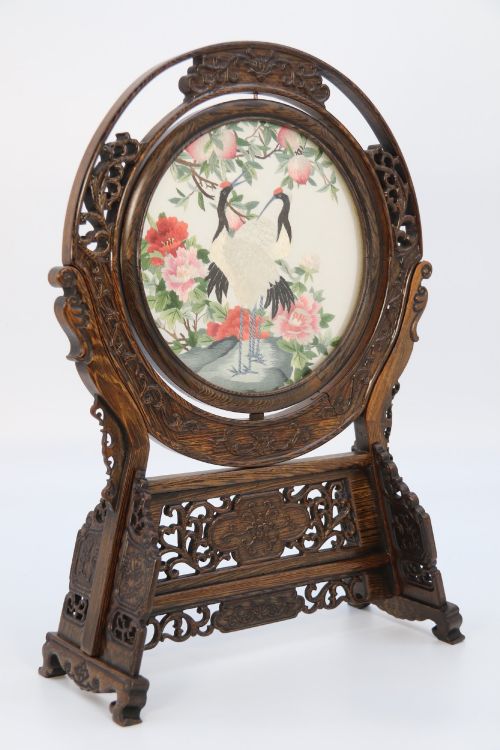
Many items incorporate delicate textile elements, utilising double-sided silk embroidery or woven silk panels fitted securely within the carved wooden surrounds.
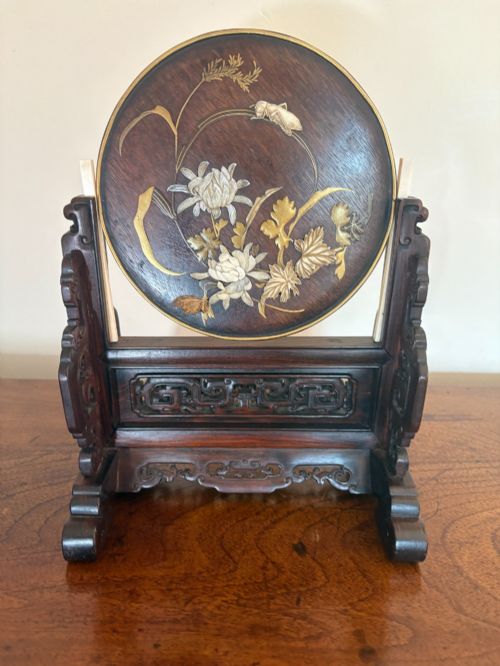
Decorative surface enrichment often includes inlay work using bone, mother-of-pearl, and brass wire to accentuate the natural grain and dark tones of the hardwood.
Several items double as rotating displays, letting you spin your silk embroidery whenever the mood strikes.
What varies in quality
The depth and crispness of the wood carving dictate the visual impact, where sharper undercut details and balanced symmetry separate superior examples from simpler production.
Integration of secondary materials like hand-embroidered silk panels or precise bone and mother-of-pearl inlays indicates the degree of specialised labour invested in the piece.
The Carved Hardwood Screen Glossary
- Table screen
- A small decorative panel mounted on a rotating or fixed stand, traditionally placed on a desk or table.
- Mashrabiya
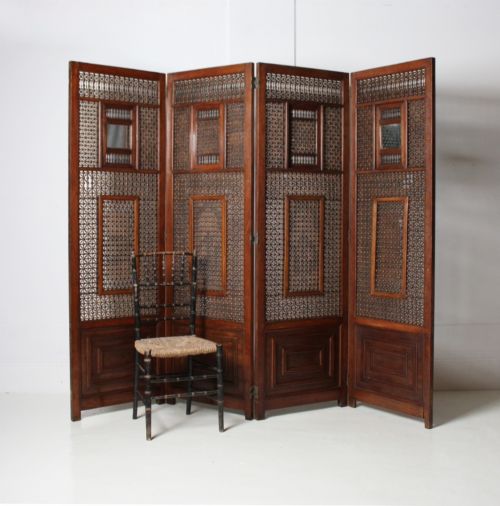
- An architectural element adapted into folding screens, formed from interconnected wooden turnings to create intricate geometric lattices.
- Shibayama
- A Japanese decorative technique applying inlaid materials such as bone and mother-of-pearl to form pictorial scenes on a wood ground.
- Padauk
- A heavy, durable tropical hardwood prized for its reddish-brown colour and stability in carved furniture.
- Firescreen
- A decorative freestanding panel placed in front of a fireplace when not in use to block unappealing hearth views.
Carved Hardwood Screen: Frequently Asked Questions
What is the difference between table screens and room dividers?
Table screens are compact items designed to sit on desks, cabinets, or altars, often featuring rotating stands and detailed silk panels or stone inserts.
Room dividers are much larger folding structures composed of multiple hinged panels intended to partition interior spaces or create privacy.
How do I care for a carved hardwood screen?
Keep the wood conditioned by avoiding direct sunlight and maintaining stable room humidity to prevent splitting in the dense timber.
Dust intricate carvings gently with a soft brush and protect inlaid silk or bone elements from moisture.
Where were these screens made?
The examples originate primarily from East and South Asian workshops, including traditional Chinese, Japanese Meiji period, and Anglo-Indian production.
Each regional style brings distinct carving motifs, from fierce dragons to geometric lattice patterns.
What materials are combined with the wood?
Carved frames frequently house double-sided silk embroidery, woven textiles, or glass panels protected within the wooden structure.
Many incorporate decorative inlays of bone, mother-of-pearl, and brass to add contrast and texture to the dark timber.