





Dark Wood Room Divider
A dark wood room divider organises space with gravitas, bringing rich timber tones and centuries of craftsmanship straight to your interior.
Dark Wood Room Divider
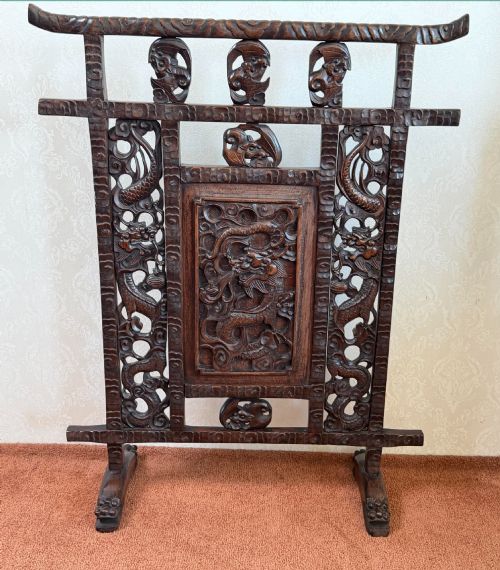
A dark wood room divider functions as both a decorative focal point and a practical partition within an interior space. These pieces emerge across periods spanning the nineteenth century through the early twentieth century, taking forms such as folding screens, fire screens, and table screens.
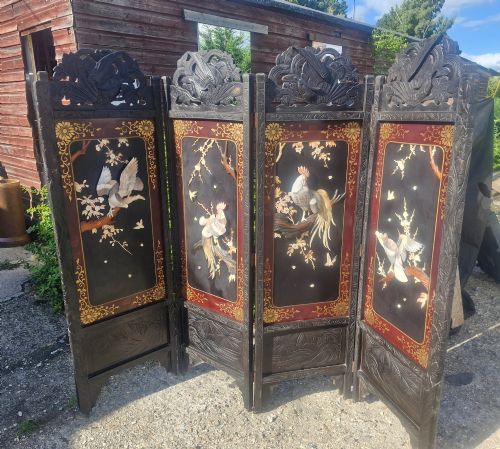
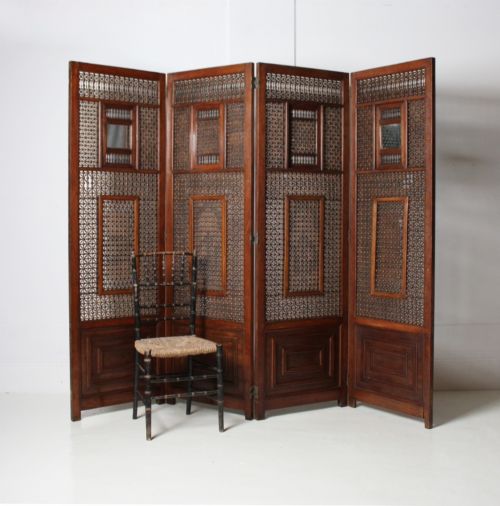
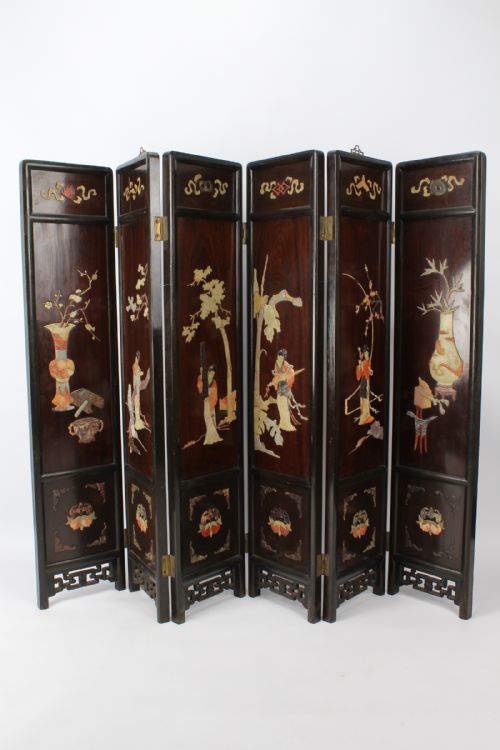
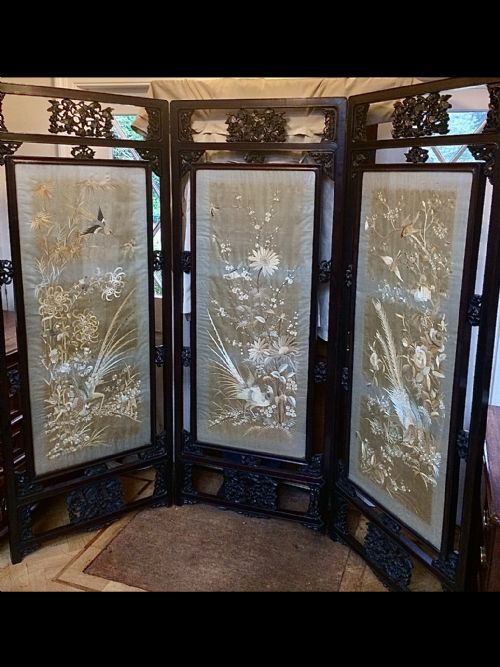
Buyers encountering this selection will find multi-panel screens constructed from dense timbers, featuring painted surfaces, carved bone figures, lacquer work, and fabric inserts. Origins range widely from English Regency workshops to Chinese Qing Dynasty pieces, Japanese Meiji examples, and Islamic Revival mashrabiya woodwork.
The configurations vary from three-fold up to five-fold designs, including fully reversible models and tall privacy screens. Each item reflects the distinct aesthetic of its origin, combining robust structural framing with intricate surface decoration.
Materials and construction
Makers utilised dense timbers such as mahogany and various hardwoods to build sturdy panel frames that could withstand repeated folding. These structural elements frequently incorporated brass hardware hinges to join multiple panels securely together.
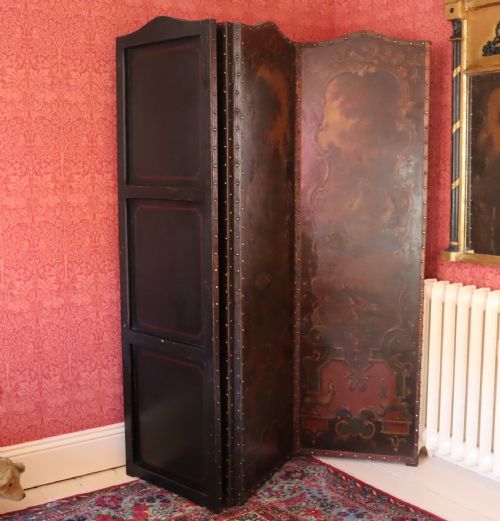
Surface decoration involved diverse artisanal techniques including deep bone carving, meticulous lacquering, and hand-painted artistry. Other examples integrated textiles such as needlepoint, silk, fabric, and leather panels held within the wooden framework.
Current listings feature materials including brass, hardwood, mahogany, lacquer, bone, fabric, teak, and leather.
Assessing quality and execution
The distinction between standard examples and superior pieces rests upon the depth and precision of the craftsmanship. Hand-carved bone figures, detailed lacquering, and complex joinery indicate a higher level of workshop output.
Material selection also dictates quality, particularly the density of the hardwood frame and the integrity of the integrated textiles or needlepoint. Fully reversible hinges and balanced multi-panel construction demonstrate superior functional design.
The Dark Wood Room Divider Glossary
- Mashrabiya
- A traditional Islamic architectural element utilising turned wooden lattices to form decorative screens. These panels provide partial light filtration and privacy.
- Meiji
- A Japanese historical period spanning from 1868 to 1912, noted for intricate craftsmanship including bone inlay and lacquer work.
- Qing Dynasty
- The final imperial dynasty of China, lasting from 1644 to 1911, associated with finely carved hardwood furniture and folding screens.
- Regency
- A British stylistic period dating from the early nineteenth century, characterised by classical restraint and elegant furniture proportions.
Dark Wood Room Divider: Frequently Asked Questions
How do I use a room divider?
A room divider creates distinct zones within an open-plan room, offering a flexible way to section off living or dining areas. They also serve as decorative backdrops against plain walls.
Position the panels at slight angles to ensure the screen stands stably on the floor. This arrangement supports the weight of multi-fold frames safely.
Are these screens fully reversible?
Some models feature fully reversible panels, allowing the screen to fold in multiple directions depending on your space requirements. Check the specific hardware and hinge construction of each piece.
Reversibility offers greater versatility in how you angle the panels within a room layout.
How do I care for hardwood and lacquer?
Dust the wooden framework regularly with a soft, dry cloth to prevent buildup in carved crevices. Keep lacquer and painted surfaces away from direct sunlight and excessive moisture.
Avoid using harsh chemical polishes that might damage historic finishes or delicate bone inlay.
What is a fire screen?
A fire screen is a smaller decorative panel traditionally placed in front of an unlit fireplace during warmer months. Antique examples often feature needlepoint, silk, or painted decoration.
They bring textural warmth to a hearth area while showcasing period textile and woodwork skills.