


Four Panel Room Divider
A four panel room divider gives you a flexible way to shape a large space while bringing rich colour and texture to the room.
Four Panel Room Divider
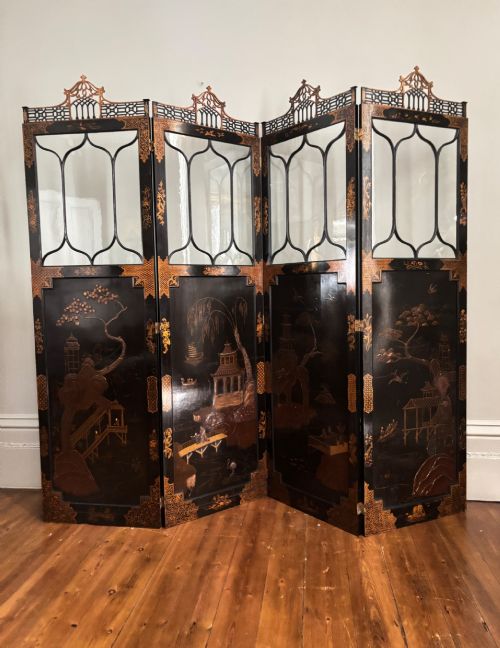
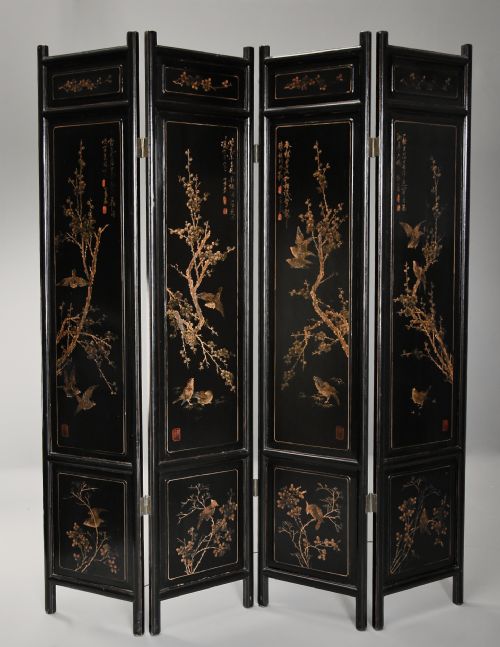
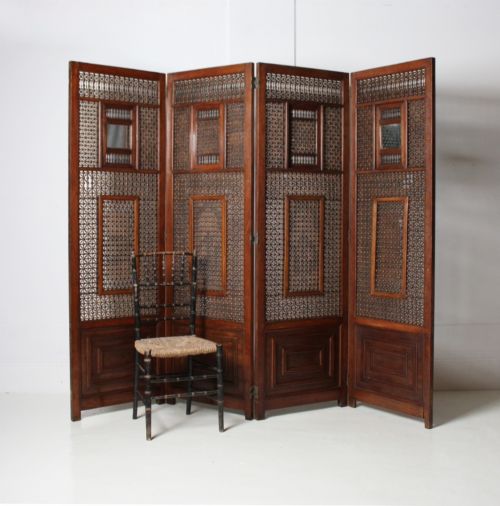
A four panel room divider is designed to partition spaces, block draughts or create privacy, taking the form of folding screens with four hinged leaves. You will most frequently encounter nineteenth century and early twentieth century examples on this page, spanning styles from Victorian and Edwardian to Chinoiserie and Arts and Crafts.
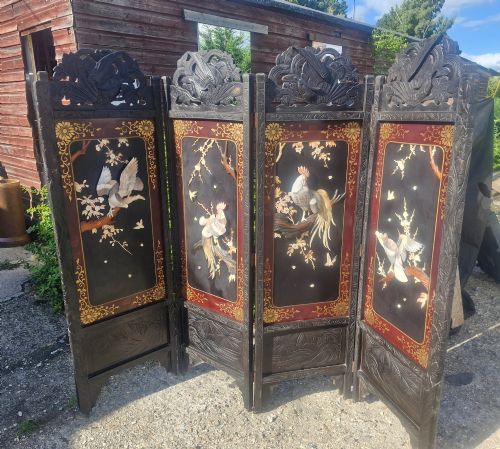
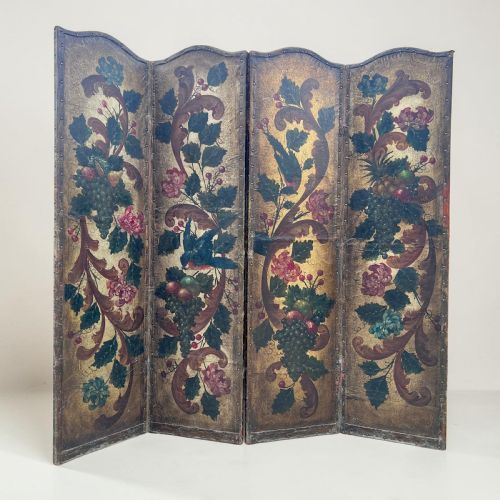
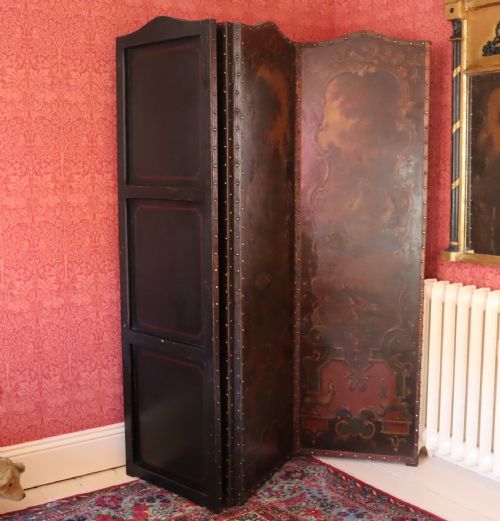
Makers utilised various traditional formats, ranging from country house painted canvas and needlepoint to carved hardwood and lacquered panels. The selection includes tall dressing screens and photographic props alongside architectural folding partitions.
Origins stretch from English workshops and French ateliers to Dutch and Oriental centres, reflecting global trade and diverse decorative tastes over several centuries.
Materials and construction
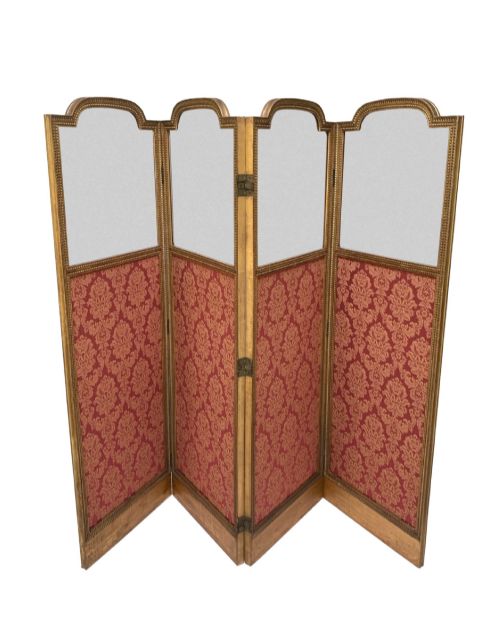
Makers constructed the primary framework from timbers such as mahogany, oak, walnut, satinwood and ebonised hardwood, joined with hinges to allow multi-directional folding. Panels were then filled with stretched canvas, leather, silk, cotton, paper mache or glass.
Surface decoration involved hand painting, polychrome or gilt embossing, needlepoint, and detailed carving in bone, hardstone or wood, particularly in Japanese and Chinese lacquer pieces.
Four Panel Room Divider Retail Price Guide 2026
Typical asking prices for four panel room divider among the pieces listed under this phrase on Sellingantiques today, from the lower quarter to the upper quarter. They describe what is for sale here now, not the wider market.
The site records diverse styles including Chinoiserie, French Chateau, Regency, Arts and Crafts, and Chinese Chippendale.
Judgement of quality
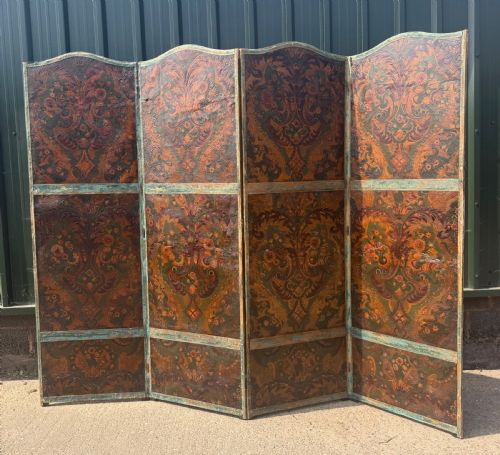
Quality rests upon the depth of the initial handwork, distinguishing mass-produced items from finely carved bone, deep lacquer work, or hand-painted Dutch and Cordoban leather. The integrity of the original hinges and the stability of the timber frame also determine the standing of a piece.
Artisanal execution dictates the value, seen in the precision of fretwork, the richness of gilding, and the preservation of delicate textiles or scrap work panels.
Paul Sormani·William Morris
The Four Panel Room Divider Glossary
- Chinoiserie
- European decorative style inspired by Chinese artistic traditions, featuring motifs of landscapes, figures and pavilions often rendered in lacquer and gilt.
- Cordoban leather
- Embossed, painted and gilded leather originating from Spain, utilised for luxury wall hangings and folding screen panels.
- Mashrabiya
- An architectural wooden lattice screen traditionally found in Islamic architecture, providing ventilation and privacy.
- Scrap work
- A Victorian craft technique where printed paper scraps were arranged and glued onto a surface before being varnished.
- Coromandel
- Chinese carved lacquerware where incisions are filled with colour on a dark ground, popular in export screens.
Four Panel Room Divider: Frequently Asked Questions
How do I care for leather or lacquer screens?
Keep painted lacquer and leather panels away from direct sunlight and strong heat sources to prevent cracking or fading over time.
Dust gently with a dry microfibre cloth and avoid using liquid cleaners or polishes on antique surfaces.
Were these screens meant for large rooms?
Many nineteenth-century country house screens were built with tall, wide panels designed to block draughts in high-ceilinged drawing rooms and grand halls.
Smaller dressing screens were intended for intimate domestic chambers and bedrooms.
How can I tell a Victorian screen from an Edwardian one?
Victorian examples often favour heavy giltwood, dark lacquer, scrap work, or rich needlepoint, reflecting an opulent and eclectic aesthetic.
Edwardian pieces tend to utilise lighter woods like satinwood and walnut with more restrained decorative schemes.