
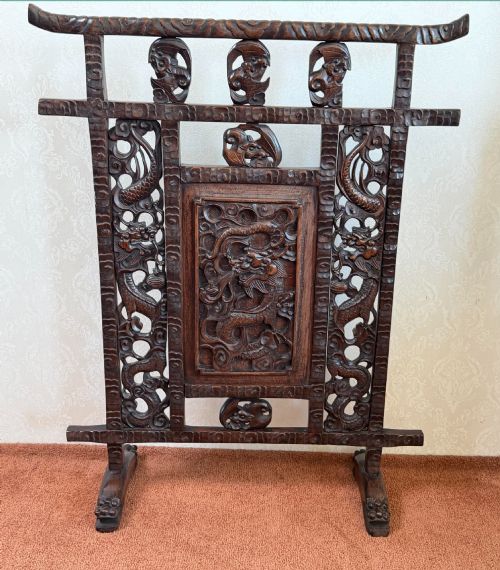
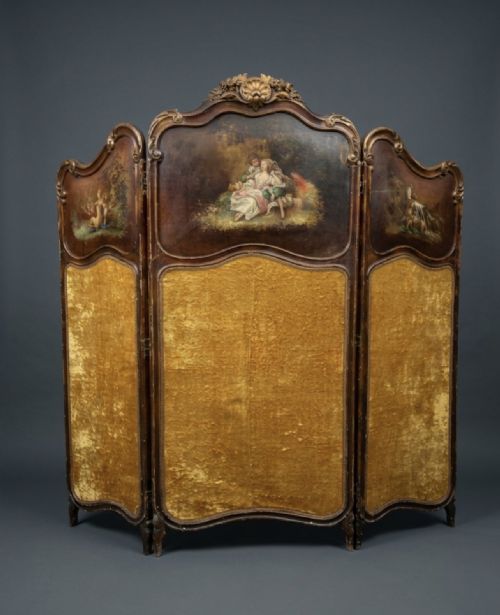
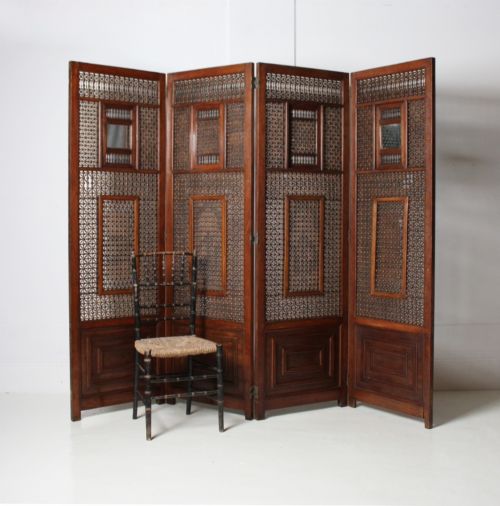
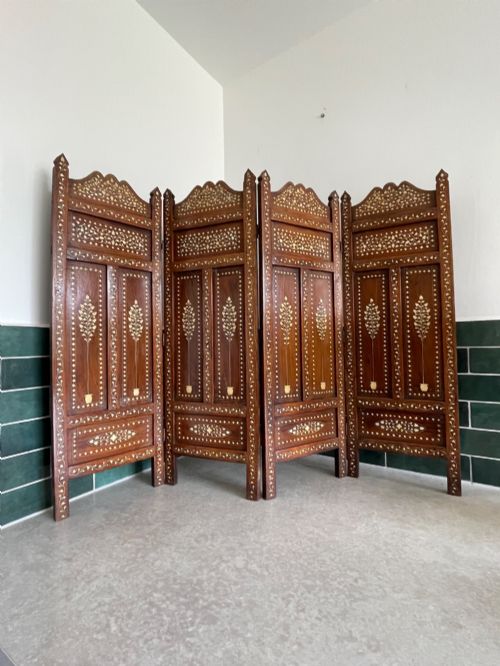

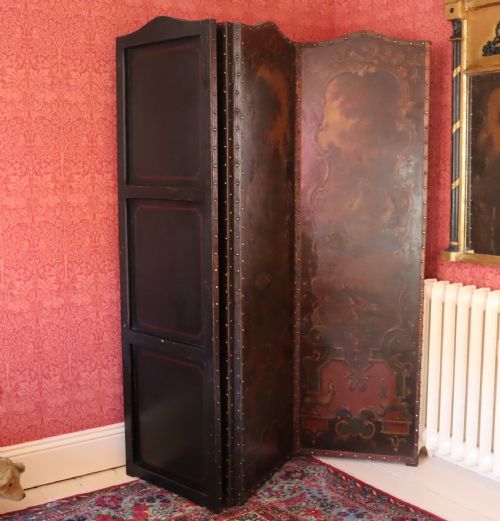


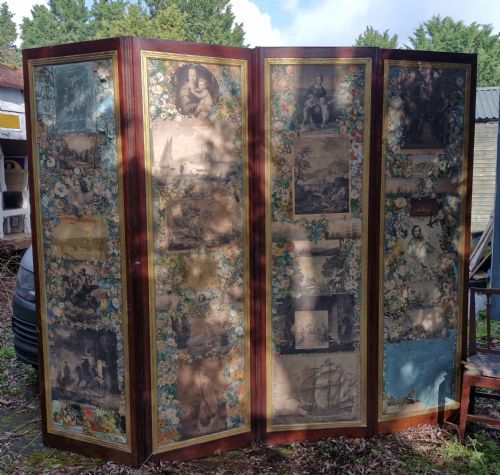


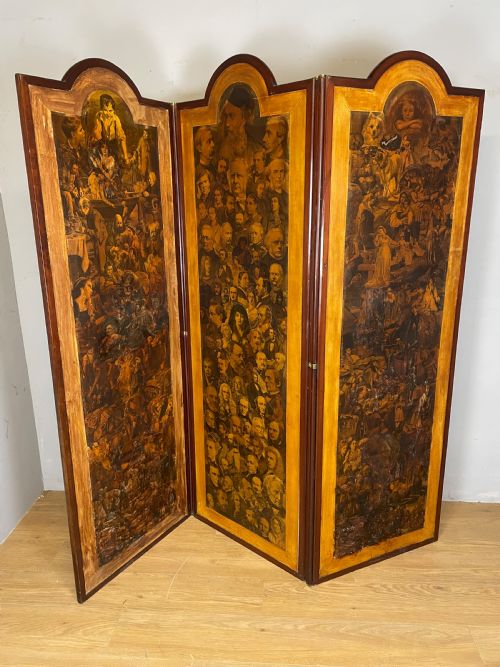
Brown Wood Room Divider
These brown wood room divider pieces offer clever ways to section off a corner or anchor a large interior with period character.
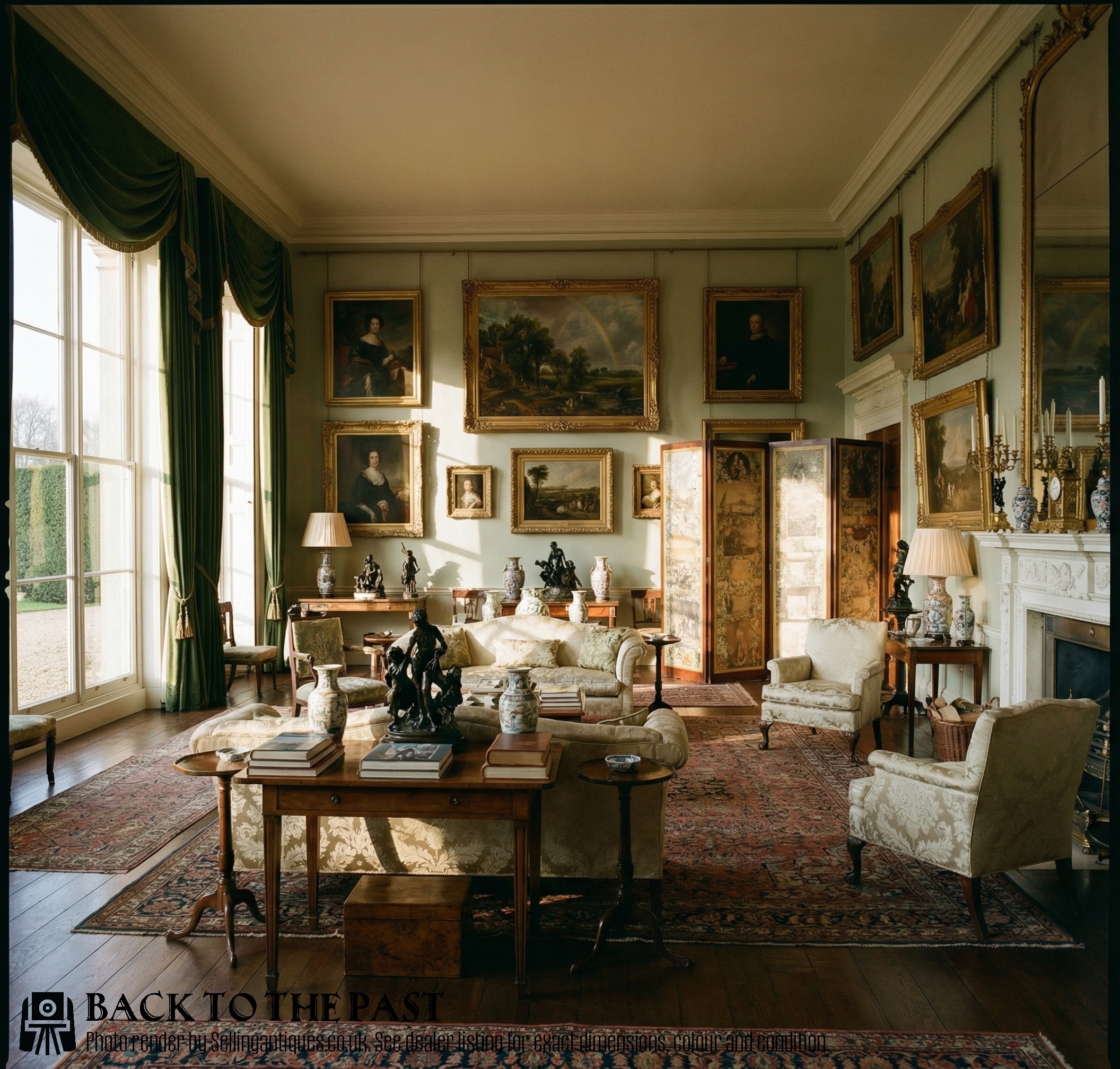
Brown Wood Room Divider
A brown wood room divider serves to partition living spaces or create private areas within a larger room, drawing on forms from the nineteenth century. These items appear across several distinct regional designs, from carved Asian hardwood panels to substantial English country house screens.
The selection on this page relies heavily on folding screens and multi-fold room dividers originating in the Victorian era and the late nineteenth century. Examples range from simple three-panel country house configurations to large four-fold privacy screens.
Buyers will also encounter smaller table screens alongside taller architectural room dividers. Many pieces incorporate decorative panels featuring painting, needlepoint, or fretwork alongside their primary wooden frames.
How they were made
Makers shaped these brown wood room divider items using dense timbers such as mahogany and various Asian hardwoods, often finished with varnish to protect the grain. Joiners constructed multi-fold panels with hinges to allow flexible movement across several sections.
Surface decoration required diverse craft traditions, combining carved wood and fretwork with oil paint, silk cotton, and paper elements. Some workshops applied intricate scrap work and decoupage directly onto the wooden framework.
Brown Wood Room Divider Retail Price Guide 2026
Typical asking prices for brown wood room divider among the pieces listed under this phrase on Sellingantiques today, from the lower quarter to the upper quarter. They describe what is for sale here now, not the wider market.
Some Victorian screens doubled as photographic props, capturing family memories behind elaborate painted and silk-backed panels.
What varies in quality
The standard of a brown wood room divider depends significantly on the depth and crispness of the carved wood details across the panels. Finer examples display meticulous fretwork and well-preserved painted or needlepoint surfaces rather than simple stamped or hurried decoration.
Structural integrity in the hinges and the weight of the timber dictate how steadily a multi-fold screen stands when extended. Heavier woods and robust joinery separate substantial country house pieces from lighter decorative props.
The Brown Wood Room Divider Glossary
- Mashrabiya
- A traditional wooden lattice screen or projecting window enclosed with carved wood bobbin work. It provides ventilation and privacy while filtering light through geometric patterns.
- Fretwork
- Ornamental design executed in wood by cutting with a fretsaw, creating openwork patterns. This technique appears frequently on nineteenth-century panels to lighten heavy timber frames.
- Scrap work
- A Victorian craft method involving the arrangement and gluing of decorative paper scraps onto a surface, often finished with a clear protective varnish. Screens decorated this way capture popular domestic pastimes of the period.
- Needlepoint
- Embroidery stitched on canvas to create dense pictorial or geometric surfaces. It often serves as the central decorative panel within nineteenth-century folding frames.
- Modesty screen
- A portable partition historically used to shield individuals from drafts or unwanted attention in large rooms. These pieces typically feature decorative fabric or painted panels.
Brown Wood Room Divider: Frequently Asked Questions
How do I use a brown wood room divider?
These screens work well to divide an open-plan living area, carve out a private dressing space in a bedroom, or simply hide a cluttered corner.
Because they fold, you can adjust the angle of the panels to fit the specific dimensions and light flow of your room.
Are these room dividers sturdy enough for daily use?
Most multi-fold screens built from nineteenth-century hardwoods are remarkably robust, though their stability depends on the weight of the timber and the condition of the hinges.
Positioning the panels in a zigzag rather than a straight line helps keep heavier screens securely upright during everyday movement.
What is the difference between a table screen and a room divider?
Table screens are smaller, portable decorative objects designed to sit on a desk, sideboard, or table rather than stand on the floor.
Room dividers are much taller architectural pieces built with multiple folding panels to partition floor space.