



Antique Draught Screen
An antique draught screen blocks the chill of a draughty room while dividing a space with painted leather, silk, or needlework.
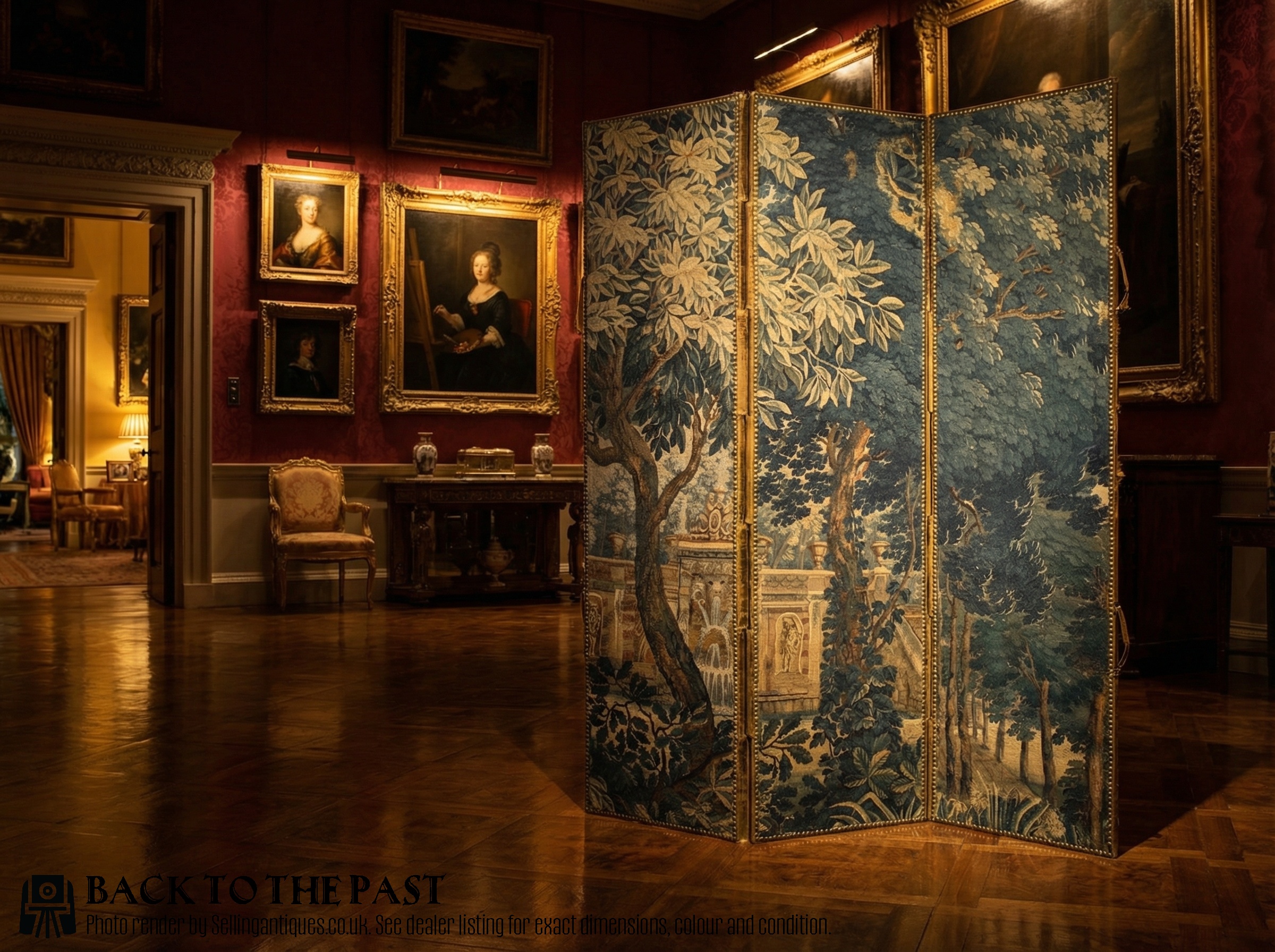
Antique Draught Screen
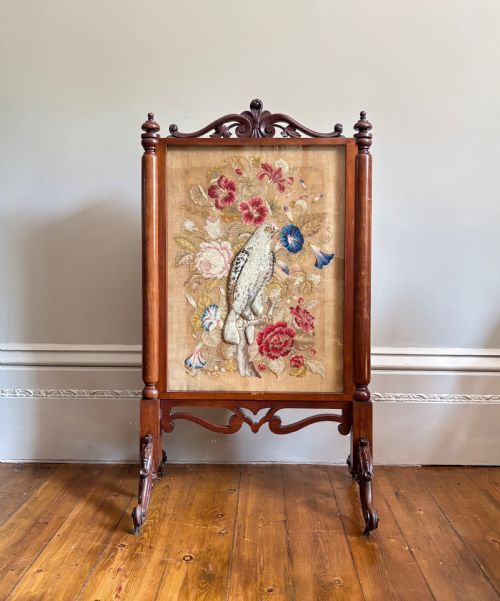
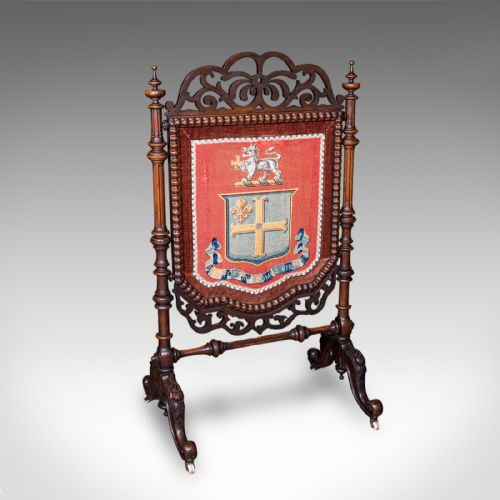
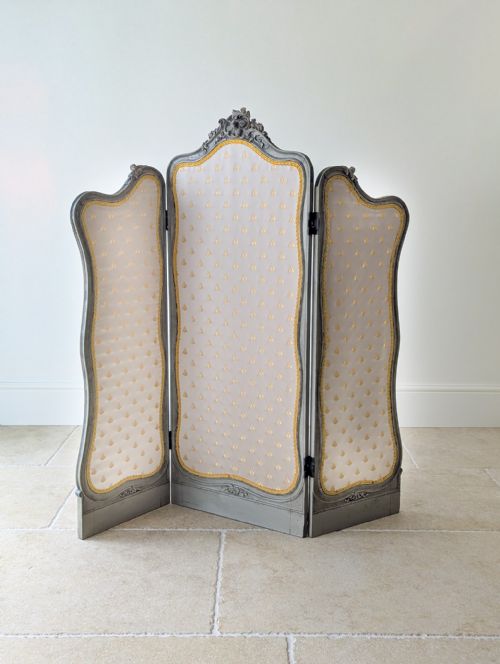
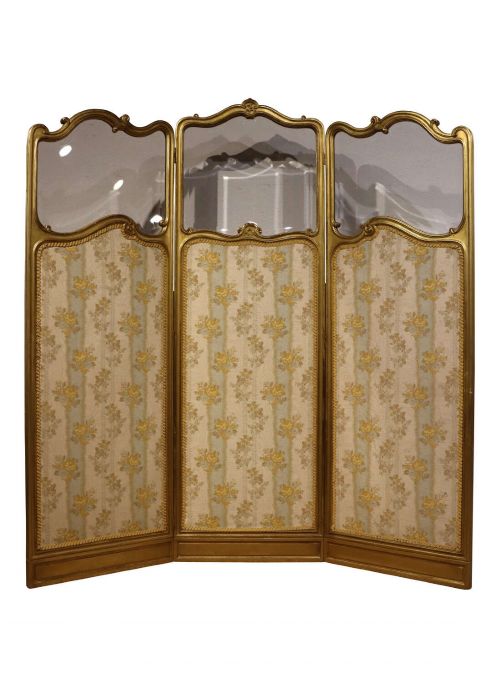
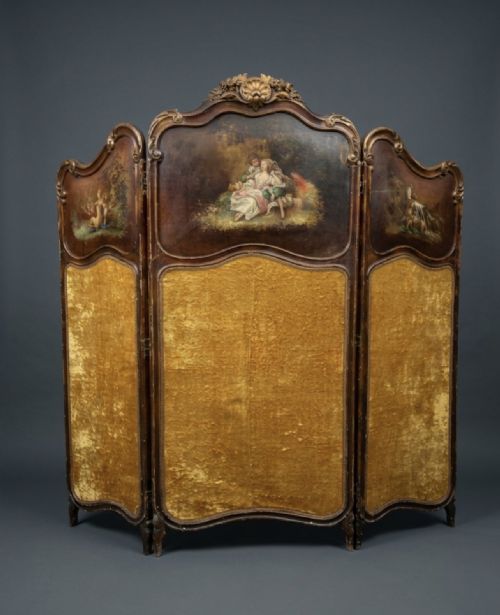
An antique draught screen acts as a movable partition designed to block cold air and create private zones within larger rooms. These items appear primarily in folding multi-panel configurations or as single-panel firescreens intended to stand before a hearth.
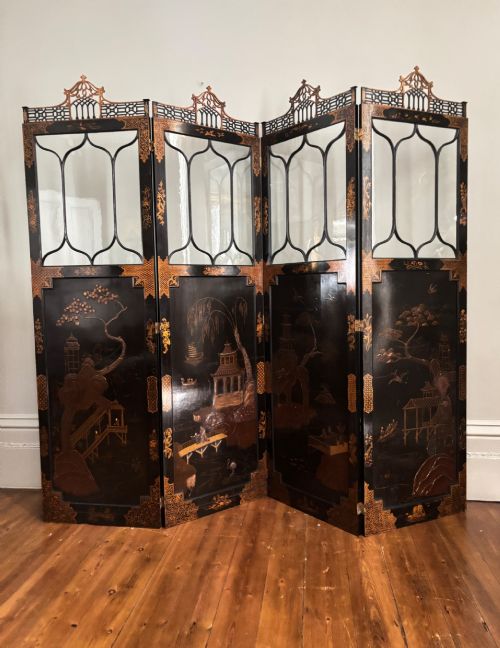
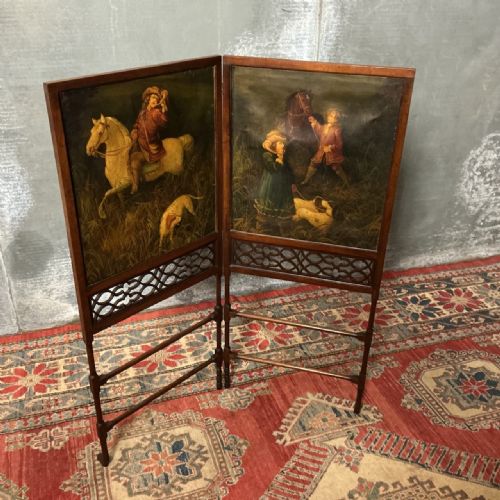
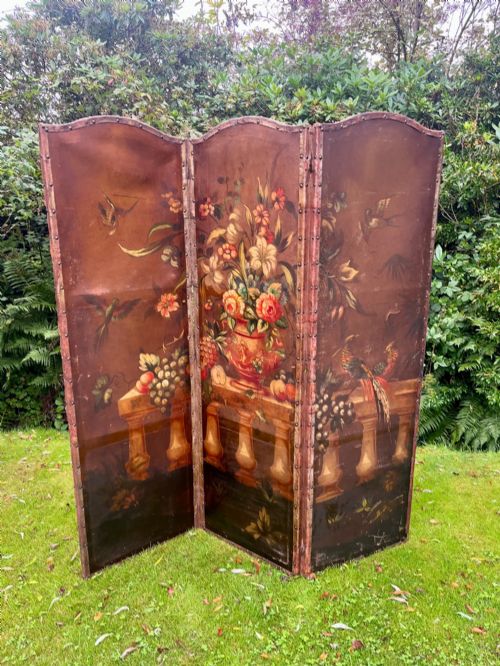
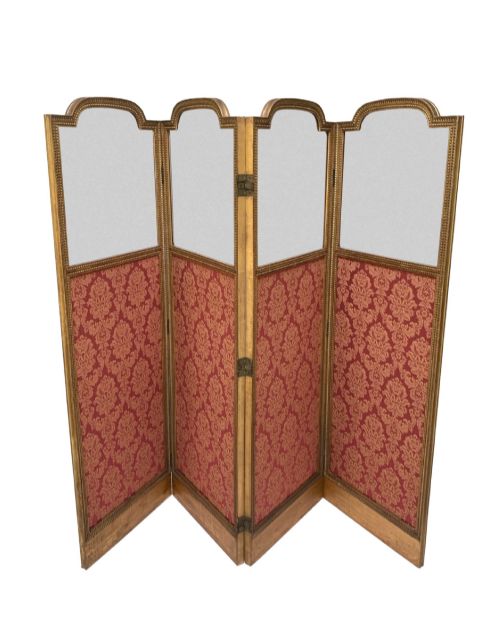
The selection on this page spans from eighteenth-century lacquer and Cordoban leather examples to nineteenth-century Victorian needlepoint pieces and early twentieth-century wooden frames. Folding room dividers and smaller fire screens dominate the selection, showing materials ranging from solid mahogany and giltwood to brass and iron.
Origins stretch across English, French, Dutch, Chinese, and Japanese workshops, reflecting both domestic country house utility and elaborate continental salon decoration. Styles move from Regency and Victorian through to Arts and Crafts and Chinese Chippendale influences.
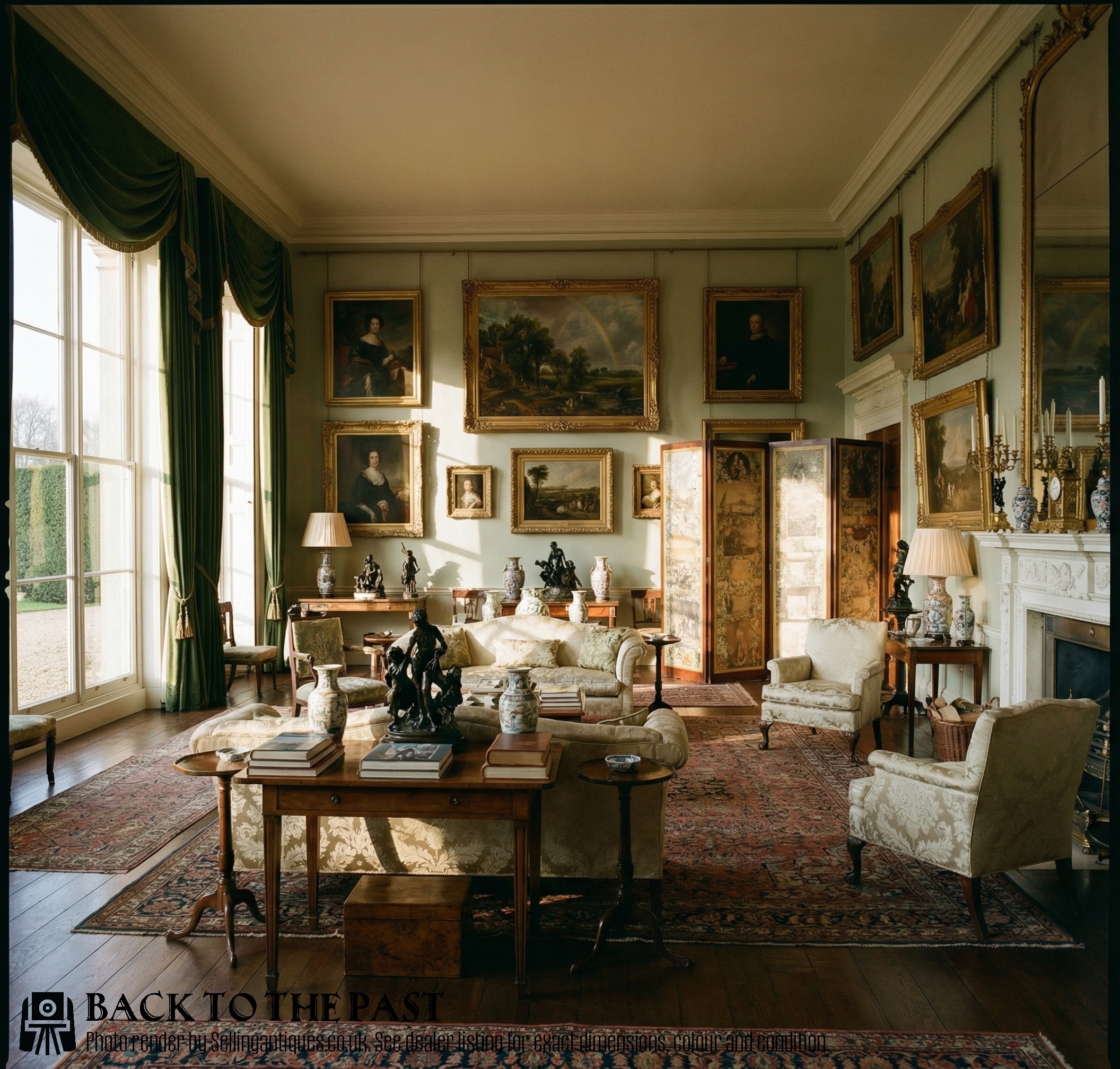
How they were made
Wood serves as the primary structural skeleton for these screens, with mahogany, walnut, oak, and giltwood providing sturdy frames for multiple hinged folds. Joinery methods include traditional hinge fixings that allow panels to articulate smoothly in both directions.
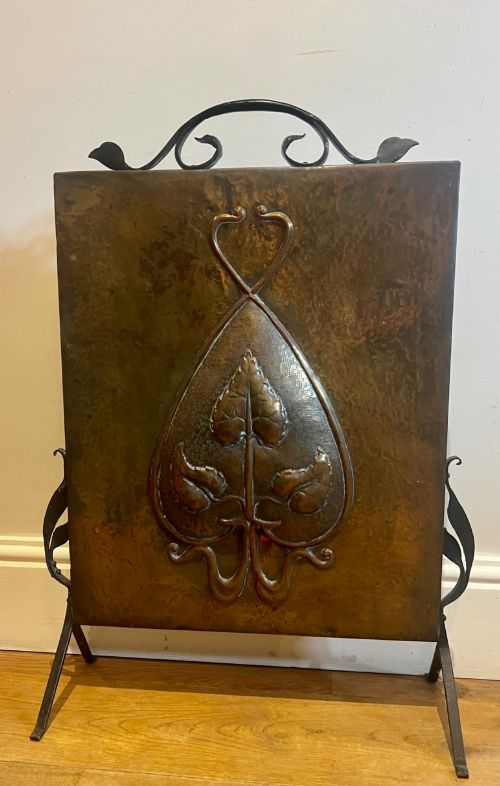
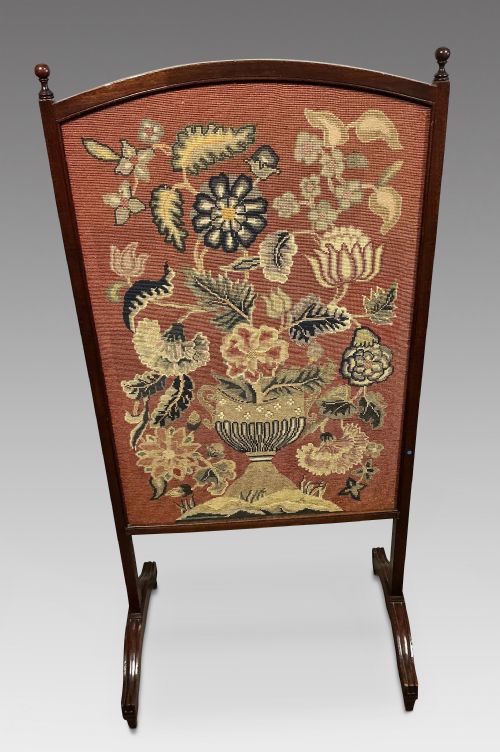
Insets utilise a diverse range of textiles and decorative surfaces, including hand-painted leather, Aubusson and Berlin work tapestries, needlepoint, silk panels, and bevelled glass. Metal elements such as brass, copper, and iron appear chiefly on fire screens and supportive hardware, often shaped through hammering or casting.
Surface decoration frequently involves hand-painting, gilt embossing, lacquer work, or scrap work applications fixed directly onto canvas, leather, or wood panels.
Antique Draught Screen Retail Price Guide 2026
Typical asking prices for draught screen among the pieces listed under this phrase on Sellingantiques today, from the lower quarter to the upper quarter. They describe what is for sale here now, not the wider market.
Listings feature periods from the 18th century through to the 1930s, alongside materials such as mahogany, brass, leather, and silk.
What varies in quality
The standard of an antique draught screen rests heavily upon the execution of its decorative panels, whether through fine needlepoint stitching, hand-painted leather detail, or intricate lacquer work. Superior pieces display crisp brushwork, dense and even textile tension, and careful hand-carving along the wooden or giltwood frames.
Structural integrity across multiple folds dictates everyday usability, where tight hinges and properly seasoned timber prevent sagging or warping over time. Workshop origin and material selection further elevate a piece, distinguishing standard domestic items from grander country house commissions or signed cabinetmaker outputs.
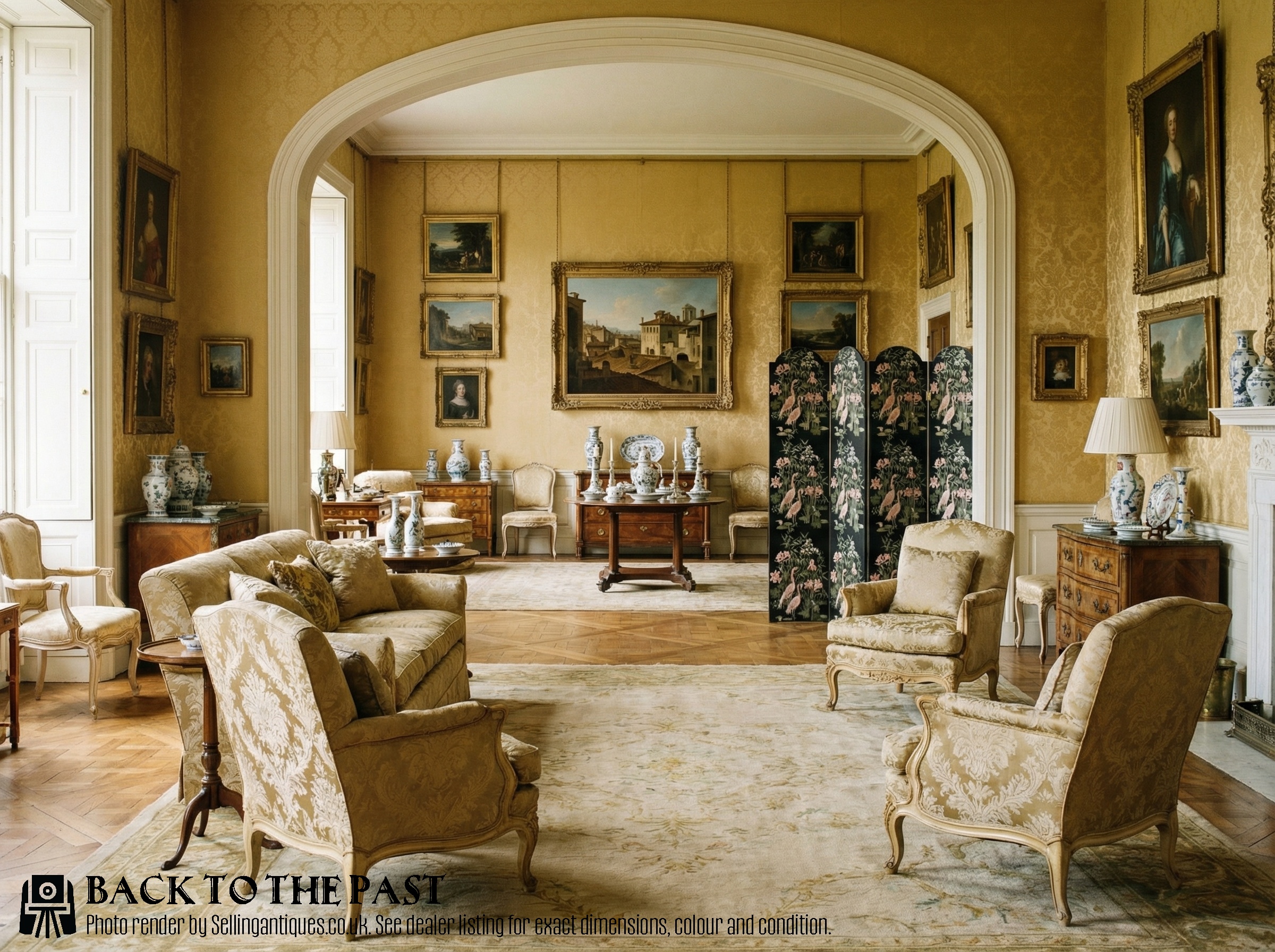
Paul Sormani·William Morris
The Antique Draught Screen Glossary
- Berlin work
- A type of nineteenth-century needlepoint embroidery worked on canvas from coloured charted designs. It allowed makers to create detailed pictorial panels for screens and upholstery.
- Cordoban leather
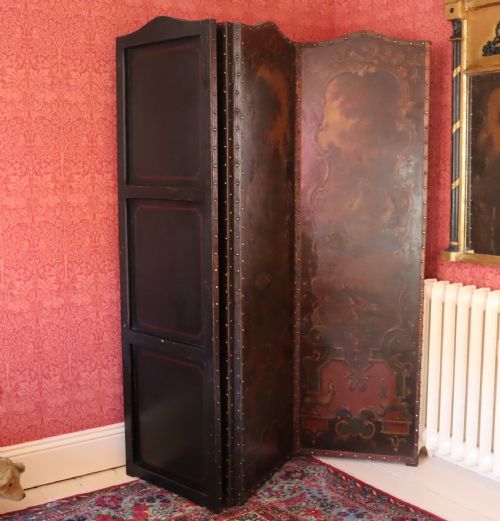
- Heavy leather decorated with hand-painting and gilt embossing originating from Spanish traditions. This material provided a durable and decorative surface for multi-fold room dividers.
- Verdure screen
- A tapestry panel depicting foliage, trees, and landscape scenery, often populated with birds or animals. Flemish workshops produced notable examples of this pastoral style.
- Pole screen
- A small screen mounted on a vertical wooden pole with an adjustable sliding mechanism. It allowed users to position the shield at varying heights to deflect heat from an open fireplace.
- Modesty screen
- A small decorative screen historically used to shield diners from the direct heat of a fire or to provide privacy within a room. These portable pieces often featured painted or fabric panels set into light wooden frames.
Antique Draught Screen: Frequently Asked Questions
What is an antique draught screen used for?
An antique draught screen serves to block cold air currents moving across a room from doors or windows. They also function as movable room dividers to create private seating areas or partition large spaces.
Smaller versions, known as firescreens, sit before hearths to protect individuals from the intense radiant heat of an open fire when unlit or dying down.
How do I care for a leather screen?
Leather screens require stable indoor humidity levels to prevent the material from drying out or cracking over time. Keep them away from direct sunlight and strong heat sources like radiators.
Dust the painted and gilt surfaces gently with a soft, dry cloth without applying modern cleaning sprays or liquid polishes.
What is the difference between a fire screen and a room divider?
A fire screen is typically a single-panel or pole-mounted screen designed specifically to stand in front of a fireplace. They feature heat-resistant materials like brass, iron, or needlepoint set into a stable base.
Room dividers consist of multiple folding panels designed to stand independently on the floor to partition an entire living space.
How do I date an antique screen?
Dating relies on examining the framing timber, hinge construction methods, and the style of the decorative panels. Victorian pieces often feature heavy needlepoint, walnut, or elaborate giltwood frames.
Earlier eighteenth-century examples frequently display Chinese Coromandel lacquer or embossed Cordoban leather, while Edwardian and later pieces adopt lighter mahogany frames or Arts and Crafts copper details.