





Mahogany Folding Screen
A mahogany folding screen divides a room with timber warmth and functional grace.
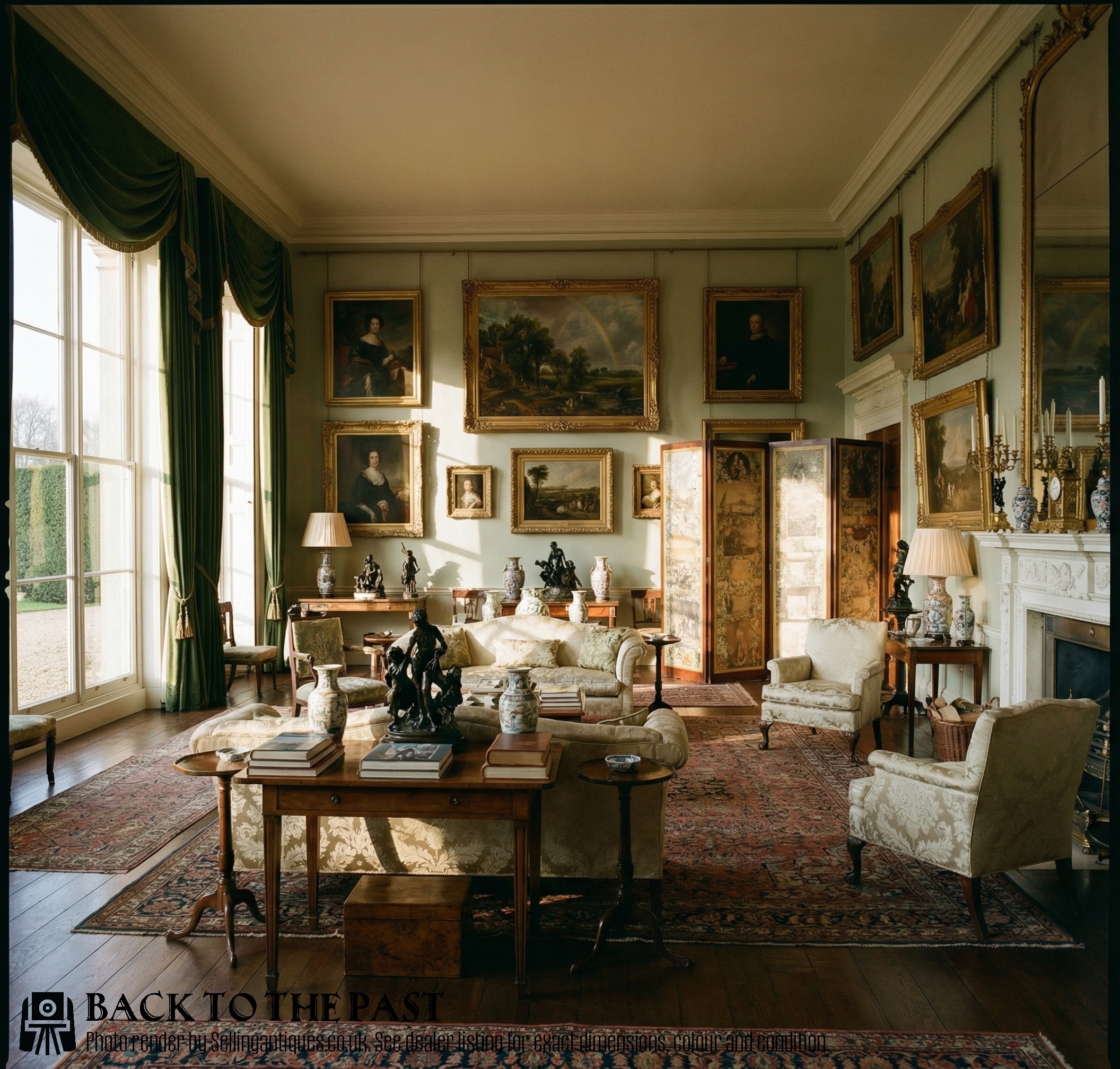
Mahogany Folding Screen
A mahogany folding screen is a hinged room divider designed to partition space or shield a corner from drafts. These pieces range from compact three leaf dressing screens to large country house barriers with multiple folds. The selection spans the nineteenth century through the Edwardian era, offering versatility for modern interiors.
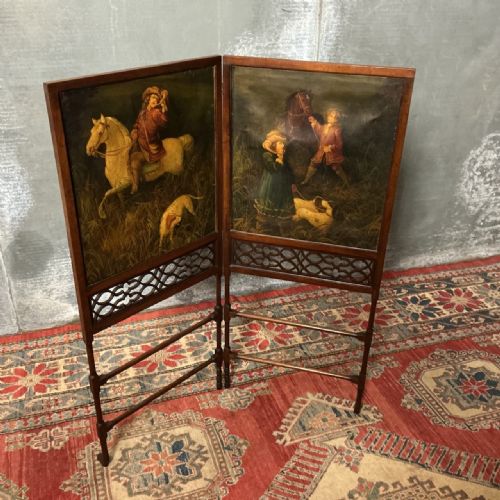
Most examples found here date from the Victorian and Edwardian periods, including specific forms like dressing room vanity screens and fire screens. They appear in configurations of three, four, or five folds, occasionally featuring reversible panels or integrated glass and textile inserts.

How they were made
These screens utilise solid mahogany frames constructed with hinged leaves for articulation. Artisans incorporated brass hardware, such as hinges and brackets, to allow smooth folding across multiple panels.
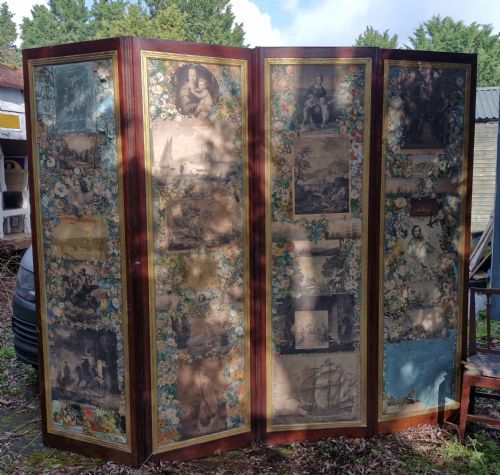
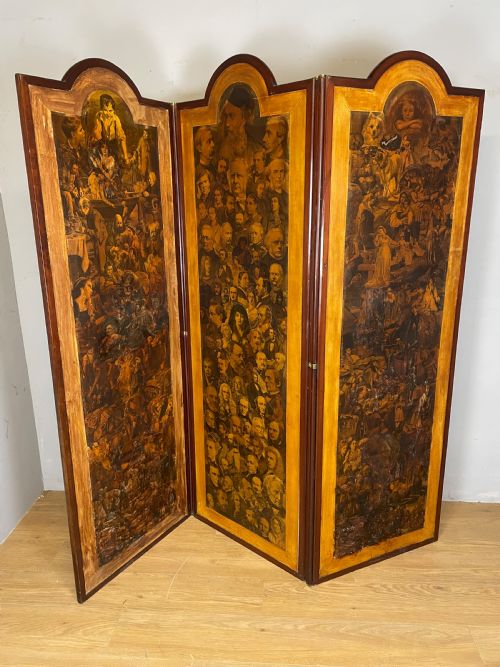
Panels accommodate various infills including paper scrap work, glass, upholstered fabric, and gilt wood. Inlaid details on Edwardian pieces demonstrate refined cabinetmaking techniques applied to structural timber.
Mahogany Folding Screen Retail Price Guide 2026
Typical asking prices for mahogany folding screen among the pieces listed under this phrase on Sellingantiques today, from the lower quarter to the upper quarter. They describe what is for sale here now, not the wider market.
Listings feature mahogany folding screens spanning the nineteenth century, Victorian era, and Edwardian period, incorporating brass, glass, and fabric.
What varies in quality
Quality rests in the weight of the timber and the precision of the joinery across each fold. Finer examples display meticulous inlay work and robust brass hinges that support heavy multi panel configurations without sagging.
The choice of panel infill also distinguishes the grade of the piece, from simple fabric upholstery to intricate scrap work or large sheets of glass. Larger country house screens require superior structural integrity to maintain stability over extended spans.
The Mahogany Folding Screen Glossary
- Mahogany
- A durable tropical hardwood prized for its reddish brown tone and stability in furniture construction. It forms the primary structural frame for these screens.
- Edwardian
- Pertaining to the period from nineteen hundred to nineteen ten, characterised by lighter proportions and refined inlay work. Pieces from this era often feature delicate framing.
- Scrap work
- A decorative technique utilising cut paper images applied to a surface and sealed. Scrap work folding screens display collages of Victorian prints.
- Gun barrel
- A turned column style resembling the profile of a firearm barrel. This term describes the turned wooden supports found on certain nineteenth century screens.
- Reversible
- Able to be turned to face either direction during use. Fully reversible screens allow panels to fold back on themselves completely.
Mahogany Folding Screen: Frequently Asked Questions
How do I use a folding screen at home?
These screens partition large rooms, create private dressing areas, or conceal storage corners with minimal effort. Their hinged design allows them to angle sharply or stretch flat depending on the floor space.
Position a screen near a window or bed to soften light and draftiness. They fold away flat against a wall when not in use.
What is the difference between Victorian and Edwardian screens?
Victorian screens tend to be heavier and more substantial, often featuring dark timber, extensive upholstery, or large country house proportions. Edwardian variants typically exhibit lighter framing, inlaid woodwork, and glass or simpler panel inserts.
Both eras utilise mahogany frames, but the later period favours a more delicate aesthetic suitable for smaller rooms.
Are these screens stable on hard floors?
Multi fold screens are inherently stable when angled correctly, as the zig zag configuration supports its own weight. Heavier nineteenth century examples provide extra steadiness due to dense mahogany construction.
Avoid extending any screen in a completely straight line, as folding the panels at slight angles prevents tipping.
How are glass panels secured in these screens?
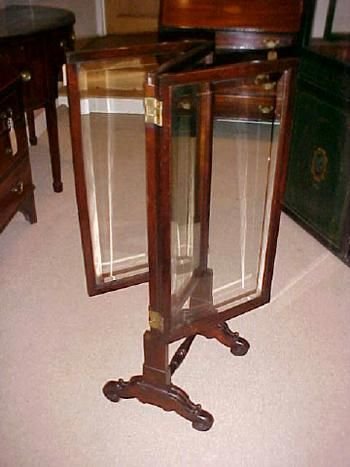
Glass inserts are fitted directly into rebated wooden framing within the mahogany leaves. Glazing beads or wooden mouldings hold the panes securely in place.
This construction allows glass screens to transmit light while maintaining a physical barrier between spaces.