



Victorian Draught Screen
A victorian draught screen guards a room against cold air, offering both domestic shelter and decorative presence.
Victorian Draught Screen
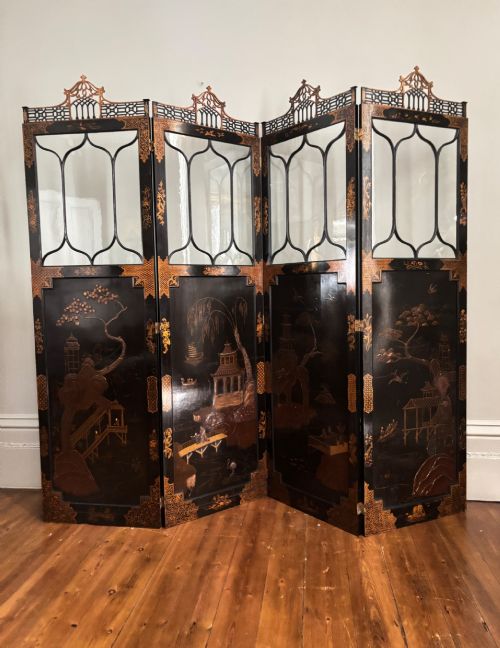
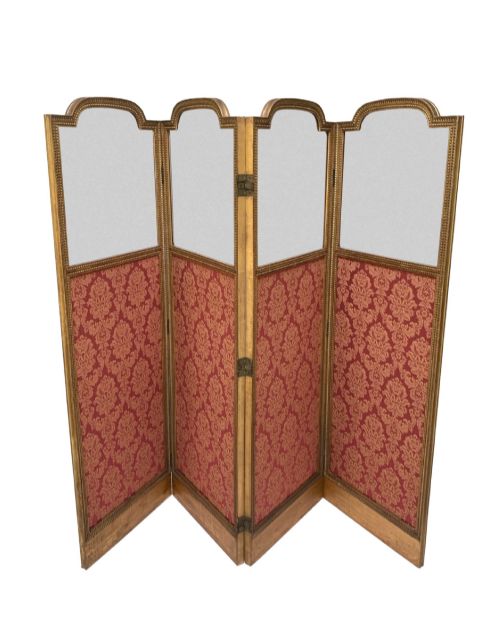
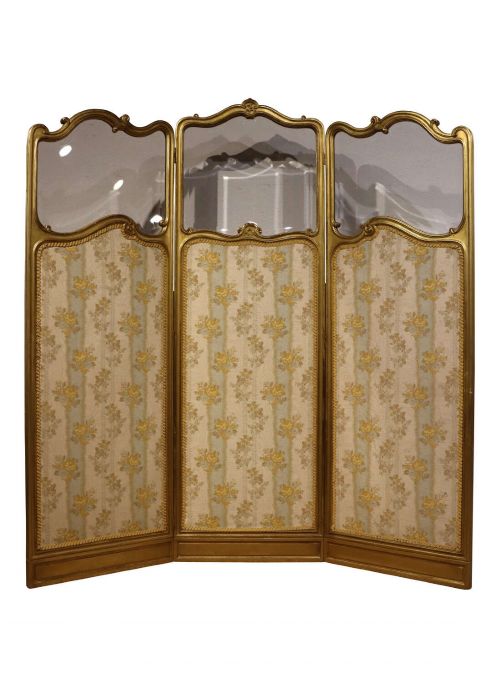
When searching for a victorian draught screen, buyers encounter large folding panels designed to block cold air currents in high-ceilinged rooms. These pieces function simultaneously as room dividers and decorative architectural elements within domestic interiors.
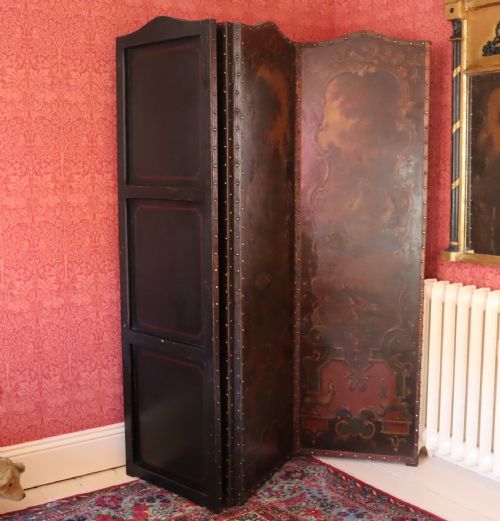
The examples appearing here span multiple folds, incorporating materials from solid mahogany to painted leather. Many items adopt styles ranging from Chinese Chippendale to French Chateau and Art Nouveau.
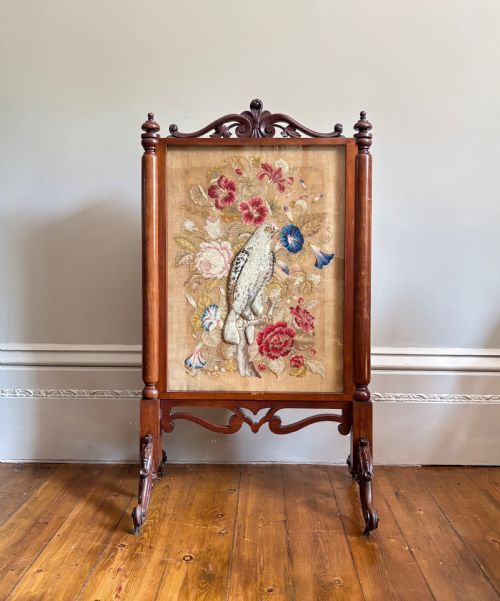
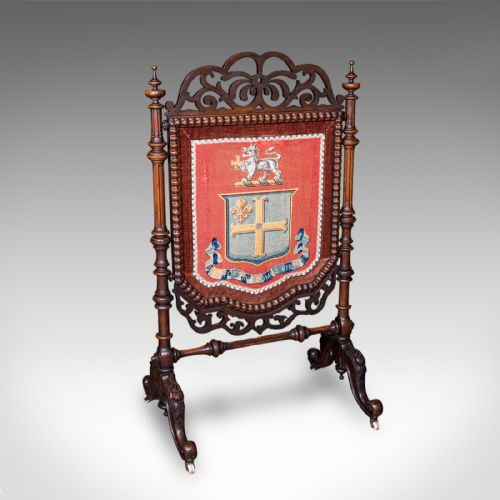
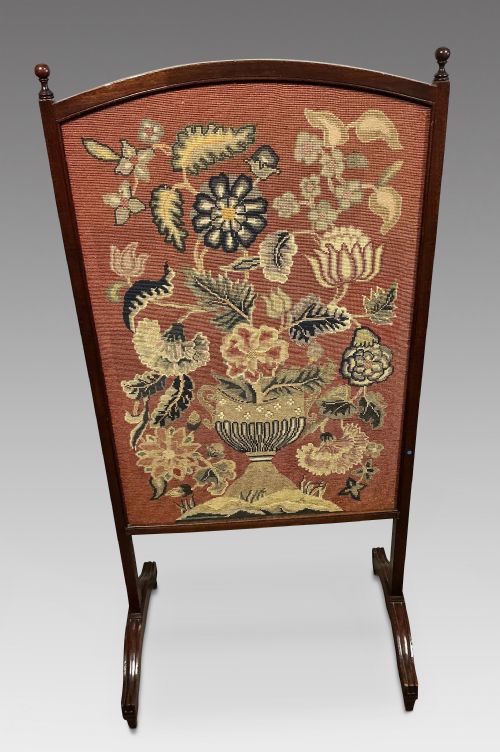
Smaller variants also appear, specifically configured as firescreens to protect occupants from hearth heat. These stand on supportive feet or pull out with leaves to adjust their width.
How they were made
Frames rely principally on timber construction, utilising mahogany, walnut, and giltwood shaped into multiple hinged leaves. Joinery supports folding configurations that span several feet in height.
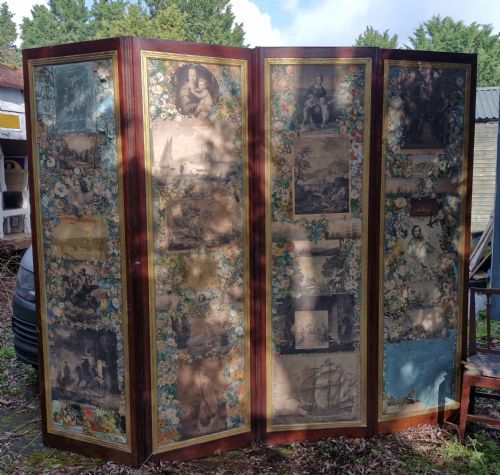
Infill panels display diverse craft techniques, combining hand-painted leather, bevelled glass, and copper with textiles such as wool needlepoint and tapestry. Scrap work and decoupage applications also furnish decorative surfaces.
Victorian scrap work screens turn old scraps of paper and greeting cards into elaborate, layered collages that demand a closer look.
What varies in quality
Quality reveals itself in the calibre of the timber frame and the complexity of the internal panels. Fully reversible folding mechanisms and hand-painted or hand-woven textile inserts distinguish finer examples from simpler partitions.
The integrity of applied decoration, such as intricate needlepoint, carved rosewood details, and bevelled glass glazing, determines the distinction between standard room dividers and grand country house screens.
The Victorian Draught Screen Glossary
- Berlin work
- A style of needlepoint embroidery on canvas popular during the nineteenth century, frequently utilised for firescreen panels. It allowed makers to create detailed pastoral and floral designs using charted patterns.
- Giltwood
- Timber that has been coated with a thin layer of gold leaf or gilt powder. This finish appears frequently on decorative frames from the period.
- Decoupage
- The art of decorating a surface by applying paper cutouts and varnishing them. This technique decorates several country house screens.
- Coromandel
- A dense, dark timber imported from Asia, valued for rich grain patterns. It forms the structure of select large folding screens.
- Needlepoint
- A type of canvas work embroidery stitched with wool or silk threads. It provides decorative surfaces for privacy screens and tapestry fire screens.
Victorian Draught Screen: Frequently Asked Questions
What is a victorian draught screen used for?
These screens block cold air currents circulating across large rooms with high ceilings. They also create private zones within open living spaces.
Beyond stopping draughts, they serve as decorative room dividers and architectural focal points. Smaller versions act as fire screens to shield individuals from direct hearth heat.
How do I identify a period piece?
Examine the timber framing, hinge construction, and infill materials for nineteenth-century characteristics. Mahogany, walnut, and hand-painted leather indicate period manufacture.
Look for traditional needlepoint panels, scrap work, and giltwood finishes consistent with nineteenth-century workshop practices. Styles such as Chinese Chippendale and Art Nouveau provide further chronological clues.
Where should I place a screen?
Position folding screens near doors or large windows to intercept incoming cold air. They work effectively in entrance vestibules and main reception rooms.
Place taller multi-fold dividers to partition larger spaces or create secluded corners. Smaller firescreens belong directly in front of fireplaces.
How do I care for fabric and leather panels?
Protect delicate textiles and painted leather surfaces from direct sunlight to prevent fading. Dust wooden frames and glass panels regularly with a dry cloth.
Avoid using harsh chemical cleaners on needlepoint, tapestry, or painted elements. Professional conservation is advisable for fragile needlework and antique leather.