


Gold Folding Screen
A gold folding screen divides a room or shields a hearth with glittering presence, bringing architectural warmth and flexible spatial division to an interior.
Gold Folding Screen
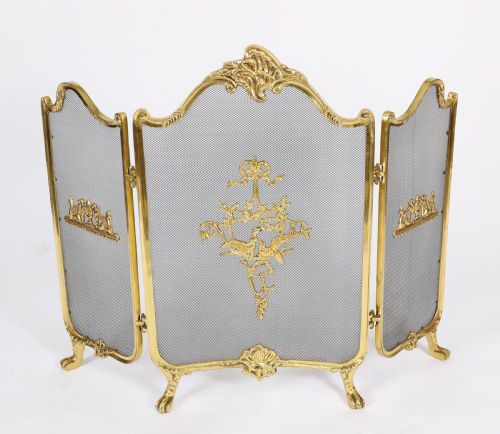
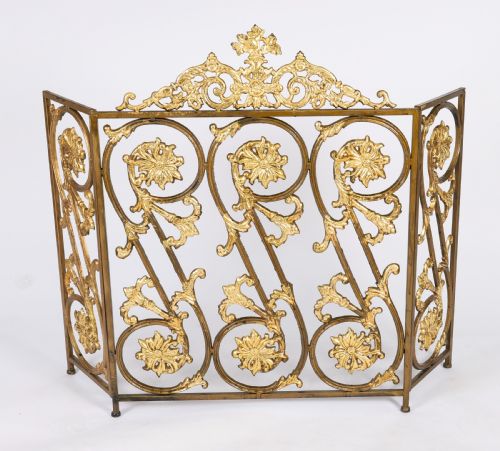
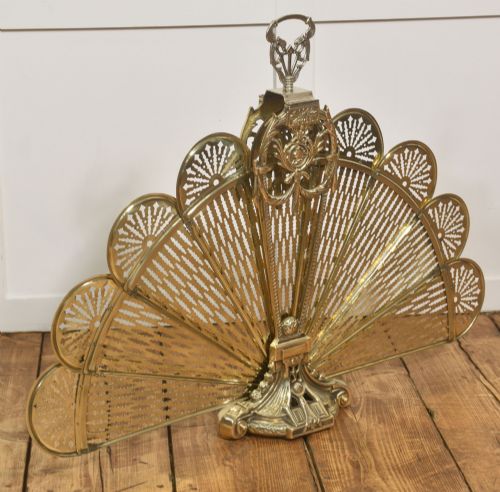
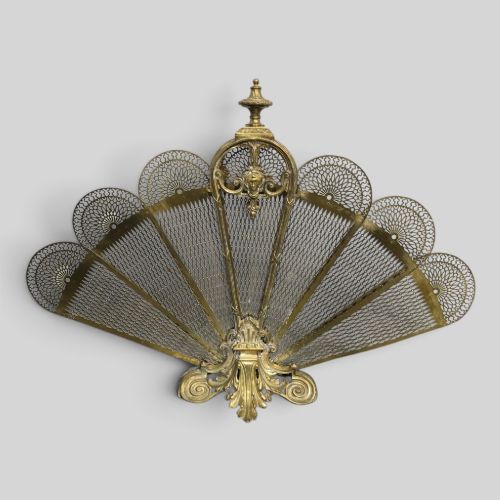
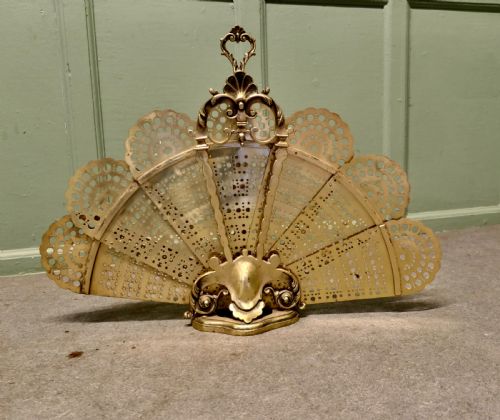
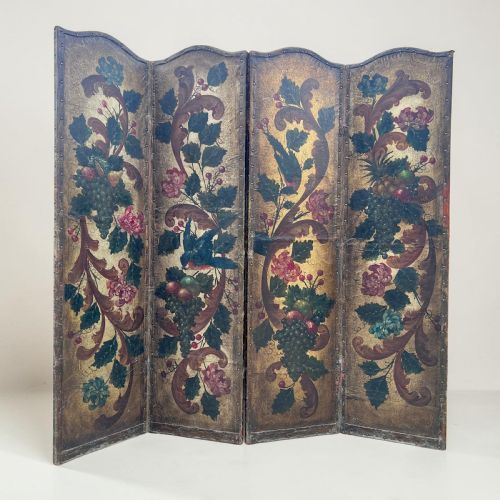
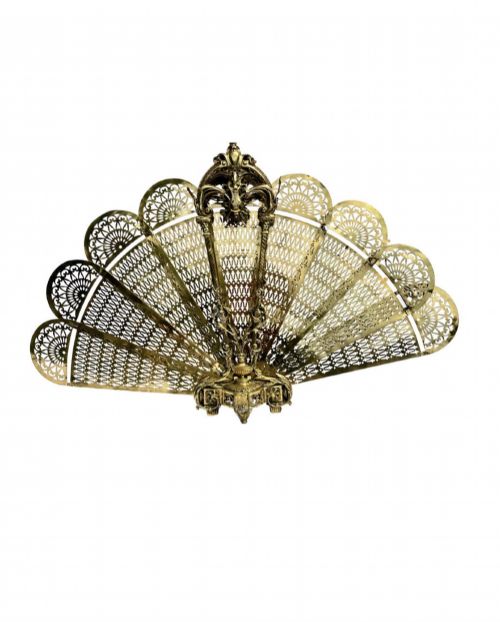
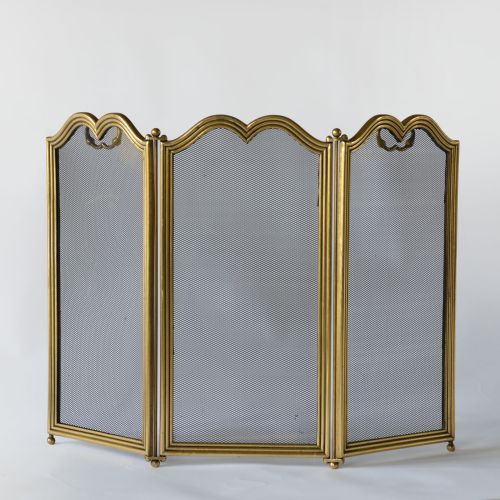
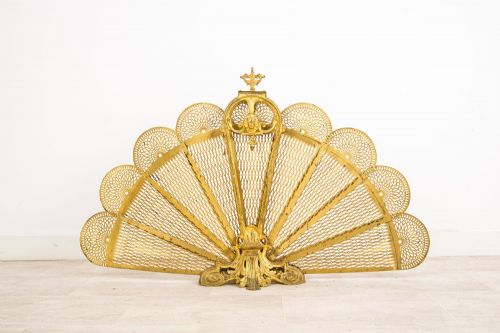
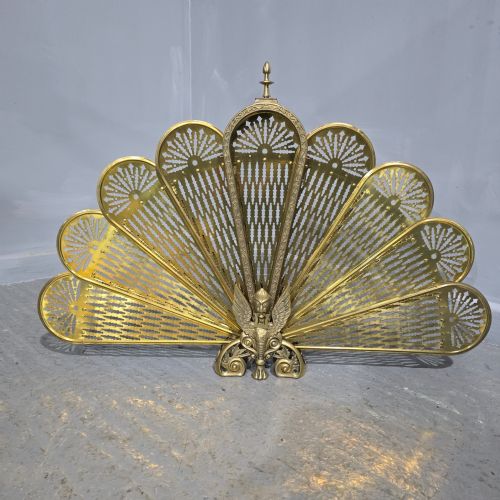
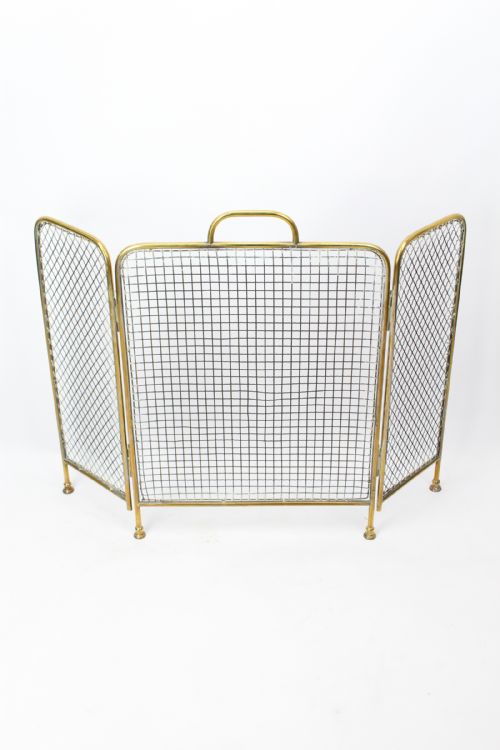
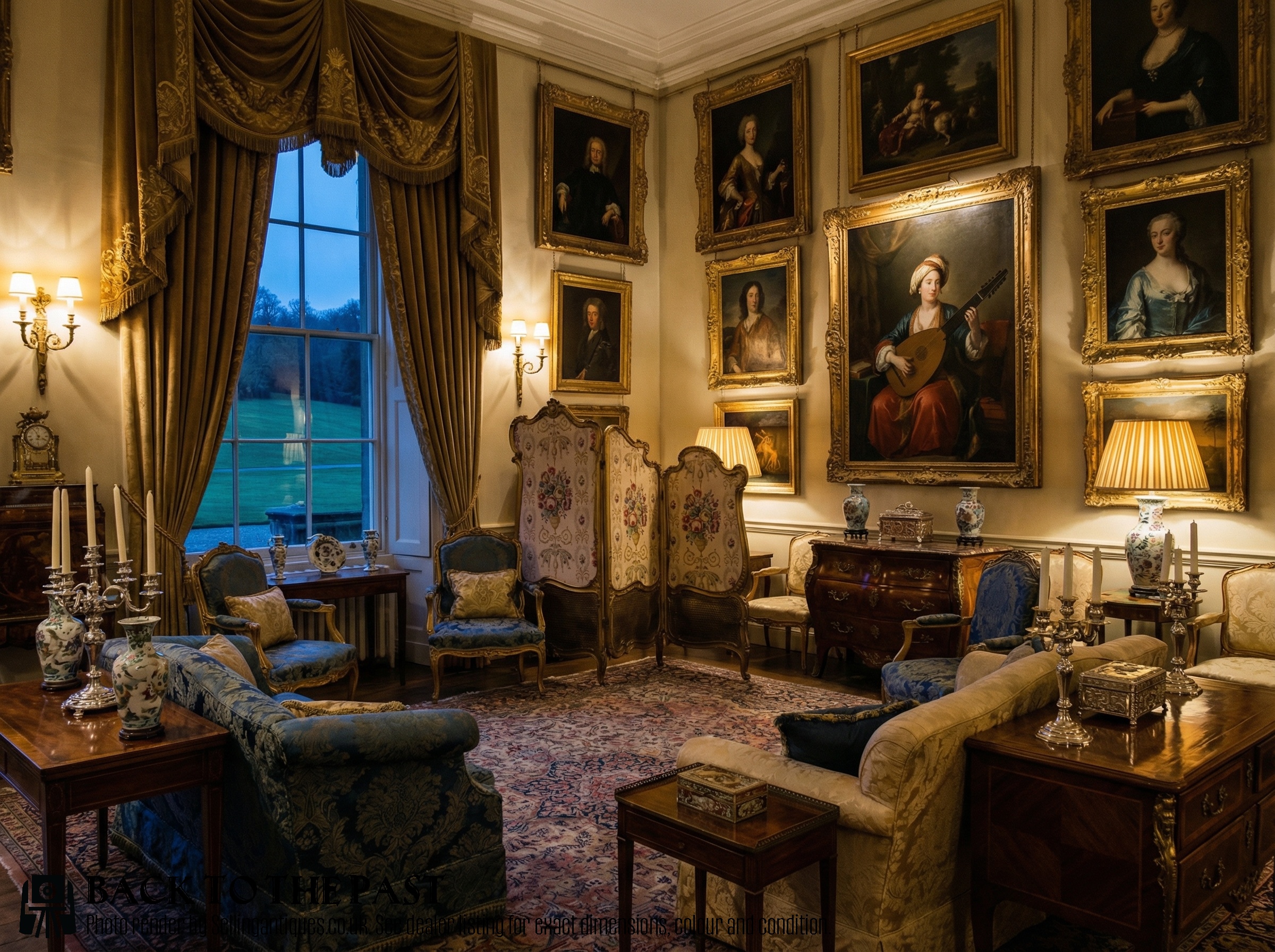
A gold folding screen encompasses various articulated panels designed either to partition a floor space or to stand before a fireplace as a decorative guard. These pieces range from substantial multi-fold room dividers covered in lacquer or leather to smaller tripartite and peacock-tail spark guards fashioned from gleaming metal.
The selections span the nineteenth century into the Edwardian era, drawing heavily upon French Rococo Revival, Louis XIV Revival, and Chinoiserie aesthetic movements. Buyers encounter both grand dressing screens and domestic fire guards, each utilising hinged sections to adjust the physical footprint within a room.
Materials and construction
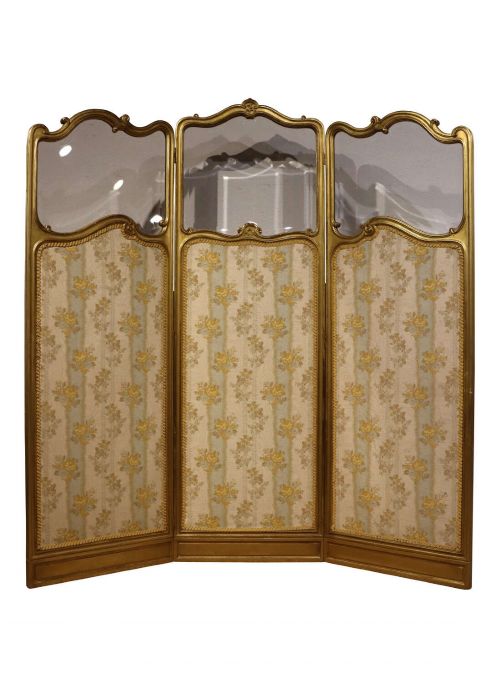
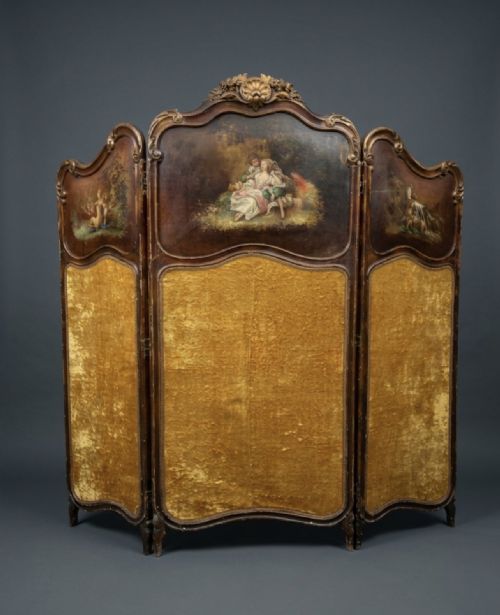
The primary structural elements combine carved giltwood, solid brass, and ormolu frames with infill panels of silk, bevelled glass, hand-painted leather, and oil paint on canvas. Many pieces incorporate intricate wire mesh spark guards or folding fan ribs that mechanically expand and contract.
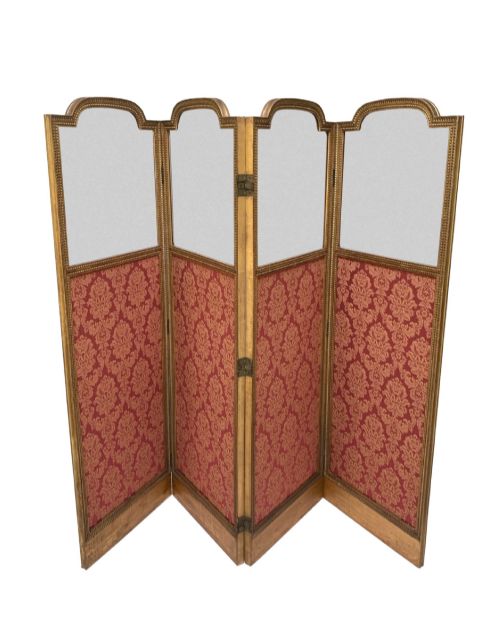
Surface ornamentation relies on traditional techniques such as hand gilding, lacquer work, and oil painting, frequently paired with embossed leather and silk fabric inserts. Joinery typically involves brass hinges connecting multiple leaves, allowing smooth articulation across three, four, six, or eight folds.
Materials represented across the collection include solid brass, giltwood, lacquer, silk, glass, wire mesh, and oil paint.
Indicators of quality
Quality reveals itself in the crispness of the giltwood or bronze casting, the weight of the brass framework, and the integrity of the hinges connecting the folds. Superior examples feature hand-painted artistry on leather or silk panels rather than printed textiles, alongside heavy bevelled glass inserts.
The complexity of the folding mechanism and the depth of the carving dictate the calibre of the piece. Robust multi-fold wooden and lacquer dividers with intact original painted surfaces represent the upper tier of craftsmanship compared to simpler wire mesh fire guards.
The Gold Folding Screen Glossary
- Giltwood
- Wood that has been coated with gold leaf or gilt paint to create a luminous metallic surface. This finish defines the ornate frames of many nineteenth-century French and English panels.
- Ormolu
- Finely chased and gilt bronze mounts applied to furniture and decorative items. It appears frequently on nineteenth-century fire screens to add sculptural enrichment.
- Chinoiserie
- European artistic style reflecting Chinese motifs and decorative techniques, popular in lacquer work and room dividers. This aesthetic brings dark backgrounds paired with gilded pictorial scenes.
- Cordoban leather
- Heavy leather that is embossed, painted, and gilded using traditional Spanish craft methods. These panels provide durable and opulent surfaces for historic room dividers.
- Aubusson
- Tapestry weave produced in France, often utilised for historic panel inserts within decorative screens. These textile sections display pictorial scenes woven with wool and silk.
Gold Folding Screen: Frequently Asked Questions
How were these screens used originally?
Historic folding screens served distinct purposes depending on their scale and form. Large multi-fold wooden and leather screens created private changing areas in bedrooms or partitioned draughty drawing rooms.
Smaller brass and wire mesh variations stood before active fireplaces to protect occupants from intense heat and stray embers while adding a decorative focal point to the hearth.
Are these screens suitable for modern rooms?
These pieces adapt easily to contemporary interior layouts by functioning as flexible room dividers in open-plan spaces. They create intimate zones without the need for permanent walls.
Smaller fire screens work well placed against empty fireplaces or styled as decorative wall art within living areas.
How do I distinguish a fire screen from a room divider?
Fire screens generally feature lower heights, sturdy brass feet, and integrated wire mesh or folding fan ribs designed specifically for proximity to heat. They often incorporate decorative handles or pivoting frames.
Room dividers stand significantly taller with three to eight folding panels upholstered in leather, silk, or lacquer, intended to block sightlines across a full floor space.
What materials are typical for Victorian screens?
Victorian examples frequently utilise polished brass, cast iron frames, and pierced wire mesh for functional hearth accessories. Finer decorative pieces employ carved giltwood, papier-mâché, and painted leather panels.
Silk fabrics and bevelled glass inserts also appear in domestic boudoir screens from the same period.