


Antique Gilded Partition
An antique gilded partition divides a room with folding panels of wood, glass, or canvas, bringing gilded elegance to an interior.
How they were made
Maker construction combines timber frameworks of wood and carved giltwood with decorative surfaces finished in gold leaf, lacquer, and paint. Artisans employed traditional joinery to build the folding panels, integrating hinges to allow flexible movement across multiple leaves.
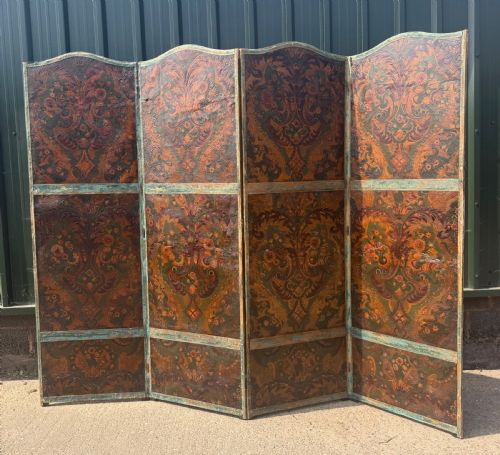
Surface decoration involves intricate techniques including hand-painted detailing, gilt embossing, polychrome work, and applied lacquer. Certain variants incorporate glazed glass panels, tooled leather in the manner of eighteenth-century Dutch examples, or woven Aubusson textile inserts.
What varies in quality
The standard of an antique gilded partition depends upon the precision of the carving, the richness of the gilding, and the integrity of the painted or lacquered decoration. Finely executed pieces display deep relief carving in giltwood alongside delicate, detailed hand-painting that remains crisp across every fold.
Materials dictate the character of the object, distinguishing simpler wood and canvas constructions from elaborate lacquerwork, embossed Cordoban leather, or documented cabinet-maker creations. The complexity of the folding mechanism and the preservation of original gold leaf and surface finishes determine the standing of each piece.
Materials across these listings span wood, brass, giltwood, gold leaf, lacquer, glass, leather, and canvas.
Paul Sormani
The Antique Gilded Partition Glossary
- Giltwood
- Timber that has been coated with gold leaf or gesso and then gilded. It provides a reflective, ornate finish characteristic of revival styles.
- Cordoban leather
- Heavy leather that is hand-painted, embossed, and gilded using traditional Spanish techniques. It frequently appears on seventeenth and eighteenth-century screens.
- Aubusson
- Tapestry woven in the French town of the same name, utilised as panel inserts within decorative frames. These textiles display pastoral or floral scenes.
- Lacquer
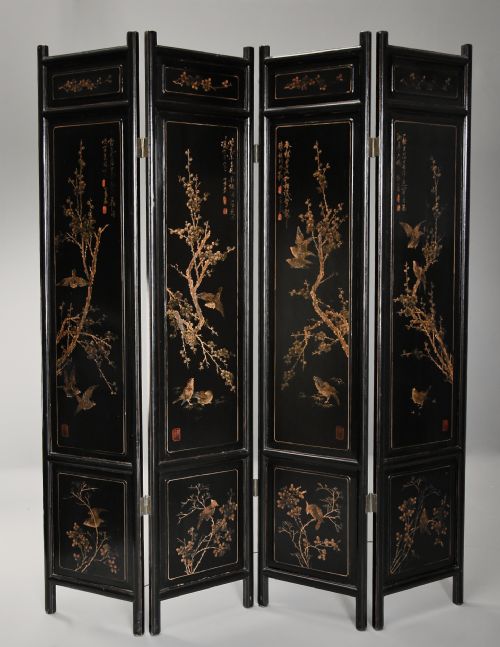
- A durable resin finish applied in multiple layers and polished to a hard sheen. East Asian and European workshops utilised it to create dark, lustrous backgrounds for gilt decoration.
Antique Gilded Partition: Frequently Asked Questions
How are antique gilded partitions used today?
These screens function effectively to zone large rooms, create private dressing areas, or simply stand against a wall as a decorative backdrop. Their folding panels allow them to be adjusted to fit various spatial layouts.
Positioning them away from direct sunlight and damp environments preserves the delicate gold leaf, lacquer, and painted canvas surfaces over time.
What styles do these screens typically feature?
The pieces available encompass French Rococo Revival, Louis XVI style, Chinoiserie, and Chinese Republic Era designs. Each style brings distinct decorative elements, from ornate carved giltwood frames to black lacquered panels.
Continental and British makers frequently drew inspiration from eighteenth-century aesthetics, resulting in richly embellished woodwork and painted finishes.
How do I identify the period of a screen?
Dating relies on examining the construction methods of the wooden frame, the composition of the hinges, and the specific materials used in the surface decoration. Eighteenth-century examples often utilise embossed leather or heavy painted panels, while nineteenth-century pieces frequently display revival carving or canvas.
Twentieth-century items, such as early Chinese lacquered screens, exhibit distinct regional manufacturing techniques and material treatments characteristic of their decade.
Are these screens freestanding?
Most examples are constructed as multi-fold freestanding screens that support themselves when angled correctly on the floor. They require no permanent installation against a wall or ceiling.
Heavier panels, such as those with wooden frames or multiple folds, offer greater stability when extended across a room divider layout.