
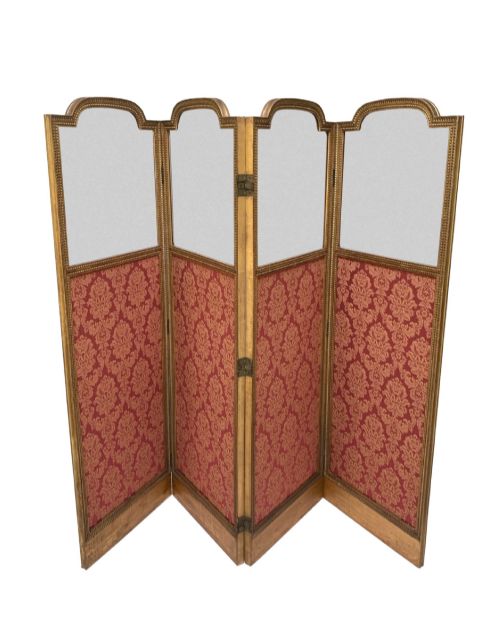
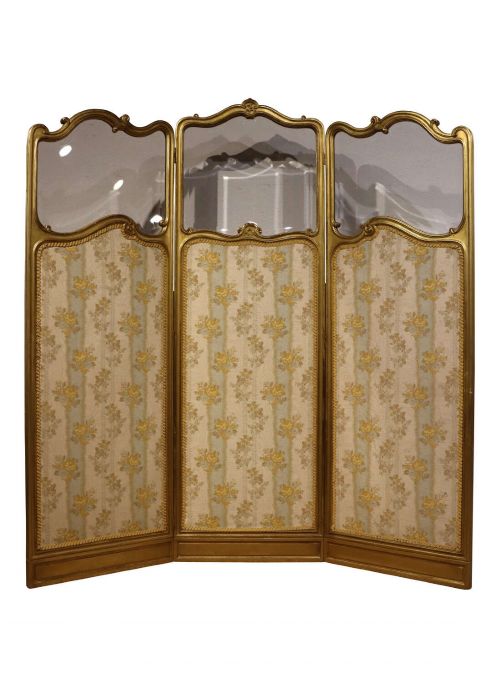


Giltwood Room Divider
A giltwood room divider offers grand architectural presence and flexible zoning for large interiors.
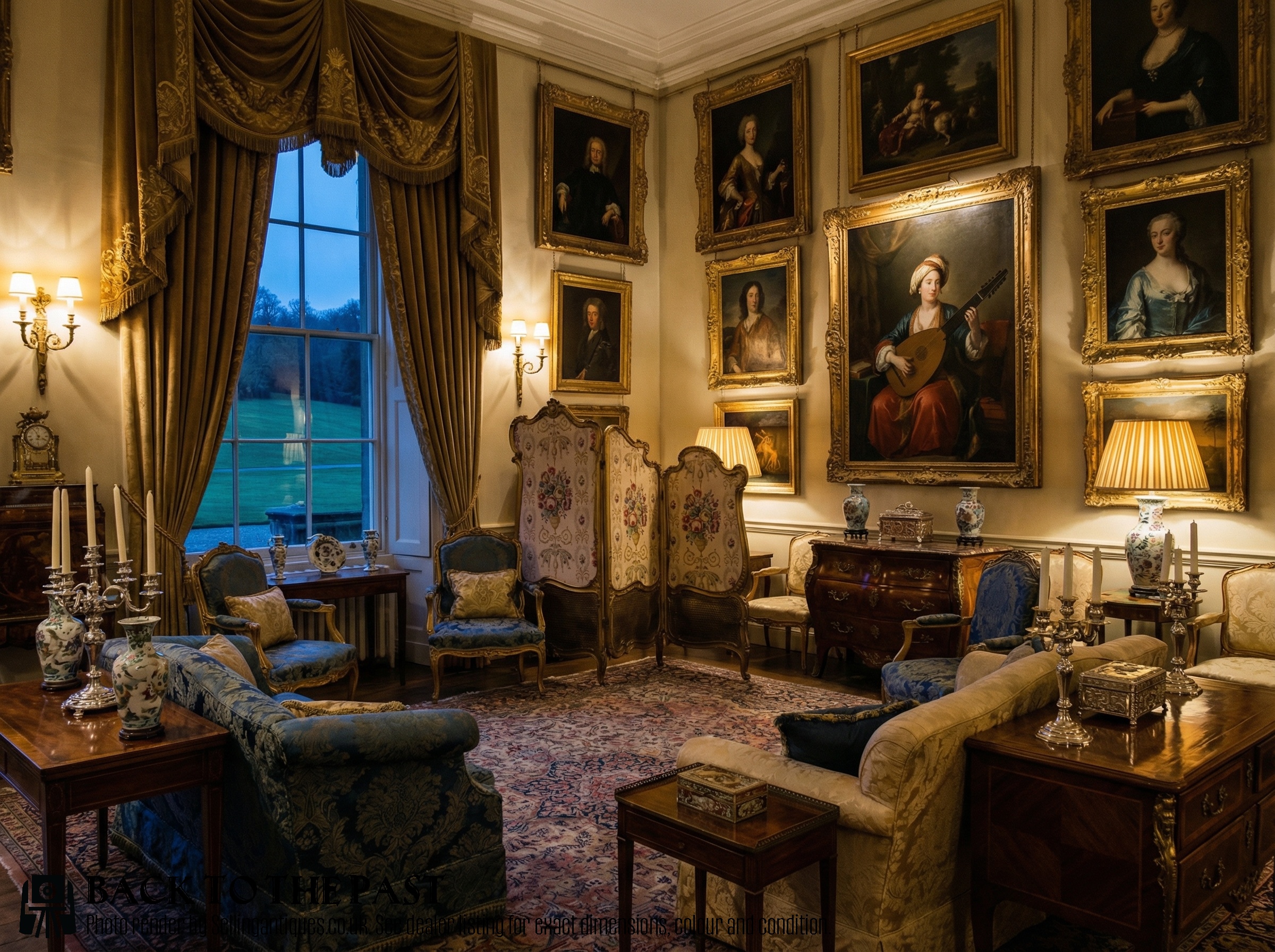
Giltwood Room Divider
A giltwood room divider stands as a folding screen designed to separate spaces with decorative flair. These pieces emerge from the nineteenth century, including specific dates such as 1870, alongside Victorian and Edwardian examples. Styles lean towards French Chateau, Louis XVI, and Rococo Revival aesthetics.
The standard configuration involves three or four folding panels joined by brass hinges. Makers utilise wood frames covered in gold leaf to frame glazed sections, textiles, painted canvas, and needlepoint. These screens function equally well as dressing screens or grand architectural dividers in formal rooms.
How they were made
Craftsmen carved wooden frames before applying fine layers of gold leaf to create the characteristic giltwood finish. Structural integrity depended on sturdy joinery and sturdy brass hardware linking the individual panels together.
Panels incorporated diverse materials including bevelled glass, silk, damask textile, damask fabric, and painted canvas or needlepoint. Each insert required precise fitting into the carved wooden framework to ensure longevity during folding and unfolding.
Giltwood Room Divider Retail Price Guide 2026
Typical asking prices for giltwood room divider among the pieces listed under this phrase on Sellingantiques today, from the lower quarter to the upper quarter. They describe what is for sale here now, not the wider market.
French Rococo Revival and Louis XVI style influences appear frequently across the surviving room divider inventory.
What varies in quality
Quality rests upon the depth and intricacy of the carved giltwood decoration across the frames. Finer pieces demonstrate superior hand-carved detailing and higher grade original gilding rather than later repainting.
The choice of infill panels distinguishes standard items from exceptional ones, particularly when featuring bevelled glass or hand-worked textiles like silk and needlepoint. Signed maker pieces elevate the overall standing within the historical record.
Paul Sormani
The Giltwood Room Divider Glossary
- Giltwood
- Wood that has been coated with thin gold leaf or powder. This finish creates a luminous metallic surface that defines the aesthetic of antique frames and screens.
- Bevelled glass
- Glass panes featuring an angled edge ground down around the perimeter. This technique catches light and adds depth to glazed screen panels.
- Needlepoint
- Hand-stitched yarn embroidery worked on a stiff open-weave canvas. These panels provide colourful pictorial or floral decoration within folding screens.
- Damask textile
- A reversible figured fabric woven on a jacquard loom with patterns formed by contrasting warp and weft threads. It offers a rich textured backdrop for interior divisions.
Giltwood Room Divider: Frequently Asked Questions
How do I use a giltwood room divider?
These screens divide large living areas, create dressing spaces, or serve as decorative backdrops against a wall. Their folding panels allow flexible adjustment to suit different room layouts.
Care should be taken when moving them to protect the delicate giltwood surfaces and the fabric or glass inserts.
Are these screens stable?
Most pieces feature three or four sturdy wooden panels connected by brass hinges designed to support the weight when partially folded. Proper positioning in a zig-zag configuration ensures freestanding stability.
Placing them away from heavy foot traffic prevents accidental tipping.
What periods do these screens come from?
The available selection primarily spans the nineteenth century, including items dated around 1870 and 1900, alongside Edwardian examples. Victorian and Rococo Revival influences dominate the design repertoire.
French Chateau and Louis XVI styles frequently appear among the listed pieces.
How do I clean giltwood frames?
Dusting gently with a soft dry cloth maintains the gold leaf surface without causing abrasion. Liquid cleaners and polishes should be avoided to prevent stripping the historic finish.
Specialist conservation advice is recommended for deeper cleaning.