
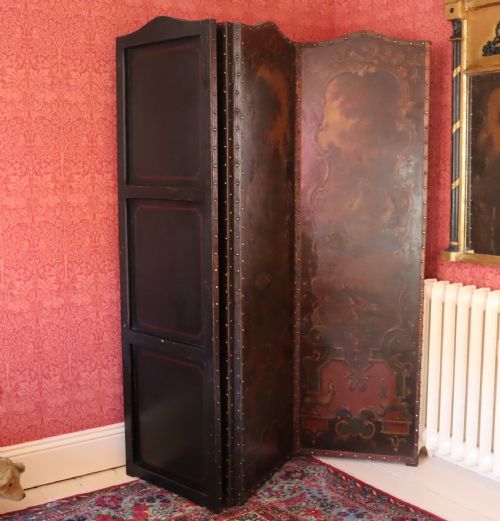


Four Panel Folding Screen
A four panel folding screen divides a room or frames a corner, bringing architectural scale and texture to an interior.
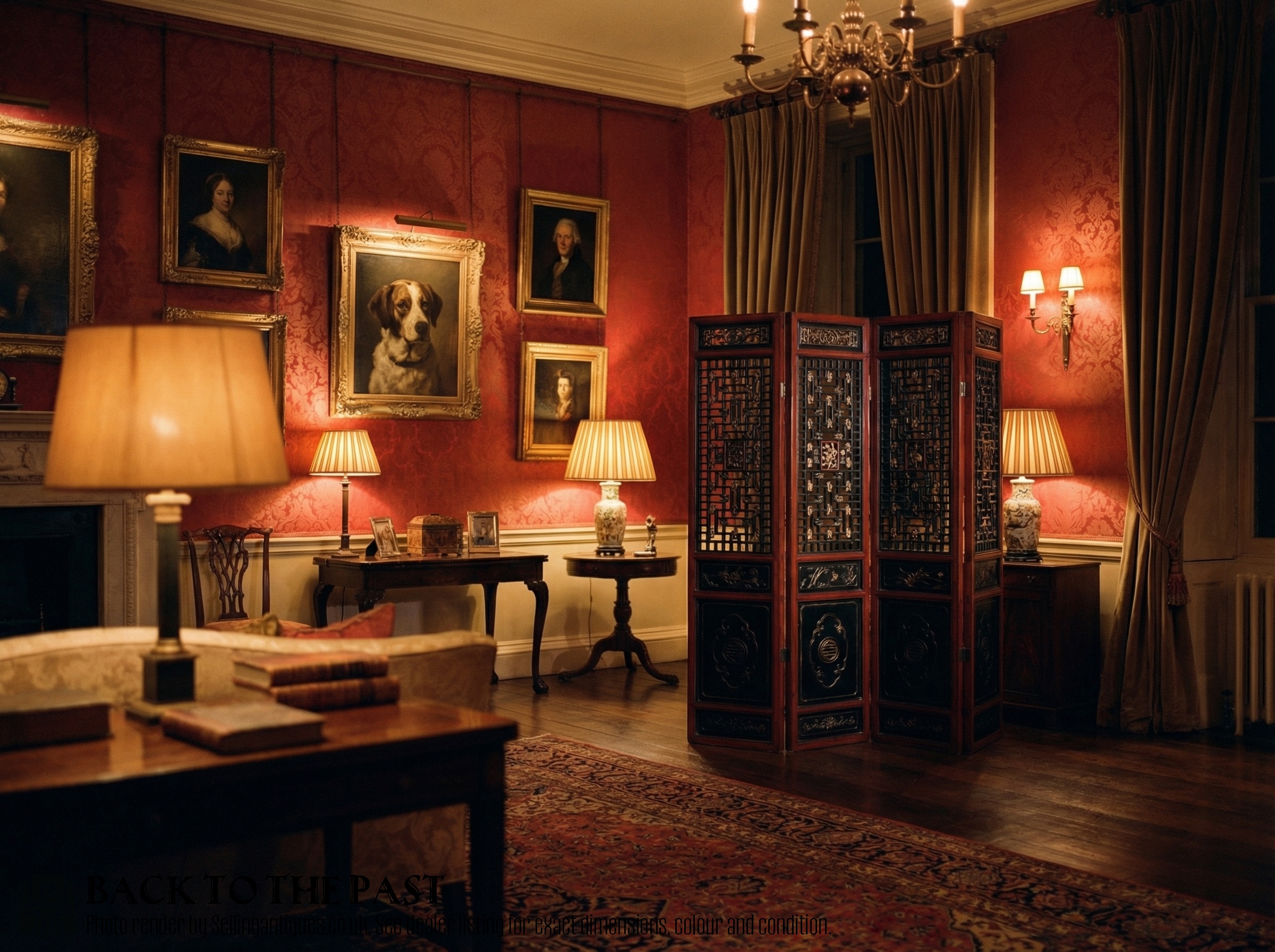
Four Panel Folding Screen
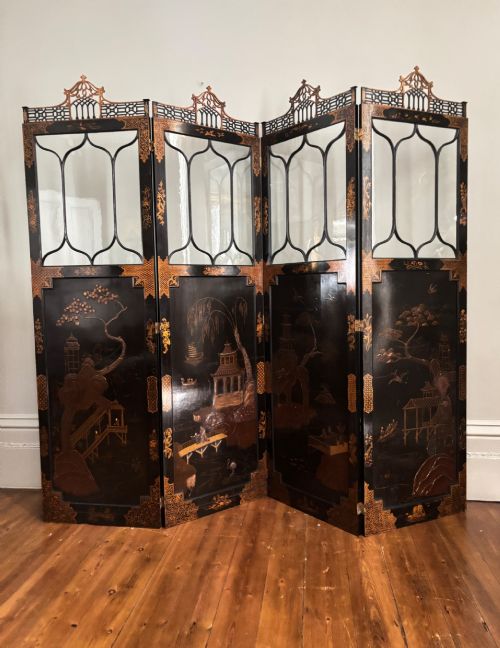
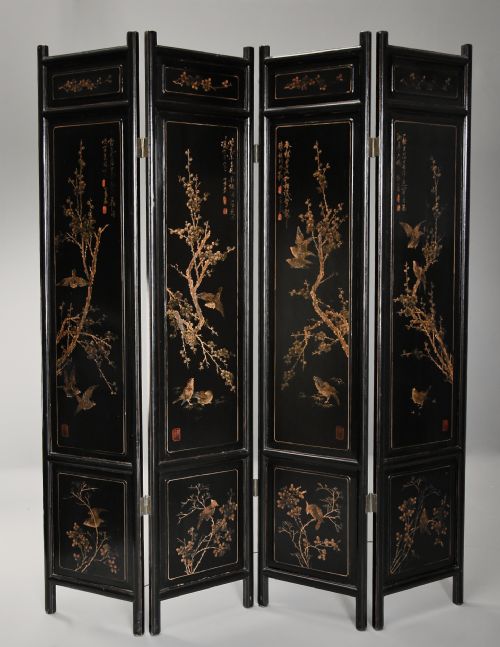
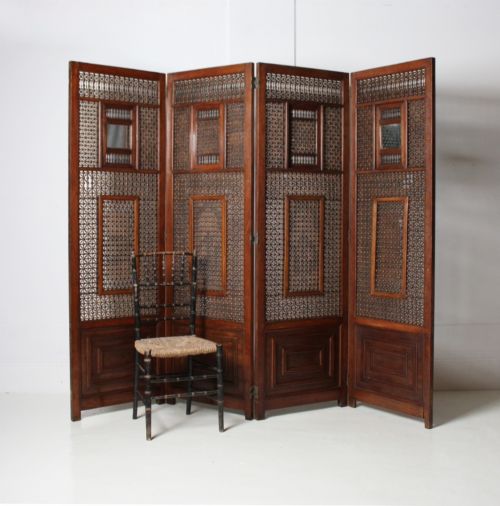
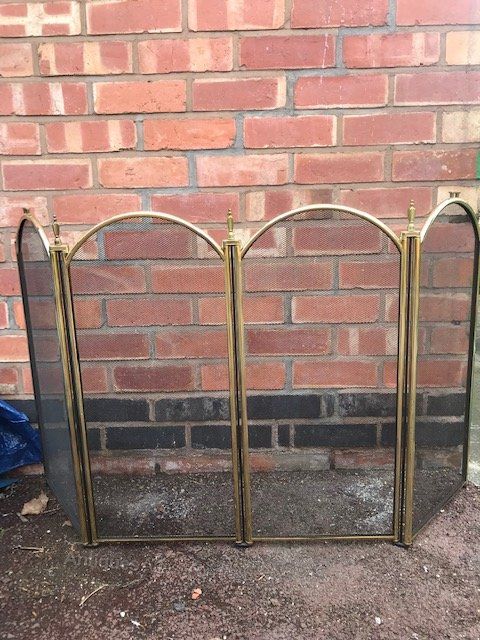
A four panel folding screen divides open spaces or creates private zones within a room. The pieces seen here span the eighteenth century to the twentieth century, taking forms such as room dividers, dressing screens, and fire screens.
Victorian and Edwardian examples predominate, alongside earlier eighteenth century pieces and twentieth century interpretations. Materials range from wood and leather to canvas, brass, glass, and iron.
Styles vary from Chinese Chippendale and Chinoiserie to Arts and Crafts, Regency, and French Chateau designs. These objects function equally as functional partitions and decorative surfaces.
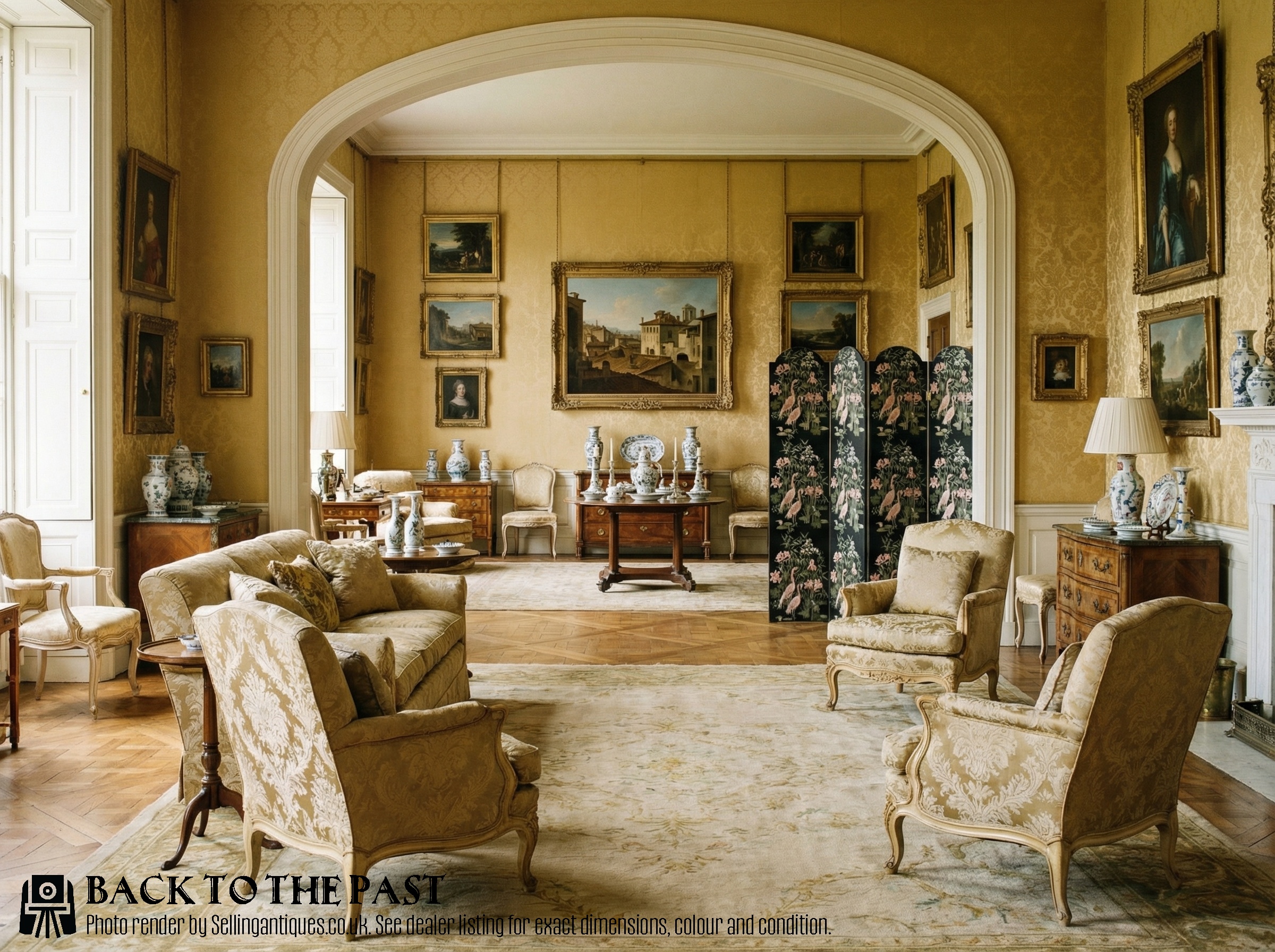
How they were made
Wood frameworks of mahogany, oak, walnut, and ebonised hardwood provide the structural support for hinges and panels. Carved details, fretwork, and joinery underpin the stability of each folding section.
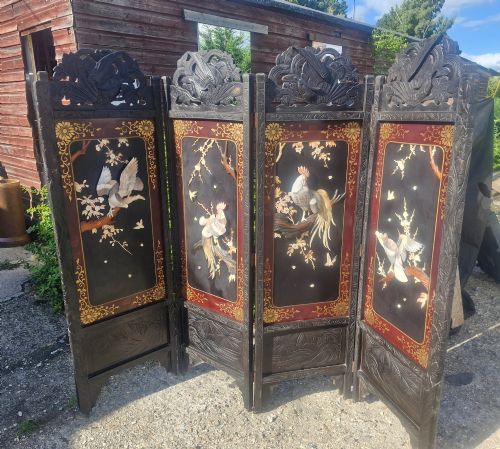
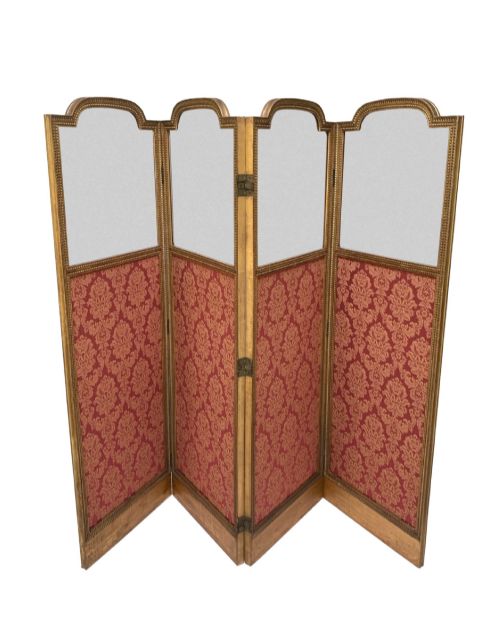
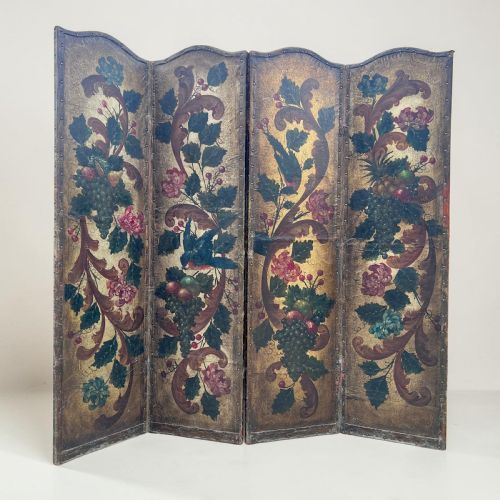
Surface decoration relies on diverse techniques including hand painting, lacquer, gilt embossing, and polychrome finishes. Textiles, needlepoint, leather, canvas, silk cotton, and paper clippings are applied directly to the frames to form the visual panels.
Four Panel Folding Screen Retail Price Guide 2026
Typical asking prices for four panel folding screen among the pieces listed under this phrase on Sellingantiques today, from the lower quarter to the upper quarter. They describe what is for sale here now, not the wider market.
Victorian scrap work screens use layered paper ephemera, turning casual parlour cuttings into permanent interior decoration.
What varies in quality
The sophistication of the surface decoration determines the distinction between standard production and exceptional examples. Hand-painted motifs, deep bone carvings, gilt embossing, and applied hardstones require high levels of artisan skill.
The integrity of the frame construction and the original hinges dictate the longevity and movement of the panels. Substantial timber framing and intact historic textiles elevate a piece beyond simple utilitarian screening.
Liberty and Co·Paul Sormani·William Morris
The Four Panel Folding Screen Glossary
- Chinoiserie
- European decorative style inspired by Chinese artistic traditions. It appears on lacquered and painted screens of the eighteenth and nineteenth centuries.
- Cordoban leather
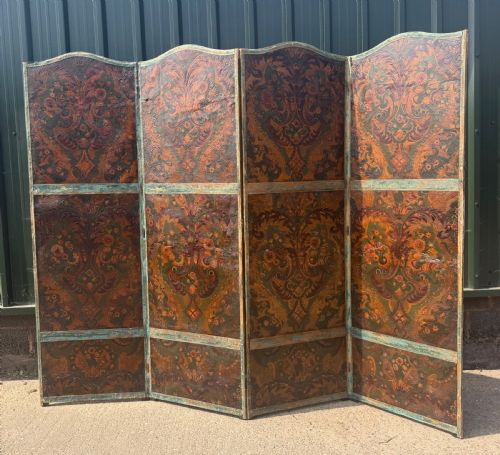
- Embossed and painted leather produced originally in Spain. It provides a durable and decorative surface for high status screens.
- Mashrabiya
- Wooden latticework joinery used for architectural screens and room dividers. It filters light while maintaining privacy between spaces.
- Scrap work
- Method of decorating panels with cut-out paper prints and decoupage. Victorian examples often layer these scraps across canvas or wood.
- Hardstone
- Polished minerals such as jade or soapstone applied in relief. Japanese and Chinese lacquer screens frequently employ this technique on panels.
Four Panel Folding Screen: Frequently Asked Questions
How do I use a four panel folding screen?
These screens divide large rooms, conceal utilitarian corners, or create dressing areas within bedrooms. Their hinged panels adjust to fit various angles and floor plans.
They also function as decorative backdrops against plain walls or serve as photographic props. Smaller versions protect hearths as fire screens.
How do I care for leather and canvas panels?
Keep painted leather and canvas screens away from direct sunlight and excessive moisture to prevent cracking or fading. Dust them gently with a dry, soft cloth.
Avoid commercial cleaning sprays or water on historic painted surfaces. Professional conservation advice is recommended for repairs.
How can I tell the period of a screen?
Examine the hinge types, wood species, and underlying construction methods for clues to the date. Eighteenth-century pieces often feature heavy leather and hand-painted Chinoiserie.
Victorian and Edwardian versions frequently use scrap work, needlepoint, or ebonised oak frames. Later twentieth-century examples display simpler joinery and different lacquer finishes.
Are these screens stable on hard floors?
Four panel screens rely on zig-zag positioning to stand securely upright. Placing them in a completely flat line reduces their stability.
Heavier hardwood and brass frames provide natural ballast, while lighter fabric or paper panels need careful angle adjustment to prevent tipping.