


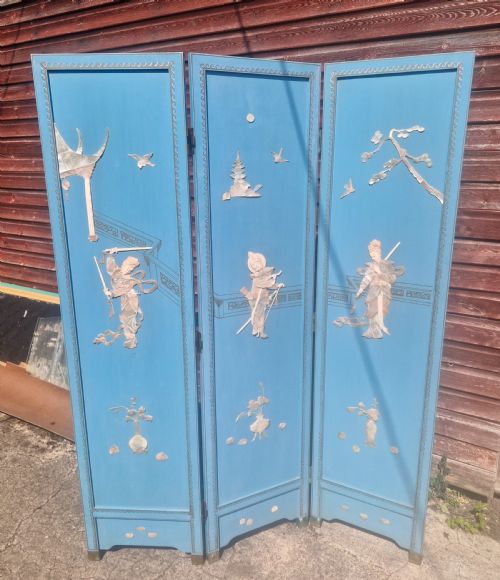


Antique Folding Partition
These multi-panel antique folding partition pieces divide a room or create privacy with architectural presence and historical craftsmanship.

Antique Folding Partition
An antique folding partition takes the form of multi-fold room dividers, privacy screens, and dressing screens spanning the Victorian, Edwardian, and nineteenth-century periods. These hinged assemblies operate as movable walls, historically utilised to divide large chambers or shield occupants from draughts.
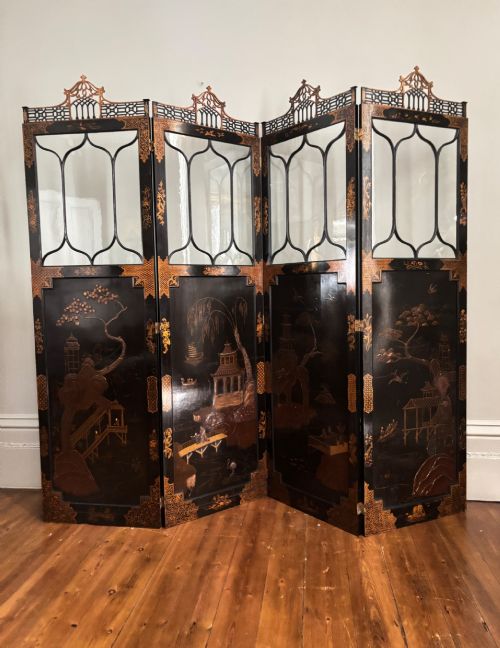
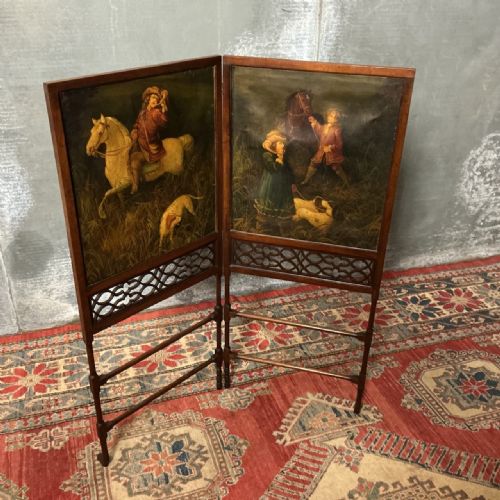
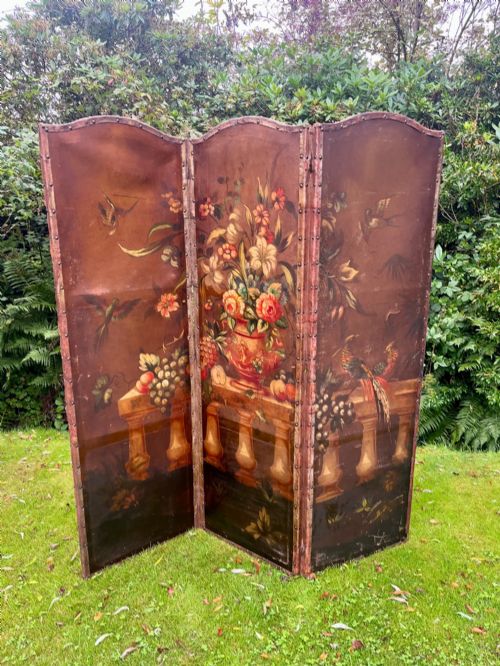
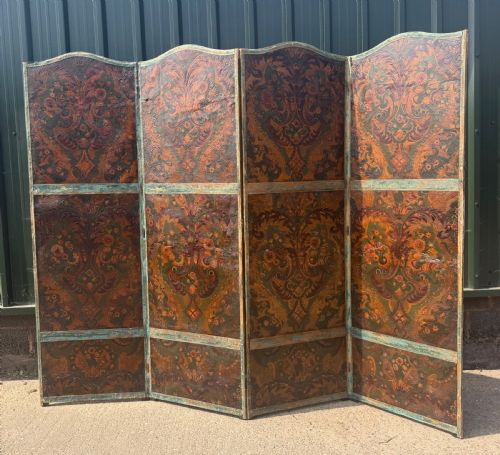
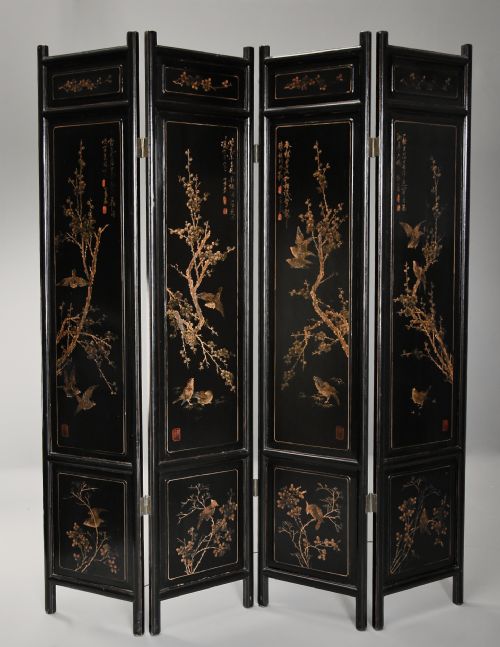
The versions most commonly met on this page range from tall four-fold canvas and leather examples to Chinese lacquered screens and mahogany frames inset with oil paintings or textiles. Formats span from intimate table screens to large freestanding panels designed for country houses and domestic interiors.
Materials and construction methods
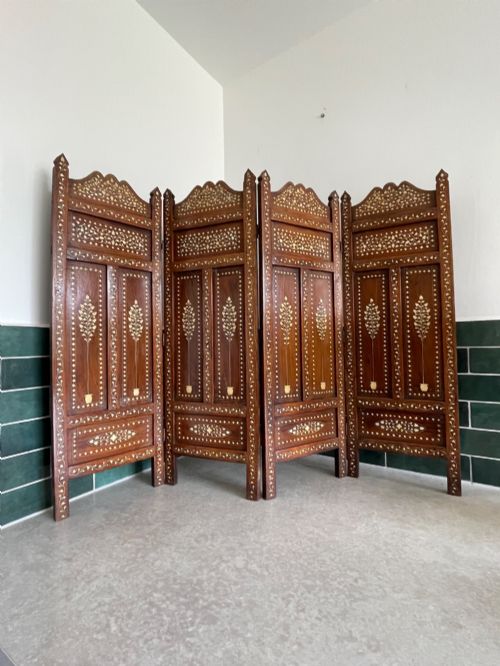
Frames rely principally on timber such as mahogany, oak, walnut, and padauk, joined with hinges to permit multi-directional folding. Structural stability requires sturdy joinery to support the weight of heavy panels over multiple folds.
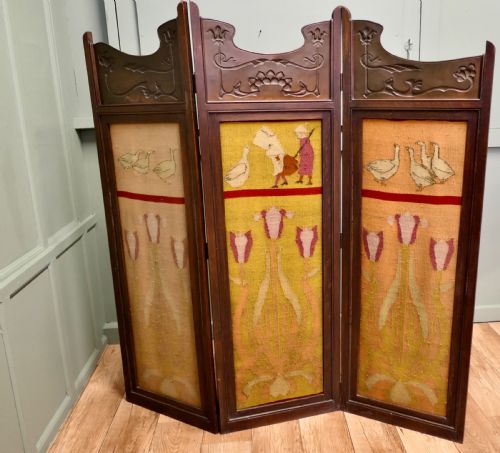
Infill materials demand diverse artisanal techniques, including hand-painted leather, polychrome canvas, carved lacquer, silk embroidery, needlepoint, and glass glazing. Surface decoration frequently incorporates giltwood highlights, oil paintings, and applied scrap work.
Current listings feature frames built from oak, mahogany, walnut, and padauk, spanning the Victorian and Edwardian periods.
Qualities that distinguish the range
Distinctions in quality rest upon the integrity of the original hinges, the execution of the surface artwork, and the selection of primary timbers. Superior examples exhibit intricate hand-carving, detailed brushwork, and intact period textiles without modern alterations.
Lower tiers often involve replacement panels, degraded surface finishes, or compromised structural framing that affects the smooth operation of the folding leaves. The depth of relief carving and the complexity of the lacquer work mark the upper echelon of surviving pieces.
Paul Sormani
The Antique Folding Partition Glossary
- Coromandel
- A type of Chinese incised lacquer work where designs are cut into a dark ground and filled with colours.
- Mashrabiya
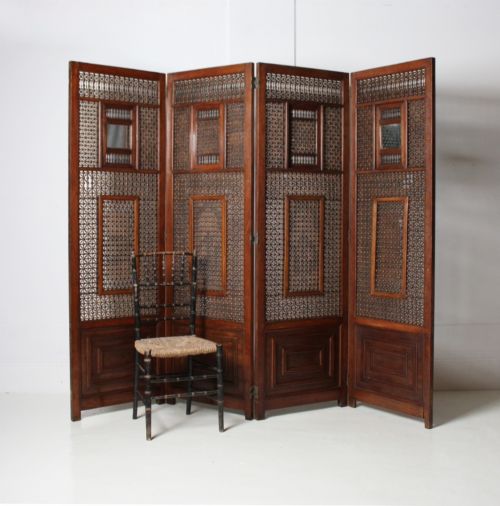
- An architectural wooden screen characterised by intricate lattice work formed from turned bobbins.
- Aubusson
- A woven tapestry technique originating from French workshops, frequently utilised for decorative screen panels.
- Scrap work
- A Victorian craft method involving the application of paper cut-outs and lithographs onto a backing surface.
- Bergere
- An upholstered armchair style occasionally referenced in the construction of inset screen panels.
Antique Folding Partition: Frequently Asked Questions
How many panels do these screens have?
Surviving examples commonly feature three, four, or eight hinged leaves depending on their original intended scale and function.
Table screens and smaller vanity versions typically utilise three panels, whereas full-height room dividers frequently incorporate four or more sections.
What materials are common in these partitions?
Construction materials encompass hardwoods like mahogany, oak, and walnut, paired with decorative infills such as leather, silk, canvas, and glass.
Asian imports often showcase black lacquer and carved coromandel, while European variants favour oil paintings, needlepoint, and découpage.
How do I care for a folding screen?
Preservation requires placing the screen away from direct sunlight and sudden temperature fluctuations to protect fragile painted surfaces, lacquers, and textiles.
Gentle dusting with a dry cloth maintains the wood and finish without introducing moisture that could damage historic adhesives or canvas.