





Victorian Room Divider
A victorian room divider is a folding privacy screen or partition that structures large interiors and shapes the flow of light.
Victorian Room Divider
A victorian room divider appears predominantly as a folding screen spanning three, four, or five panels linked by hinges. These pieces serve to segment large spaces, shelter corners from draughts, or create intimate dressing areas within a chamber.
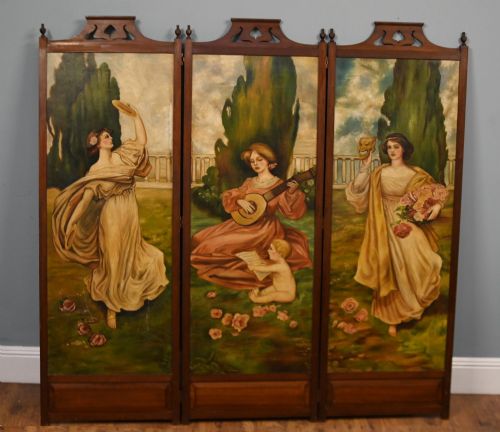
The materials span mahogany, oak, pitch pine, and walnut frames combined with leather, canvas, paper, glass, and needlepoint panels. Crafting these partitions involved skilled joinery and diverse surface decoration, ranging from hand-painted Chinoiserie and giltwood to decoupage scrap work.
Examples originate from English, French, Italian, and Chinese Chippendale traditions, reflecting diverse aesthetic movements such as Regency, Rococo Revival, Arts and Crafts, and Louis XVI style. These objects function equally as decorative focal points and practical barriers in domestic settings.
Materials and Technique
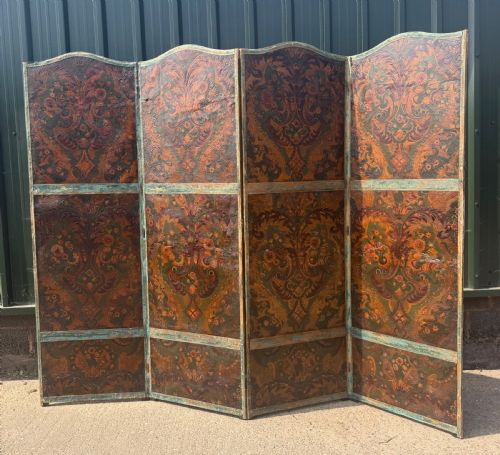
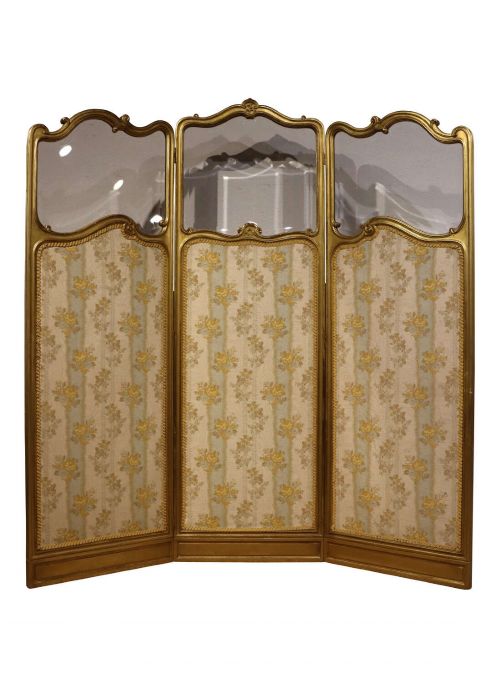
Frames are constructed from sturdy timbers including mahogany, walnut, oak, and pitch pine, often shaped into multi-fold configurations with functional bi-fold hinges. Giltwood and lacquered papier-mâché provide ornate structure for more decorative iterations.
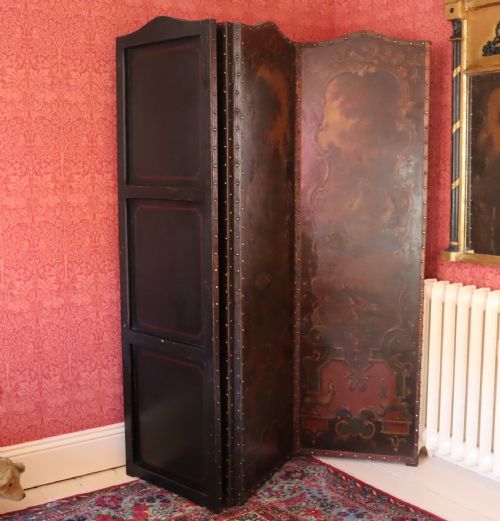
Surfaces feature layered mediums such as hand-painted leather, polychrome canvas, silk panels, and paper decoupage scrap work. Glazed sections incorporate bevelled glass or stained glass panels, while textile components utilise woolwork needlepoint and tapestry fabric.
Numerous folding screens served past photographers as studio backdrops for formal Victorian portraits.
Indicators of Excellence
Construction standards depend upon the robustness of the timber framing and the execution of the original hinge mechanisms, which determine whether a multi-fold screen remains stable and fully reversible over time. Superior joinery ensures that panels hang true without sagging.
The distinction between ordinary and exceptional work lies in the execution of surface art, such as finely detailed hand-painted Chinoiserie lacquer, intricate needlepoint, or carefully composed scrap work decoupage. Original finishes and intact glass or silk panels elevate the integrity of the piece.
The Victorian Room Divider Glossary
- Scrap work
- A decorative technique utilising printed paper cut-outs pasted onto a panel and varnished. This method produced dense, narrative displays popular during the nineteenth century.
- Chinoiserie
- European interpretations of Chinese and East Asian artistic traditions. It frequently appears on lacquered screens featuring figures, landscapes, and floral motifs in gold and black.
- Bevelled glass
- Glass panes with angled edges cut and polished to a specific angle. This technique refracts light and adds decorative depth to glazed screen panels.
- Pitch pine
- A resinous North American softwood utilised in structural joinery and furniture making. It displays a prominent grain pattern and substantial durability.
Victorian Room Divider: Frequently Asked Questions
How were folding screens used?
These partitions were positioned around fireplaces to block radiant heat and drafty doors to protect occupants from cold air currents. They also established private dressing spaces in bedrooms and served as photographic studio backdrops.
Their mobility allowed owners to reconfigure room layouts instantly according to daily domestic requirements.
How do I identify different styles?
Styles are determined by framing timbers, decorative motifs, and regional influences. French examples often feature giltwood and carved walnut, while English pieces frequently utilise mahogany, oak, or pitch pine.
Decorative elements like needlepoint tapestry indicate specific textile movements, whereas black lacquer and gilt designs point to Chinoiserie aesthetics.
How do I care for a wood and leather screen?
Keep wooden frames and leather panels away from direct sunlight and excessive heat sources to prevent warping and cracking. Dust regularly with a dry cloth and avoid harsh liquid cleaners on painted or gilded surfaces.
Ensure hinges are supported properly when folding the panels to maintain structural stability over time.