



Wooden Privacy Screen
These wooden privacy screen examples divide a room with elegance, offering both seclusion and decorative impact.
Wooden Privacy Screen
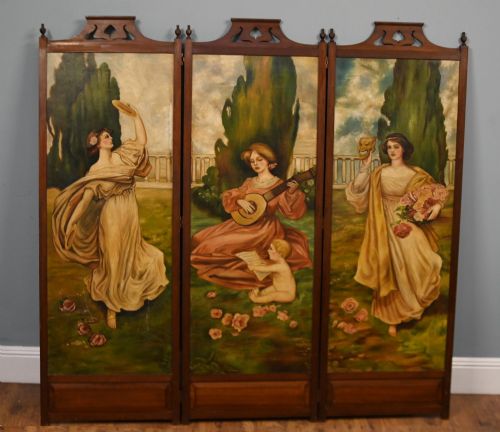
A wooden privacy screen stands as a functional architectural divider designed to section off parts of a room or obscure areas from view. When exploring this selection, buyers encounter folding panels originating from diverse global traditions, ranging from European painted designs to intricate Eastern craftsmanship.
The pieces on this page span several distinct periods, including the nineteenth century, Regency era, and early twentieth century. Common forms include multi-panel folding structures, modest dressing screens, and tall room dividers constructed from sturdy timbers.
How they were made
Craftsmen built these screens using hardwoods such as mahogany, walnut, and oak to ensure structural stability across multiple hinged panels. Joinery techniques varied from traditional framing to intricate fretwork, allowing panels to fold smoothly.
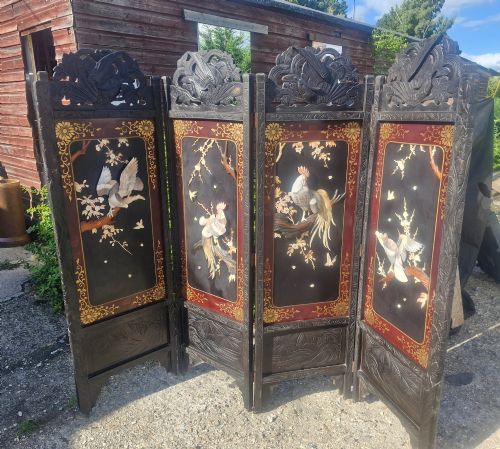
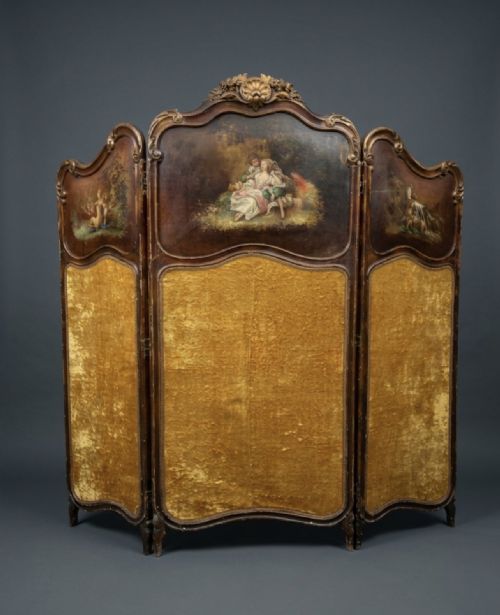
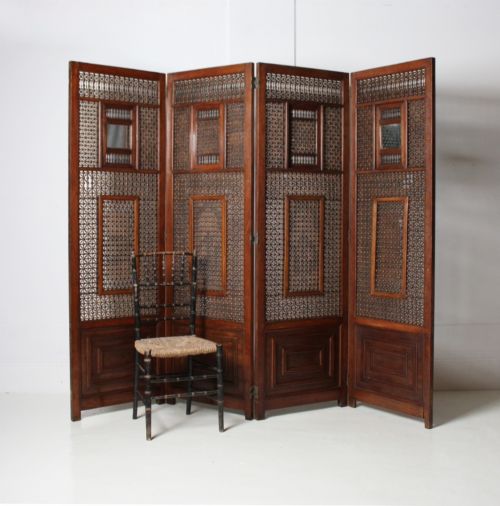
Surface ornamentation involved diverse methods, including hand-applied paint, deep bone carving, lacquer work, and the incorporation of textiles like velvet and needlepoint. Mashrabiya screens utilised intricate wooden lattice construction to filter light and air while maintaining seclusion.
Listings feature oak, mahogany, and walnut panels adorned with paint, lacquer, and velvet.
What varies in quality
Quality in a wooden privacy screen rests upon the density of the timber used and the precision of the joinery connecting the panels. Heavier woods and robust hinges ensure the structure stands firmly without sagging over time.
The refinement of the surface decoration further distinguishes finer examples. Hand-painted artistry, deep sculptural carving, and the integration of specialised fabrics demonstrate superior workmanship compared to simpler utilitarian versions.
The Wooden Privacy Screen Glossary
- Mashrabiya
- An architectural element featuring wooden lattice work, often utilised in panels to provide seclusion while allowing ventilation.
- Fretwork
- Ornamental design created by cutting patterns through wood, commonly seen in intricate screen panels.
- Needlepoint
- Embroidery stitched on canvas mesh, frequently inset into panels for decorative texture.
- Lacquer
- A durable resin finish applied in multiple layers to wooden surfaces, often polished to a smooth sheen.
- Dressing screen
- A portable folding partition historically used for changing clothes in private chambers.
Wooden Privacy Screen: Frequently Asked Questions
How are wooden privacy screens used today?
These screens serve to section off open-plan living areas, create quiet reading corners, or simply act as striking decorative backdrops against a wall.
They offer a flexible way to alter the layout of a room without undertaking permanent building work.
Can these screens block light entirely?
Solid wooden panels and those upholstered in thick fabrics will effectively block light from passing through the partition.
Conversely, screens featuring fretwork or lattice designs like mashrabiya allow light and air to filter gently through the gaps.
How do I maintain the wooden frame?
Regular dusting with a soft, dry cloth helps preserve the timber and any applied surface finishes.
Avoid placing the screen in direct sunlight or near heat sources to prevent the wood from warping and the hinges from loosening.
How do I identify the period of a screen?
Examining the timber type, hinge style, and decorative motifs offers strong clues regarding the era of manufacture.
Stylistic elements such as hand-painted floral panels or carved bone figures often reflect the aesthetic preferences of nineteenth and early twentieth-century workshops.