
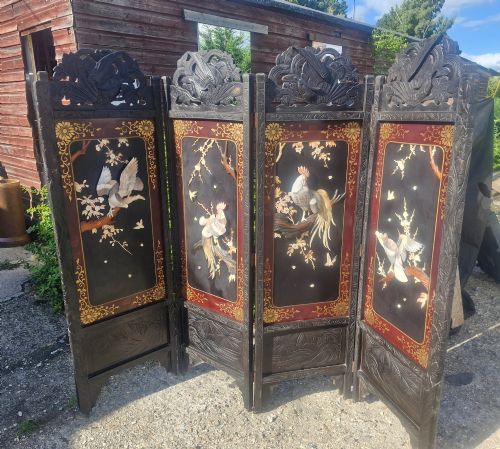
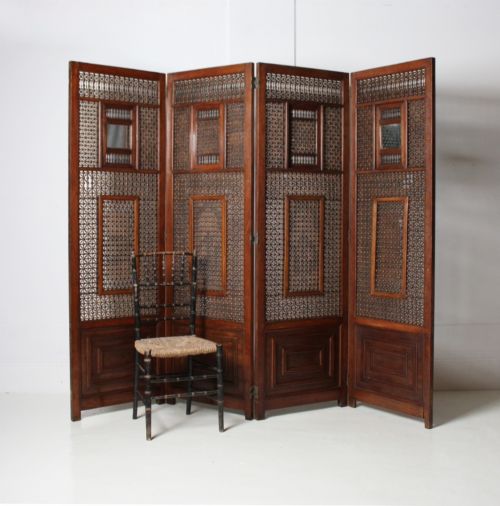

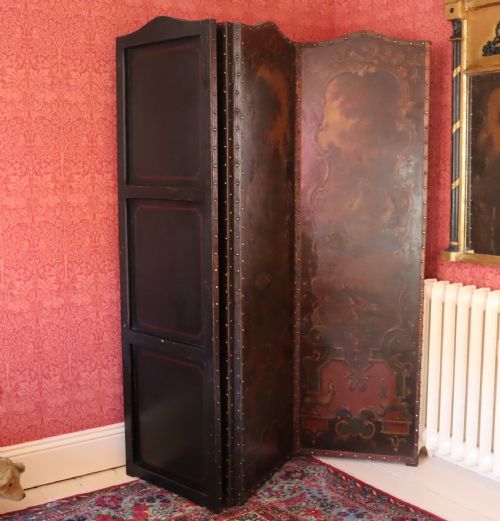
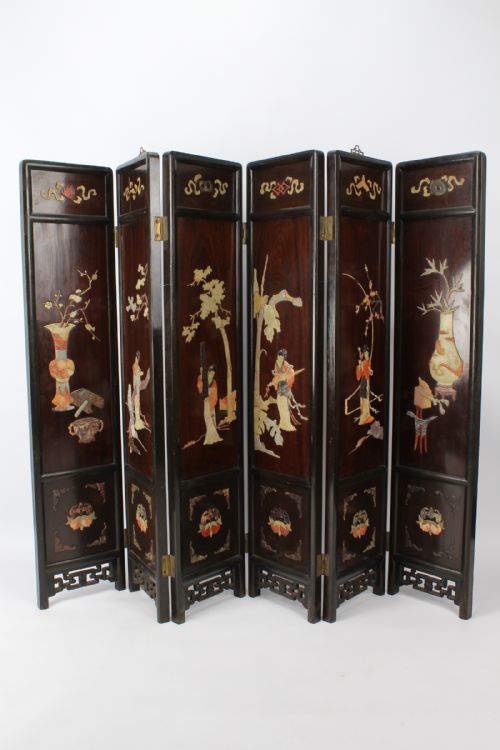


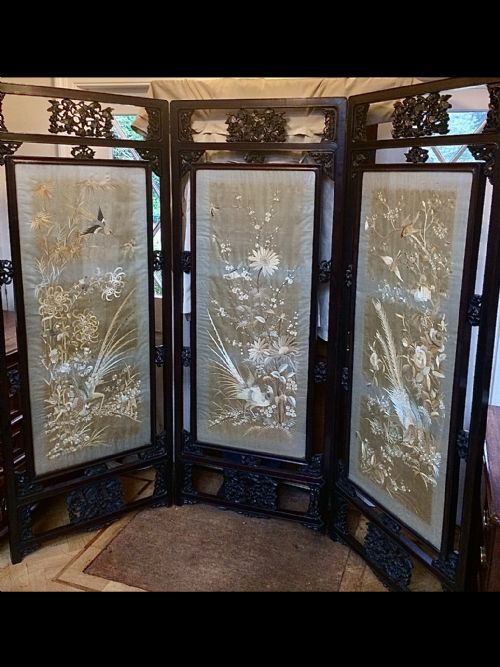


Dark Wood Folding Screen
These dark wood folding screen pieces divide spaces with rich timber and intricate panels, offering instant privacy and character to a room.
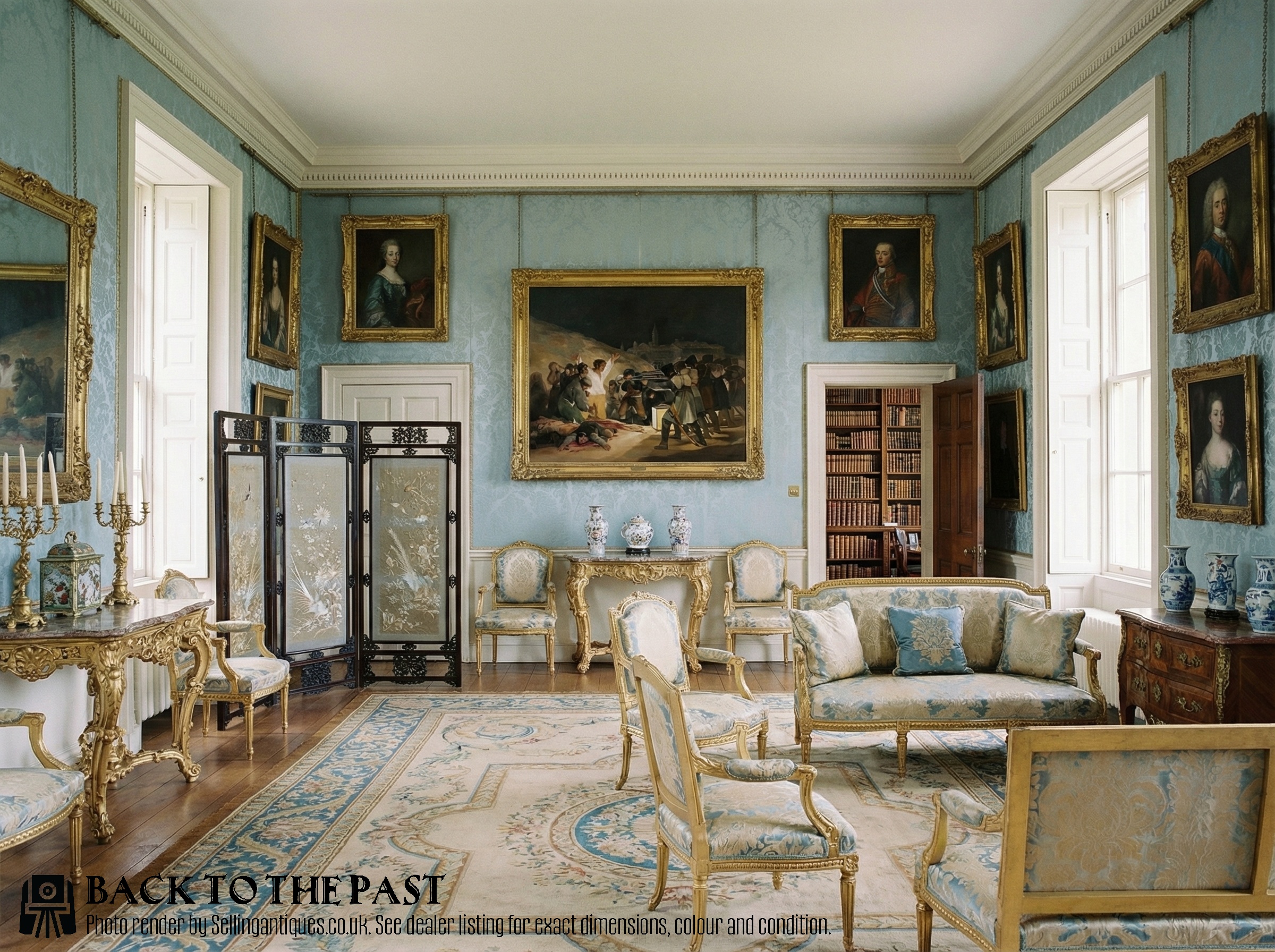
Dark Wood Folding Screen
A dark wood folding screen brings architectural presence and flexible division to domestic spaces. Buyers encounter various forms on this page, spanning tall multi-panel room dividers and smaller fire screens designed for hearths.
The selection ranges across several distinct cultural traditions and eras, including Victorian, Regency, Meiji, and Qing Dynasty pieces. Makers utilised sturdy timbers and hinged panels to create portable barriers that rearrange interiors instantly.
Examples vary from Anglo-Indian mashrabiya panels and Burmese work to Japanese hardwood designs and English needlepoint fire screens. Each dark wood folding screen reflects the functional and decorative demands of its period.
Materials and construction
Craftsmen built these pieces using dense timbers such as mahogany, teak, and various hardwoods to ensure stability across multiple hinged panels. Surfaces often incorporate complex carving, painted details, or specialised joinery.
Decoration frequently includes bone inlay, lacquered finishes, and applied silk or needlepoint fabric panels. These diverse elements showcase traditional woodworking and surface ornamentation techniques from different global regions.
Dark Wood Folding Screen Retail Price Guide 2026
Typical asking prices for dark wood folding screen among the pieces listed under this phrase on Sellingantiques today, from the lower quarter to the upper quarter. They describe what is for sale here now, not the wider market.
Current listings span the nineteenth and early twentieth centuries, featuring materials such as brass, bone, lacquer, fabric, and teak.
Assessing quality and execution
Quality rests in the crispness of the carving, the integrity of the timber, and the precision of the hinges connecting each panel. Superior examples display deep, deliberate relief work and well-balanced frames that stand true.
Materials selection also dictates standing, with fine bone inlay, hand-painted details, and fully reversible mahogany construction separating standard items from exceptional ones. The complexity of the fretwork or needlepoint further elevates the piece.
The Dark Wood Folding Screen Glossary
- Mashrabiya
- A traditional wooden architectural screen characterised by intricate turned lattice work. This technique creates geometric patterns that filter light and air.
- Fire screen
- A decorative panel placed before a fireplace when not in use. These smaller screens protect rooms from drafts or excessive heat.
- Reversible
- A construction method allowing panels to fold in both directions. This design offers greater versatility in positioning the room divider.
- Needlepoint
- A type of canvas work embroidery utilised for decorative panel inserts. It provides a textured, colourful surface within a wooden frame.
- Inlay
- A decorative technique where materials like bone are set into the surface of the timber. It creates contrasting patterns against the dark wood background.
Dark Wood Folding Screen: Frequently Asked Questions
How do I use a room divider?
These folding pieces segment large rooms, create private corners, or mask areas that require visual separation.
Their hinged design allows you to adjust the angle and footprint to suit your floor space.
Are fire screens different from room dividers?
Fire screens are traditionally smaller portable panels designed specifically to sit in front of a domestic hearth.
Room dividers feature taller multi-panel configurations intended to partition open living areas.
How do I identify the period of a screen?
Dating relies on stylistic clues, timber choice, and decorative motifs such as Japanese bone figures or English needlework.
Construction methods and hinge types also offer clear indicators of the era of manufacture.
How should I care for dark wood?
Maintain the timber by keeping the screen away from direct heat sources and sudden temperature fluctuations.
Dust the carved surfaces gently and avoid harsh chemical polishes that might damage lacquered or inlaid details.