

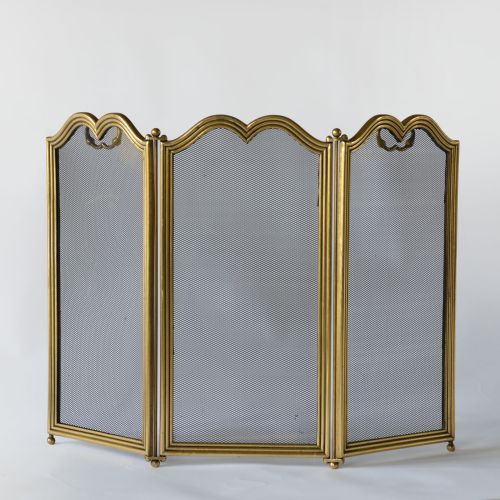


Edwardian Folding Screen
An edwardian folding screen divides a room or frames a hearth with versatile panelled structure.
Edwardian Folding Screen
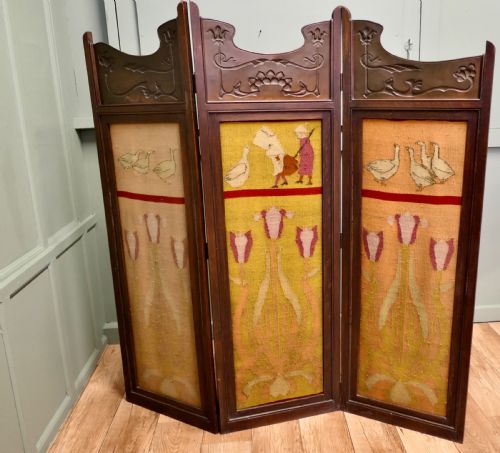
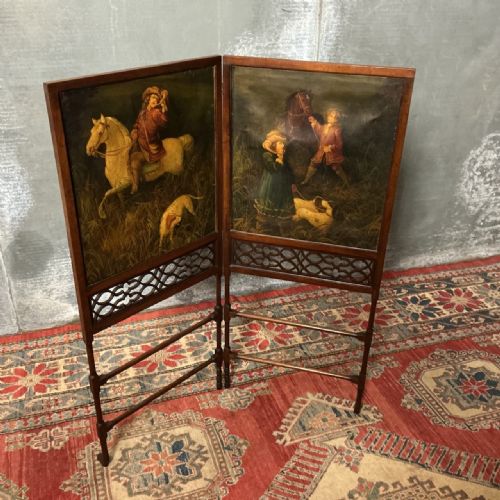
An edwardian folding screen divides space or guards a hearth using hinged panels spanning multiple folds. You will most often meet mahogany frames holding fabric, oil paintings, inlaid wood, or glass.
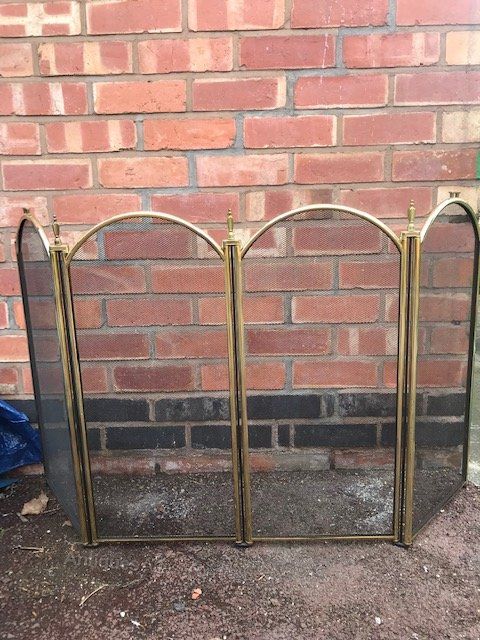
The materials range from brass and copper to oak, walnut, and black lacquer. These pieces serve as room dividers, dressing screens, and fire guards.
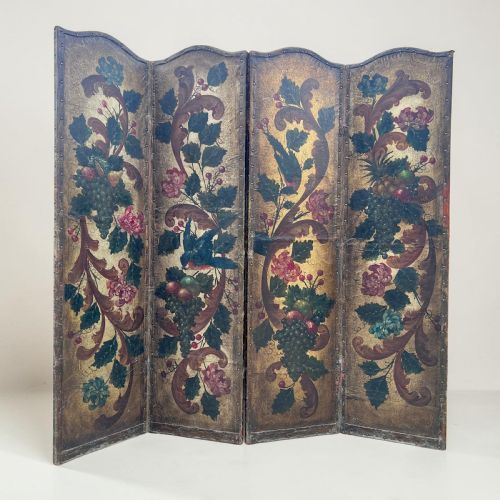
Examples appear in styles from Art Nouveau and Arts and Crafts to Chinoiserie and French Rococo Revival. The periods stretch from the Victorian era through the 1930s, anchored firmly by Edwardian craftsmanship.
How they were made
Makers constructed frames from solid timbers including mahogany, oak, and walnut, joined with hinges to permit multi-fold movement. Metal elements utilise brass and copper, sometimes with fine mesh or black finishes.
Infill panels display diverse techniques such as oil painting, hand painting, leatherwork, needlework, embroidery, and woven fabric. Lacquered surfaces feature papier mâché, hardstone mounts, and Chinoiserie decoration.
Fretwork and inlay embellish wooden frameworks, while metamorphic designs allow fire screens to double as occasional tables.
The listings here incorporate timber, brass, copper, glass, lacquer, and fabric across periods spanning from the Victorian era into the 1930s.
What varies in quality
The distinction between tiers rests upon the execution of the panel infills and the integrity of the frame construction. Hand-painted art, fine needlework, and oil paintings elevate a piece above standard printed textiles.
Materials dictate weight and longevity, with dense hardwoods like mahogany and walnut supporting elaborate multi-fold configurations better than lighter substitutes. The precision of the hinges and the smoothness of the folding action determine mechanical durability.
The Edwardian Folding Screen Glossary
- Tripartite
- Composed of three parts or folds. This layout commonly appears in smaller dressing and room dividing screens.
- Spark guard
- A metal screen designed to protect a room from fireplace embers. These items utilise brass, copper, and wire mesh.
- Chinoiserie
- European imitation of Chinese artistic traditions. This style manifests in black lacquer finishes and decorative motifs.
- Bergere
- An enclosed upholstered armchair style, occasionally referenced in partition screens. It incorporates woven cane panelling.
- Metamorphic
- An object designed to transform into another form of furniture. Examples include fire screens that convert into occasional tables.
Edwardian Folding Screen: Frequently Asked Questions
How do I use a folding screen at home?
These screens partition large rooms, conceal dressing areas, or act as decorative backdrops. Smaller versions serve as fireplace spark guards.
Position them against walls or angle the folds to create cosy enclosures in living spaces.
What materials are typical for these screens?
Common materials include mahogany, oak, walnut, brass, and copper frames. Panels feature fabric, leather, lacquer, glass, and painted canvas.
Combination pieces utilise wood paired with metal mesh or embroidered textiles.
How do I date an edwardian screen?
Examine the timber, hardware, and decorative motifs for period indicators. Edwardian examples often display mahogany with inlaid details or fabric panels.
Compare the construction methods with adjacent Victorian or 1930s pieces to confirm the era.
Can fire screens double as tables?
Certain designs incorporate metamorphic mechanics that allow the screen to pivot into a horizontal position. This transforms the vertical guard into an occasional table.
Such pieces combine hearth safety with functional surface space.