


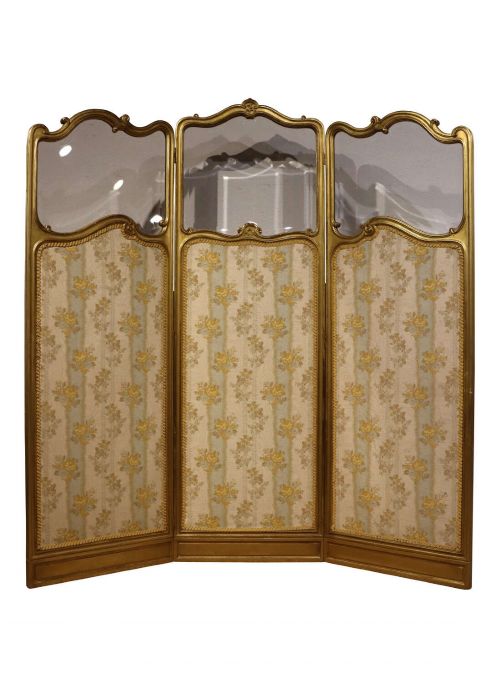

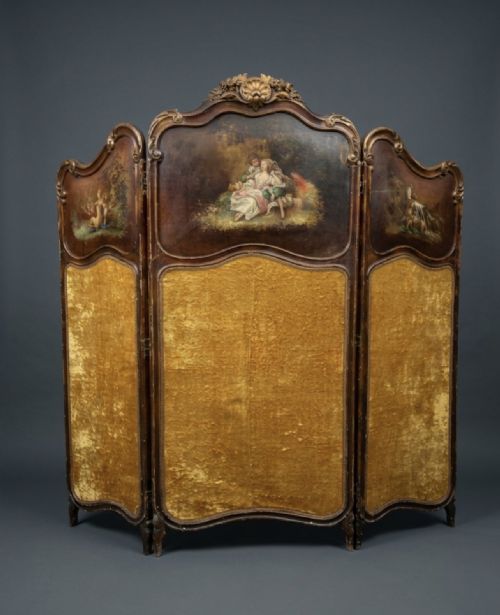

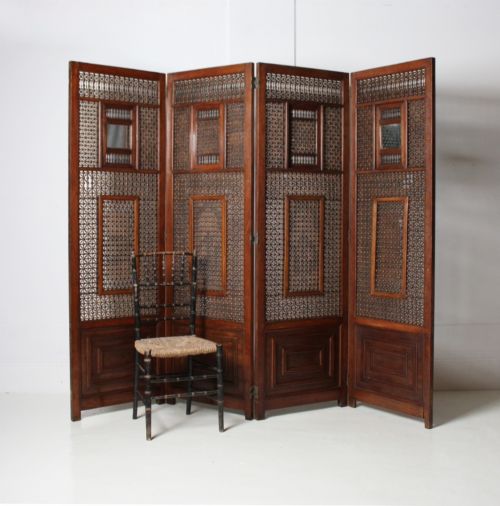
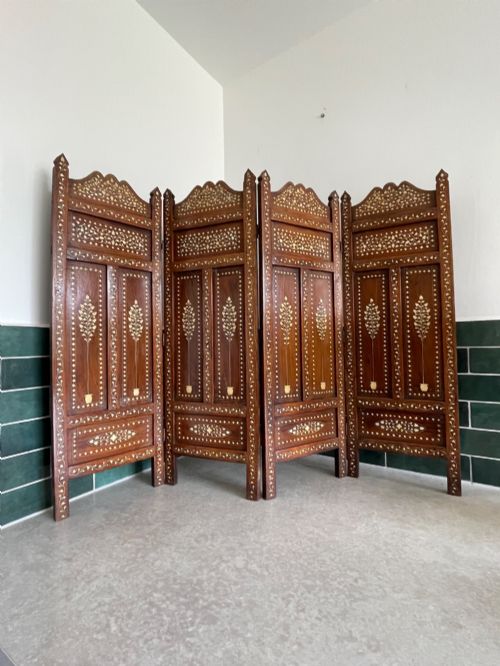
Antique Room Divider Screen
When choosing an antique room divider screen, you select a movable architectural partition that defines living space with period character.
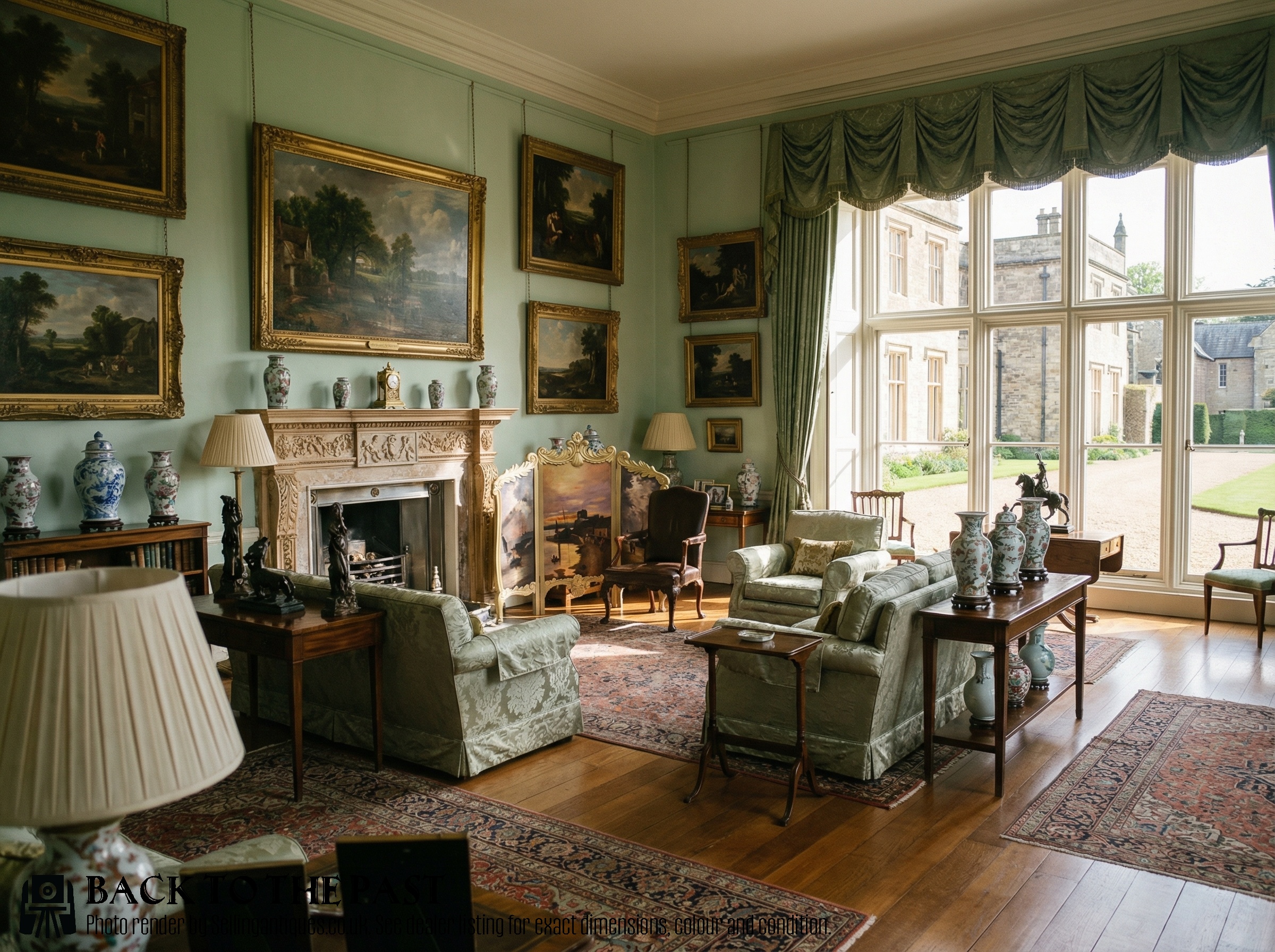
Antique Room Divider Screen
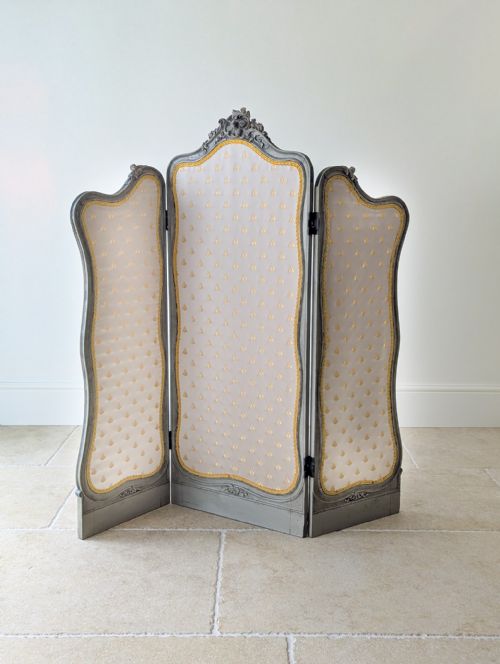
An antique room divider screen functions as a hinged, multi-panel partition designed to segment domestic interiors, manage draughts, or create privacy within larger chambers. These objects survive in formats ranging from modest three-fold vanity screens to commanding eight-fold architectural barriers.
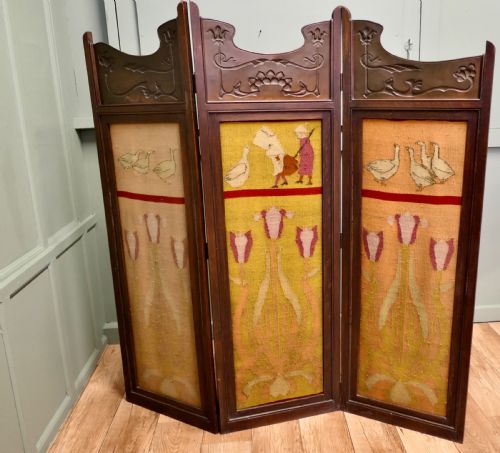
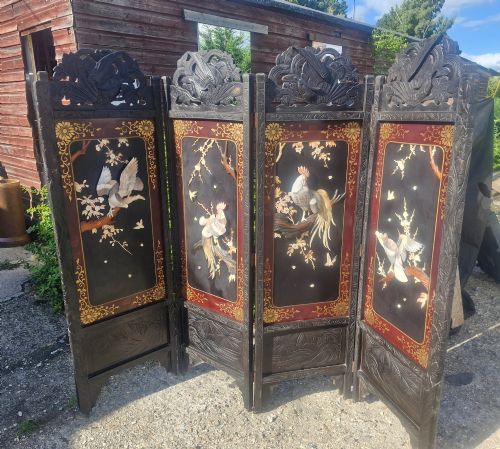
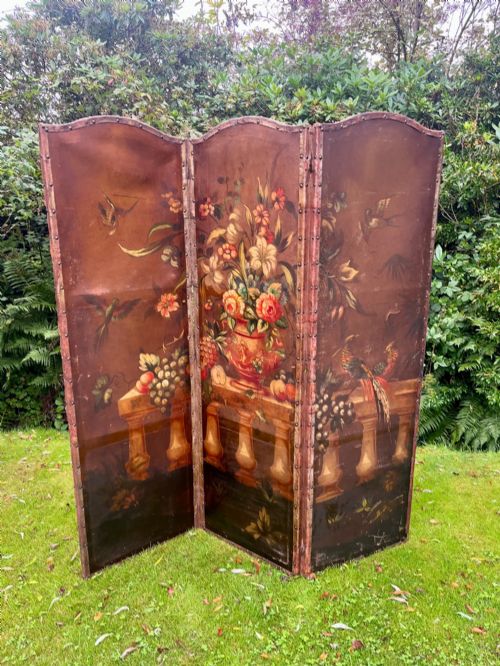
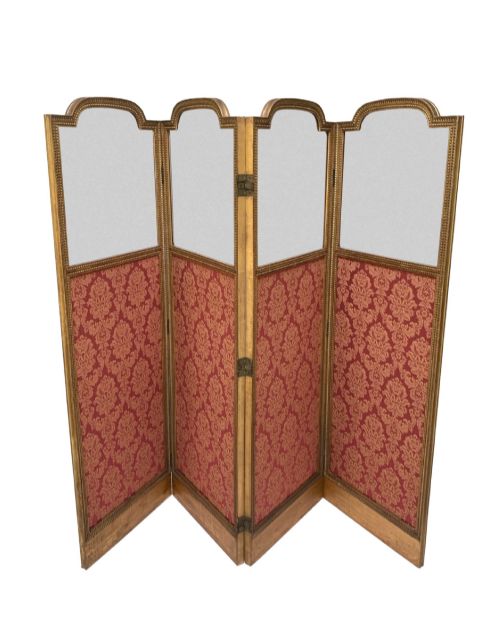
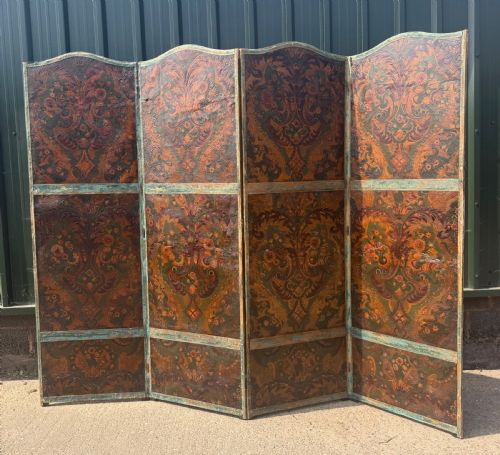
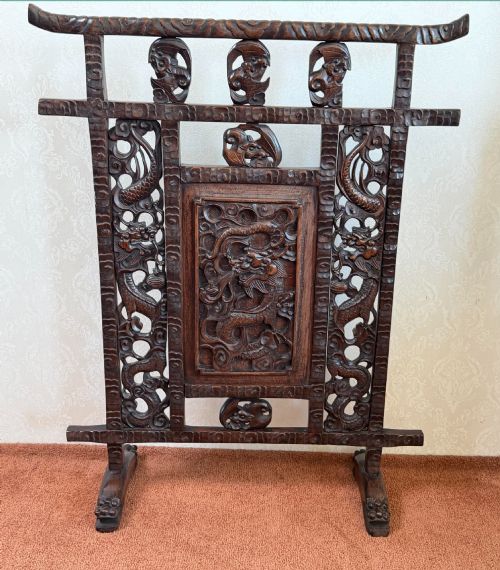
The versions most commonly met on this page include nineteenth-century European painted canvas and leather panels alongside East Asian lacquered wood constructions. Makers utilised hardwoods, softwood frames, and various folding mechanisms to produce portable partitions suitable for drawing rooms, boudoirs, and dressing areas.
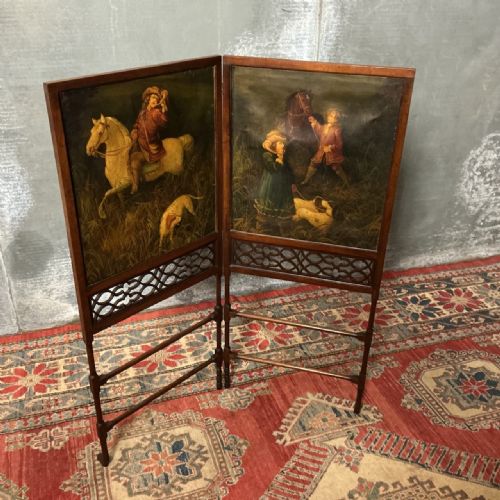
Beyond spatial division, these items serve as decorative surfaces displaying oil paintings, needlepoint, carved bone, or découpage scrap work. Buyers encounter folding screens, fire screens, and table screens spanning the Victorian, Edwardian, and earlier periods.
How they were made
Carpenters constructed structural frames primarily from timber such as mahogany, walnut, oak, and exotic hardwoods like padauk, joining individual leaves with metal hinges to ensure smooth articulation. Panels frequently received textile inserts, including silk, velvet, tapestry, canvas, and wool, or rigid infill materials like cane and carved wood.
Surface ornamentation involved diverse artisan techniques, from hand-painted oil scenes and polychrome decoration to traditional East Asian lacquer work and incised coromandel carving. Leather panels required embossing, gilding, and tooling, while scrap screens relied on layered paper découpage secured directly to the support structure.
Antique Room Divider Screen Retail Price Guide 2026
Typical asking prices for room divider screen among the pieces listed under this phrase on Sellingantiques today, from the lower quarter to the upper quarter. They describe what is for sale here now, not the wider market.
Listings feature items constructed from brass, wood, lacquer, hardwood, oil paint, leather, giltwood, and glass across multiple centuries.
What varies in quality
The standard of execution rests on the structural integrity of the timber framing and the precision of the joining hardware that allows the leaves to fold evenly in both directions. Superior examples retain original hinges, stable foundational wood, and taut, undamaged panel inserts without excessive distortion.
Artistic depth separates utilitarian partitions from masterwork pieces, visible in the hand of the painter, the crispness of carved bone or wood relief, and the richness of applied gilding. Pieces featuring double-sided decoration, intricate needlepoint, or specialised lacquer demand closer inspection for material preservation.
The Antique Room Divider Screen Glossary
- Coromandel
- A type of Chinese incised lacquerware where designs are carved into a dark ground and filled with pigments or gold.
- Verdure
- A style of tapestry or painted screen depicting lush botanical foliage, woodland scenery, or pastoral landscapes.
- Scrap screen
- A Victorian domestic creation decorated with layered paper cut-outs, prints, and photographs fixed to the panel surface.
- Mashrabiya
- An architectural wooden lattice screen or partition originating in traditional Middle Eastern craftsmanship.
- Modesty screen
- A small portable privacy partition historically utilised in domestic dressing rooms or medical spaces.
Antique Room Divider Screen: Frequently Asked Questions
How were folding screens used historically?
Households deployed folding screens to block draughts near fireplaces and doorways, partition large reception rooms into intimate conversation areas, and conceal dressing or washing zones in bedrooms.
They offered a flexible alternative to permanent walls, allowing interior layouts to shift according to the daily routine and social gatherings of the household.
What is a coromandel screen?
A coromandel screen is a heavy East Asian folding partition finished in dark lacquer, where artisans carved intricate pictorial scenes through layers of coloured ground.
European traders mistakenly named the technique after the Coromandel Coast of India where the ships stopped en route from China.
How do I care for an antique screen?
Maintenance requires placing the partition away from direct sunlight, extreme temperature fluctuations, and damp environments to protect fragile lacquer, leather, and painted surfaces.
Dusting should be performed gently with a dry, soft cloth, avoiding commercial cleaning liquids that might strip historical finishes or loosen textile panels.
Can these screens support weight?
Most antique room divider screens function purely as decorative partitions or visual privacy barriers rather than load-bearing structural walls.
Care must be taken when positioning them on uneven floors to ensure the weight distributes evenly across all hinged leaves without straining the joints.