
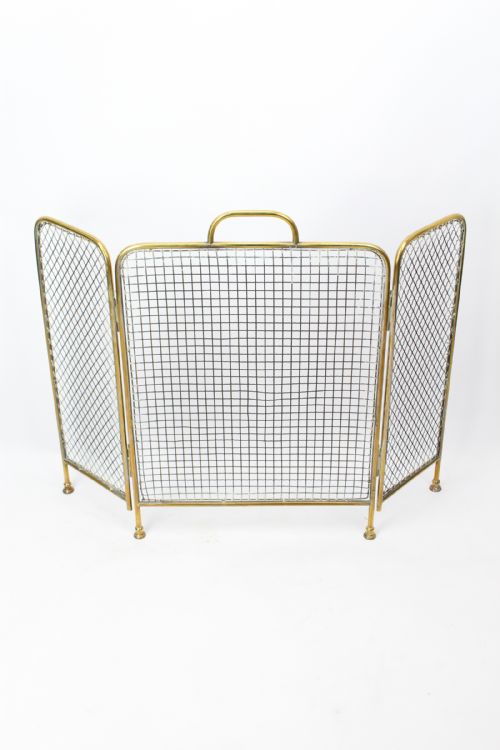


Folding Fireguard
These folding fireguard pieces protect rooms from stray embers while adding period character, spanning Victorian brass to Arts and Crafts iron.
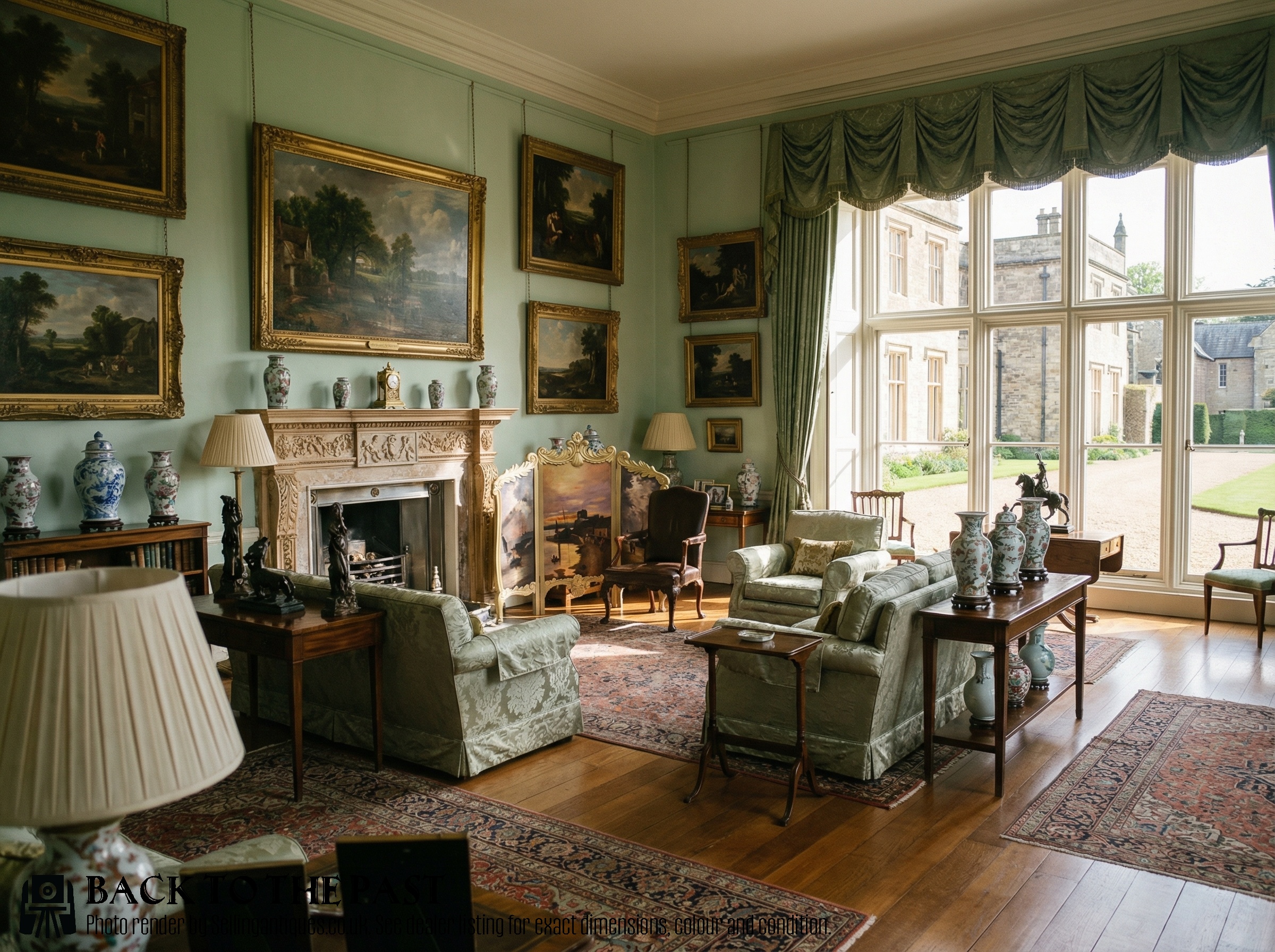
Folding Fireguard
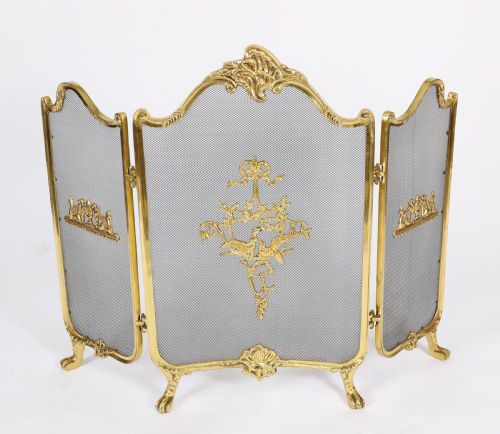
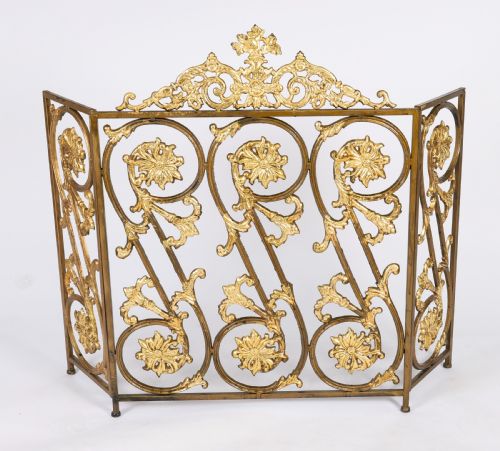
A folding fireguard acts as both a practical barrier against sparks and a decorative screen for the hearth. When you search for a folding fireguard, you encounter folding brass spark guards, tripartite frames, and multi-section designs originating from the Georgian period through to the Edwardian era.
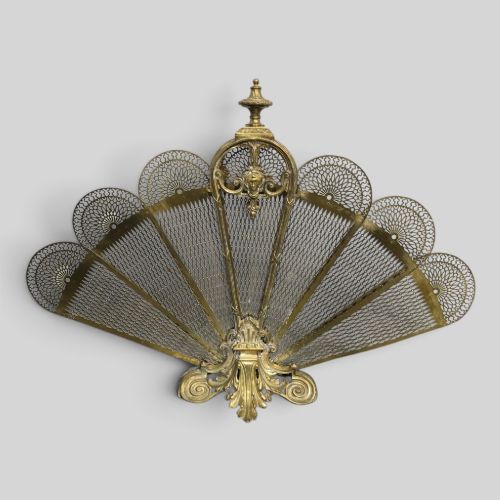
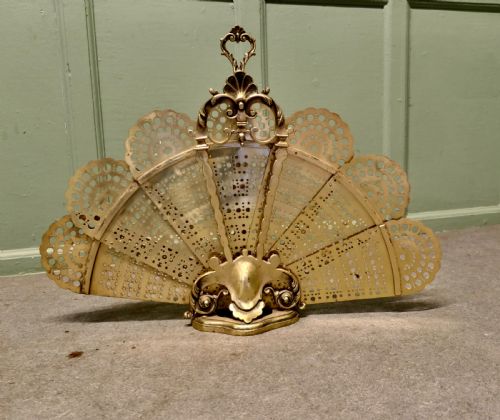
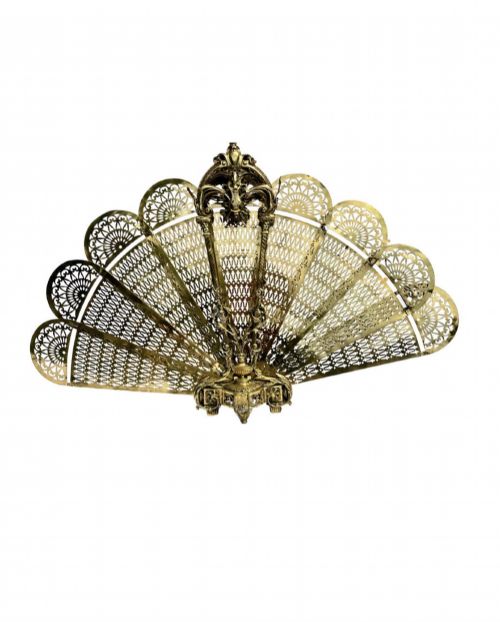
The most common examples on this page utilise brass, wire mesh, and iron, often taking the form of peacock tail designs or multi-fold panels. These objects range from French Rococo Revival gilt bronze pieces to simple utilitarian wire mesh guards.
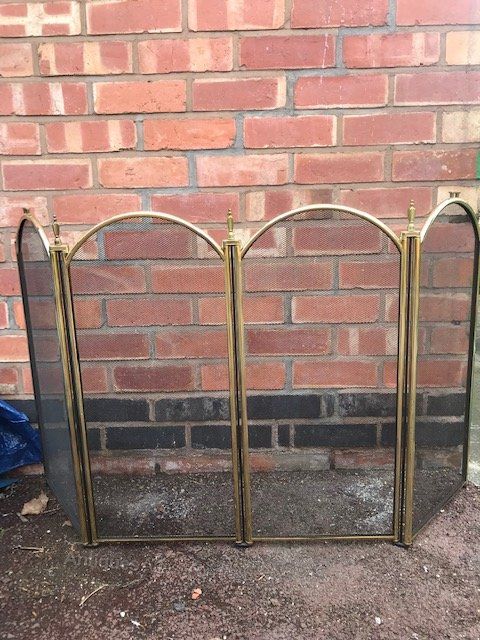
Makers and manufacturers produced these fire screens in various configurations, including three-fold and four-folding sections designed to fold away when the hearth is unlit. Their primary purpose shifted between active protection and ornamental display during the warmer months.
How they were made
Construction relies heavily on cast brass, iron, and wire mesh, combined to form articulated frames that fold flat. Artisans joined individual panels with hinges, allowing the guards to expand around an open hearth.
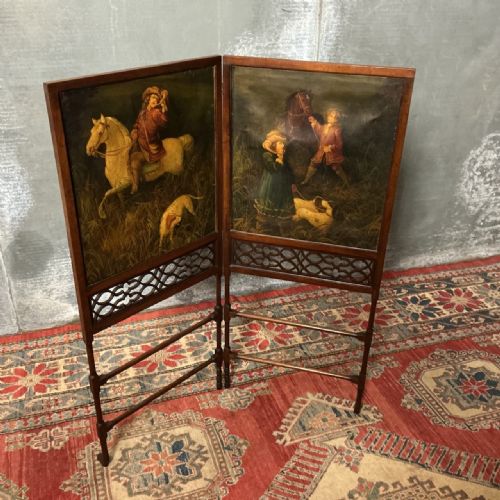
Decorative versions incorporate gilt bronze, canvas with oil paintings, and mahogany frames. Metal components were cast, chased, or finished with black paint, whilst textile elements involved hand-painted oil canvases and tapestry.
Peacock screens let you dramatically fan out your metal tail feathers every evening just to keep stray embers off the hearth rug.
What varies in quality
Quality reveals itself in the weight of the metal and the precision of the hinges. Heavier cast brass and robust gilt bronze frames maintain their stability during expansion and folding, whereas lighter iron or wire versions feel more utilitarian.
Artistic execution separates standard production items from finer revival pieces. Elaborate French Rococo casting and detailed oil paintings on canvas represent higher workmanship than plain wire mesh spark guards.
The Folding Fireguard Glossary
- Tripartite
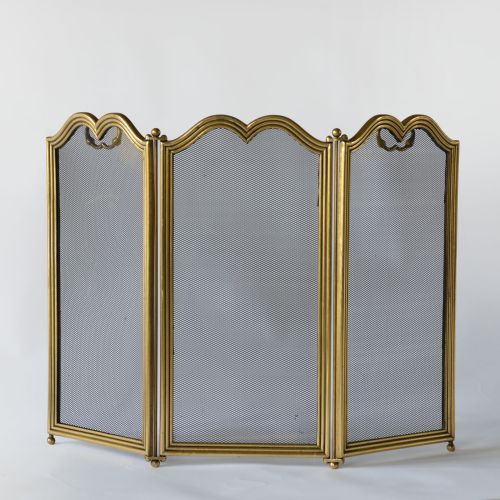
- Divided into three sections. This configuration allows the side panels to angle inward for stability around the fireplace opening.
- Spark guard
- A protective mesh or metal barrier designed to catch flying embers. These guards keep rooms safe while maintaining visibility of the fire.
- Gilt bronze
- Bronze coated with a thin layer of gold. This material appears frequently in French revival decorative fire screens.
- Peacock screen
- A folding screen whose radiating blades open out like a tail. This design expands to cover the fireplace and collapses compactly.
- Revival
- A style that imitates historical aesthetics such as Louis XIV or Rococo. Makers produced these pieces to bring earlier ornate designs into nineteenth-century interiors.
Folding Fireguard: Frequently Asked Questions
How do folding fireguards work?
These screens use hinged panels that expand outward to create a protective barrier in front of an active hearth. The folding design allows the guard to adjust to different fireplace widths and fold flat for storage.
When the fire is not in use, the folded screen occupies minimal space beside the fireplace. Multi-section models open smoothly on pins or hinges to enclose the hearth opening fully.
Were these screens used for safety or decoration?
They served both purposes depending on the season and the room. During winter, wire mesh and brass guards stopped flying sparks from damaging carpets and furniture.
In summer, ornamental screens filled the empty hearth to hide unappealing ash and soot. Painted canvas and tapestry panels transformed a dark fireplace into a decorative focal point.
What materials are typical for these guards?
Brass and iron form the primary structural framework for the majority of examples. Wire mesh frequently fills the panels to catch sparks without blocking the heat.
Finer decorative versions incorporate gilt bronze, mahogany frames, and oil paintings on canvas. Georgian and Victorian examples often utilise polished brass that reflects the light of the room.
How do I identify the period of a screen?
Stylistic clues such as Rococo curves, Arts and Crafts ironwork, or Edwardian mahogany frames point to specific eras. Heavy cast brass and elaborate ornamentation usually indicate nineteenth-century production.
Construction methods also help determine age, as hand-riveted hinges and early wire mesh differ from later twentieth-century manufacturing techniques. Examining the materials provides a reliable guide to when the piece was made.