
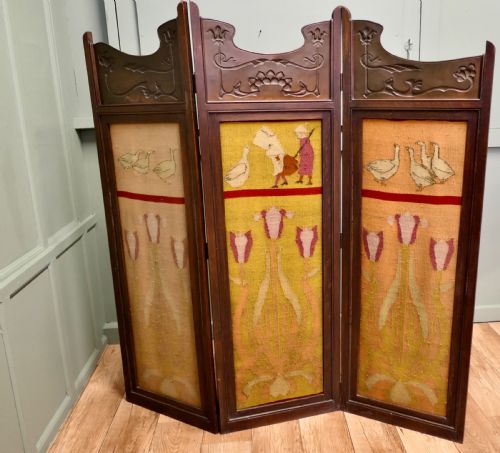
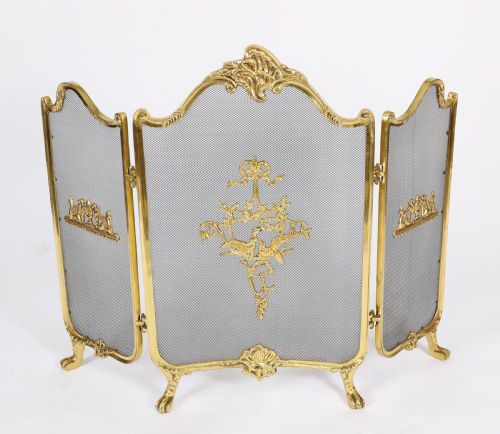
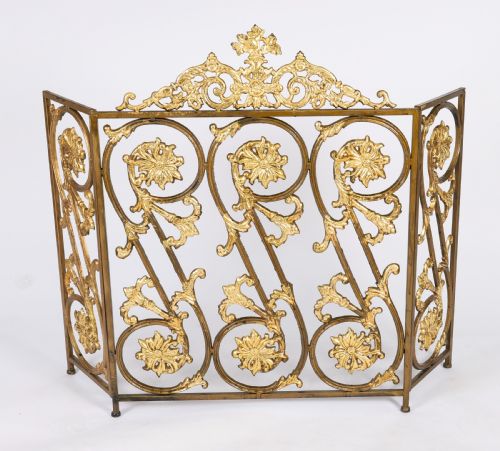
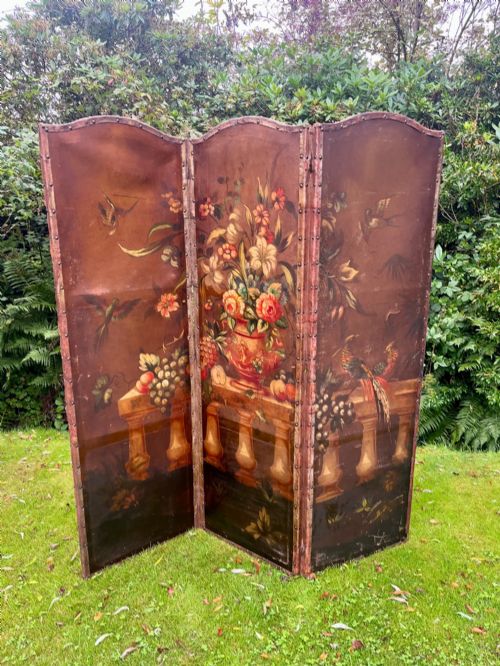





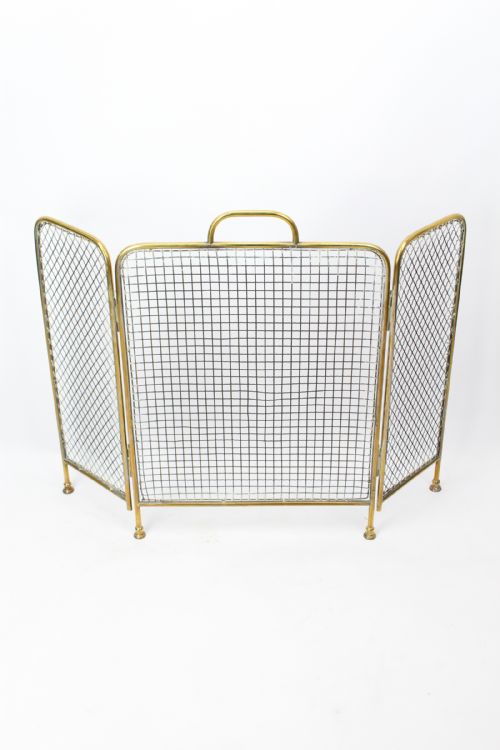
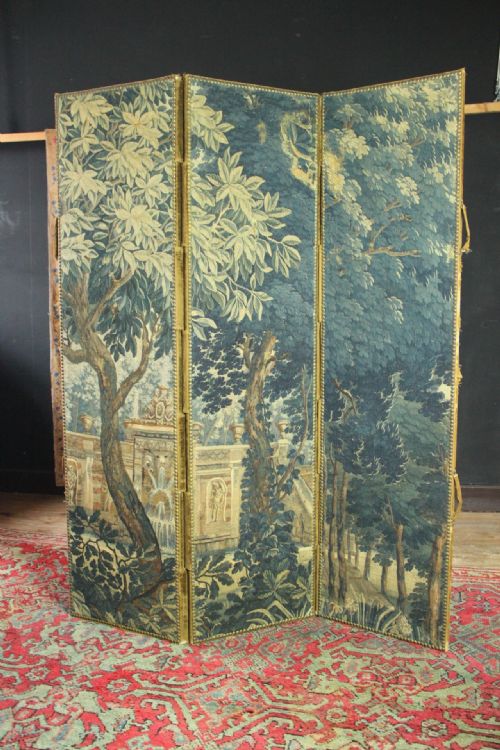

Three Panel Folding Screen
A three panel folding screen divides a room with flexible elegance, offering both decorative presence and practical seclusion.
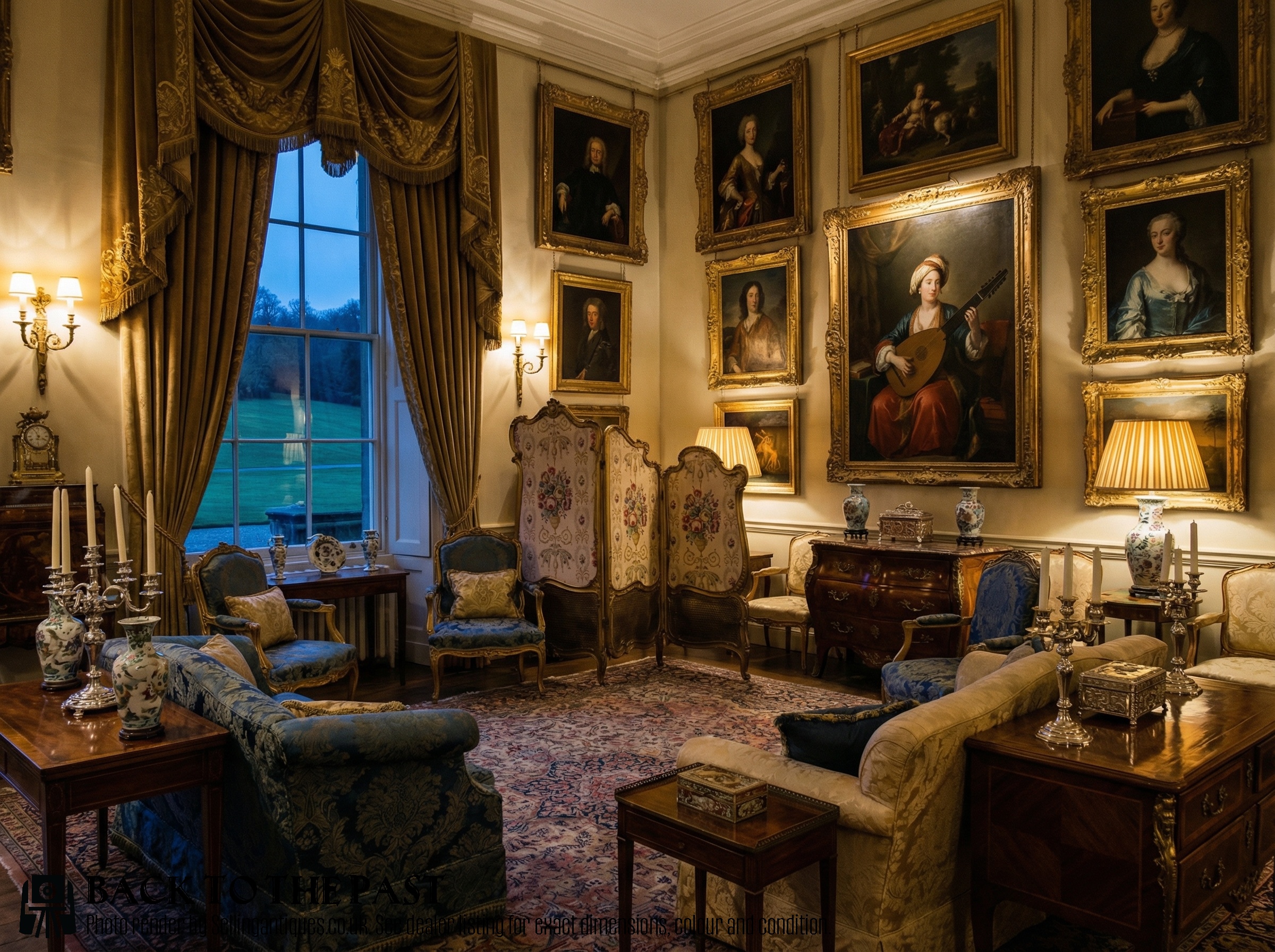
Three Panel Folding Screen
A three panel folding screen is a hinged portable divider designed to partition interior spaces or create privacy within a room. The examples found here span the Victorian, Edwardian, and mid-twentieth century periods, encompassing diverse aesthetic traditions.
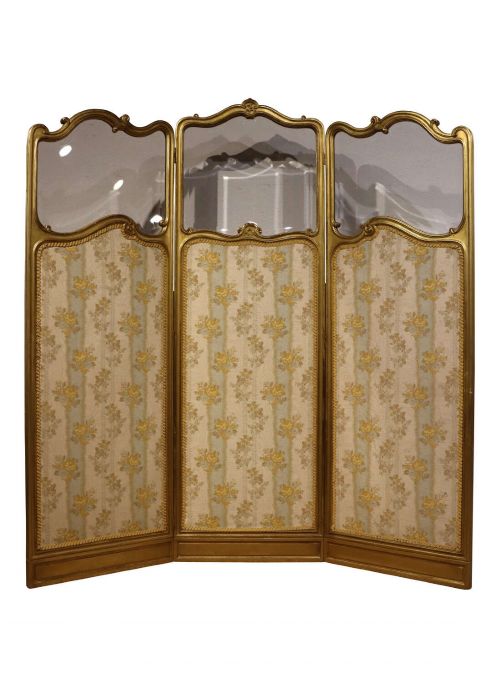
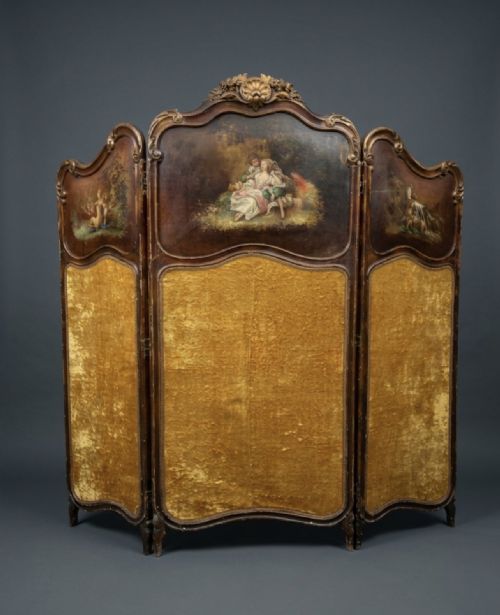
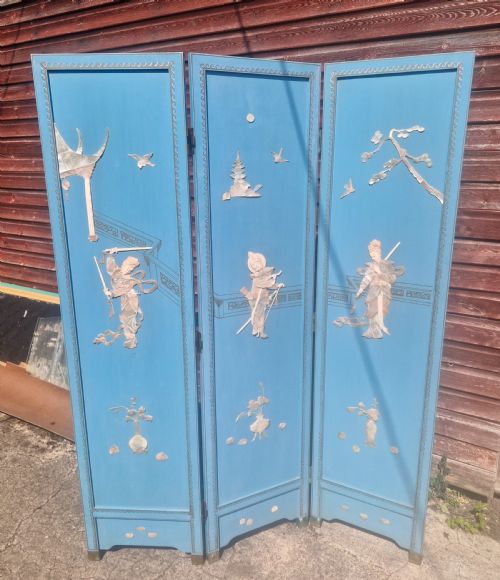
The assortment on this page includes hand-painted leather pieces, carved giltwood room dividers, and exotic Burmese or Anglo-Indian wooden frames. Regional expressions range from continental baroque and rococo revival styles to chinoiserie and scrap work creations.
Most pieces consist of three vertical leaves joined by hinges, allowing the assembly to fold flat or angle to suit the floor plan. These objects function equally as functional partitions and as striking decorative backdrops.
How they were made
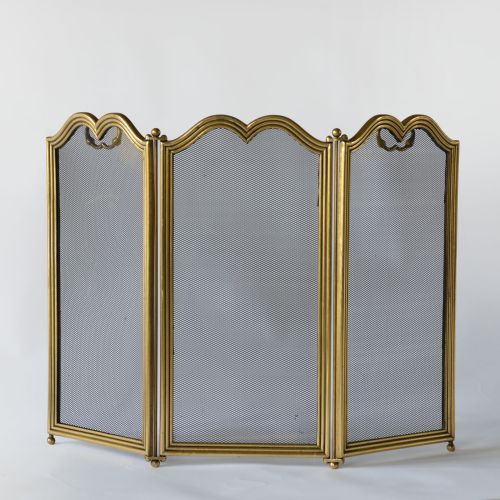
Constructed primarily from sturdy timber frameworks including oak, teak, mahogany, and giltwood, these screens rely on traditional joinery to support their central panels. Metal tacks frequently secure stretched hides or fabrics, while brass hinges enable the smooth articulation of each fold.
Surface decoration involves skilled application of oil paint, intricate hand-painted leather, applied mother-of-pearl, and delicate lacquerwork. Artisans combined carpentry with fine artistic detailing, utilising rich pigments and layered finishes to achieve visual depth.
Three Panel Folding Screen Retail Price Guide 2026
Typical asking prices for three panel folding screen among the pieces listed under this phrase on Sellingantiques today, from the lower quarter to the upper quarter. They describe what is for sale here now, not the wider market.
Materials recorded across these listings include oil paint, brass, leather, teak, and mother-of-pearl.
What varies in quality
Quality reveals itself in the execution of the hand-painted details and the crispness of the carved woodwork. Finer examples display accomplished brushwork on leather or canvas and substantial timber frames that stand firmly without sagging at the hinges.
The integrity of the original hardware and the sophistication of the decorative style distinguish superior specimens from simpler domestic partitions. Material choice, such as dense mahogany or genuine mother-of-pearl inlay, elevates the status of a piece within its period.
The Three Panel Folding Screen Glossary
- Three panel folding screen
- A moveable partition composed of three distinct vertical sections connected by hinges. This configuration provides optimal stability while remaining easy to reposition.
- Giltwood
- Timber that has been coated with a thin layer of gold leaf or gilt paint. This technique imparts a rich, reflective surface popular in revivalist furniture.
- Chinoiserie
- European artistic style reflecting Chinese motifs and techniques. Artisans applied these decorative elements to screens, furniture, and ceramics.
- Scrap work
- The decorative practice of applying cut-out prints, pictures, or paper scraps onto a surface before sealing it. Screens decorated in this manner often present a dense collage of Victorian imagery.
- Rococo Revival
- A nineteenth-century design movement characterised by ornate, asymmetrical scrolls and natural ornamentation. This style frequently appears on carved wooden room dividers from the period.
Three Panel Folding Screen: Frequently Asked Questions
How do I use a three panel folding screen in a modern home?
These screens excel at zoning open-plan spaces, concealing home office areas, or softening an empty corner with texture and colour.
Position the panels at alternating angles to ensure stability on the floor while creating an engaging visual backdrop.
How do I distinguish Victorian screens from Edwardian examples?
Victorian pieces often lean towards heavy, ornate carving, dark woods, and richly painted leather or scrap work.
Edwardian versions typically exhibit lighter frames, restrained ornamentation, and influences from classical revival or simpler vernacular styles.
Are these screens stable enough to stand on their own?
Yes, when angled correctly, the three interconnected leaves support one another to remain upright without wall attachments.
Adjusting the folds creates a zig-zag stance that distributes the weight evenly across the floor.
What materials were commonly used for these screens?
Framing materials include woods such as oak, mahogany, teak, and giltwood, paired with infills of leather, canvas, and glass.
Decorative elements frequently incorporate oil paint, mother-of-pearl inlay, and brass hardware.