
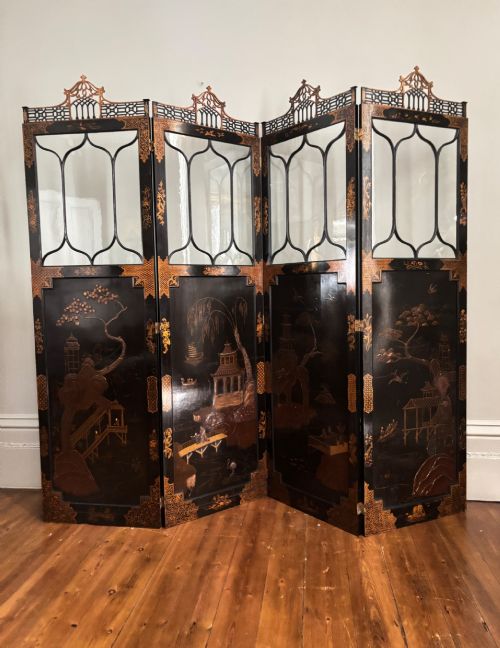
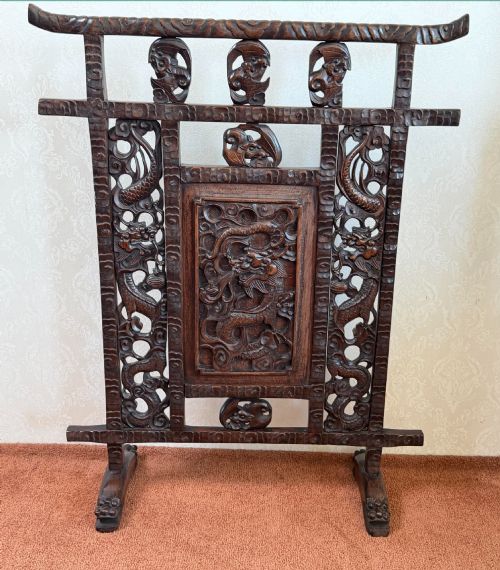
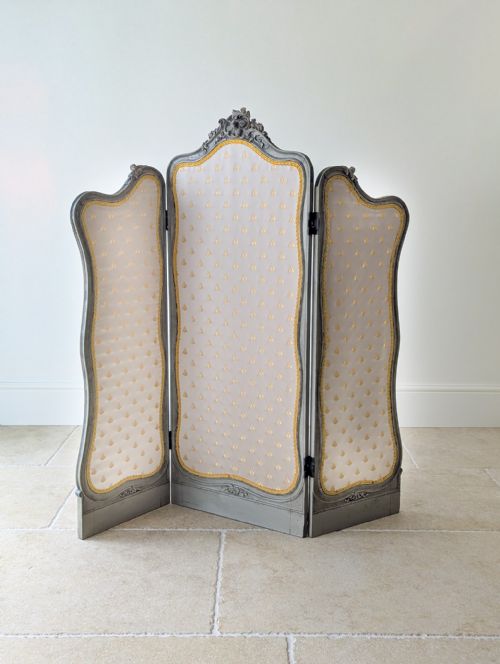
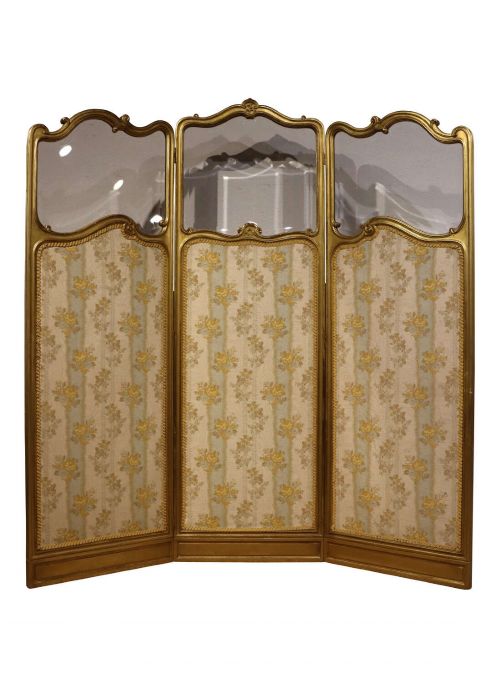




19th Century Room Screen
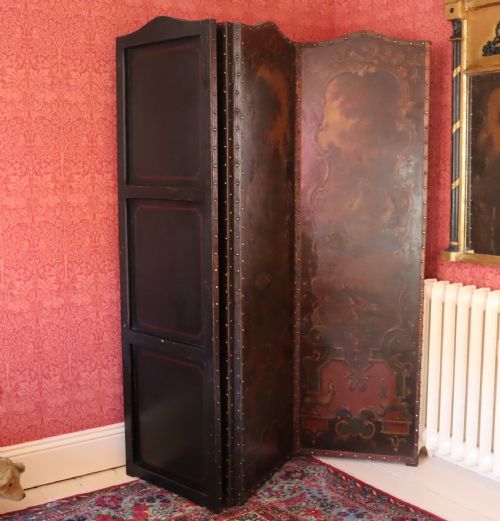
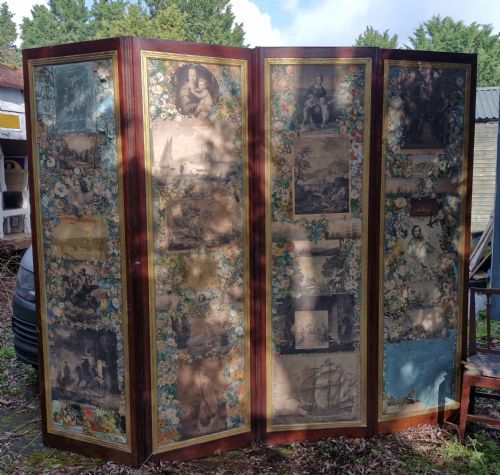
A 19th century room screen divides a space with movable panels of lacquered wood, painted leather, or gilded framing.
19th Century Room Screen
A 19th century room screen serves to divide interior spaces and manage draughts, typically constructed in folding sections from three to eight folds. Buyers frequently encounter examples finished in hand-painted leather, lacquered wood, or ornate giltwood framing.
The selections span from large country house mahogany dividers to intimate tabletop pieces and French vanity screens. Styles range from Chinese Chippendale and Qing Dynasty coromandel lacquer to European revival designs like French Rococo and Napoleon III.
Materials and construction
Wood serves as the primary structural skeleton, utilising dense hardwoods, mahogany, and carved giltwood to form the hinged panel frames. Joinery supports multiple folds connected by metal hinges that allow the screens to articulate smoothly.
Surfaces receive decorative treatments including layered lacquer work for Asian imports and hand-painted or gilt details on leather and fabric panels. Glass inserts and bevelled mirrors appear in European framework to catch light across the room.
Listings combine Asian export coromandel lacquer with European giltwood and hand-painted leather.
Factors of quality
Quality rests upon the depth and execution of the surface decoration, distinguishing master-carved coromandel lacquer and hand-painted leather from simpler painted finishes. The integration of structural elements like bevelled glass and sturdy hinges indicates superior manufacture.
Scale and proportion separate standard domestic dividers from grand salon pieces, with larger multi-fold examples requiring precise balance to stand unsupported. The preservation of original painted surfaces and gilding maintains the integrity of each panel.
The 19th Century Room Screen Glossary
- Coromandel
- A type of Chinese incised lacquerware where designs are carved into a dark ground and filled with colours. This technique creates a rich, textured surface across multiple folding panels.
- Giltwood
- Timber that has been coated with a thin layer of gold leaf or gesso powder. It provides a bright, reflective finish popular in French revival furniture.
- Chinoiserie
- European artistic style reflecting Chinese motifs and decorative techniques. It appears on lacquerwork and painted screens throughout the period.
- Vanity screen
- A smaller folding screen designed for use on a dressing table or vanity. These pieces often incorporate mirrors or adjustable panels.
- Aubusson
- A traditional style of French tapestry woven in the town of Aubusson. Panels featuring this textile bring soft texture to European frames.
19th Century Room Screen: Frequently Asked Questions
How do I place a room screen?
Position the screen to anchor an empty corner, shield a doorway from draughts, or section off a quiet reading area within a larger living space.
Ensure the panels are angled correctly so the screen stands stable on its own feet without straining the hinges.
Are these screens heavy?
Weight depends entirely on the materials used, ranging from light fabric and wood vanity models to exceptionally heavy multi-fold hardwood and leather structures.
Larger screens with eight folds or thick coromandel lacquer require two people to move and position safely.
Can I fold the screen flat?
Most antique folding screens articulate in both directions via traditional hinges, allowing them to flatten or accordion into a compact stack.
Frequent repositioning should be done with care to protect antique lacquer and painted leather finishes along the folds.
How do I clean painted leather?
Dust the leather panels regularly with a soft, dry cloth to prevent dirt accumulation within the painted details.
Avoid liquid cleaners and harsh chemicals, as moisture can damage the historical paint and dry out the antique hide.