





Antique French Room Divider
An antique french room divider creates sudden privacy or divides a grand salon, built as a folding screen in giltwood, walnut, or painted leather.
Antique French Room Divider
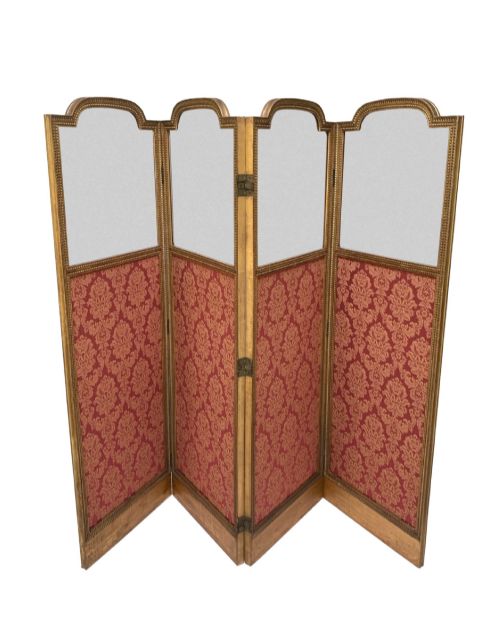
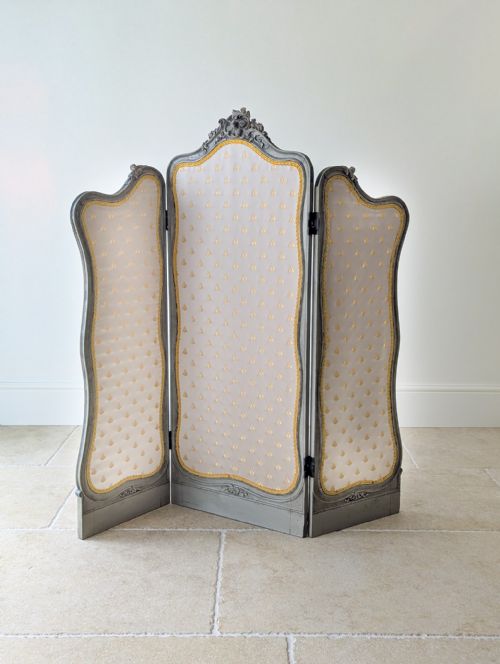
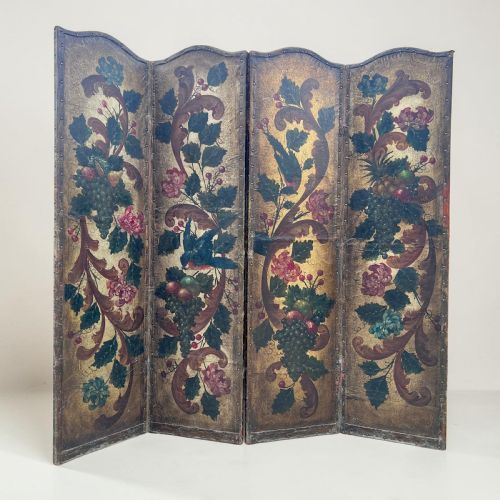
An antique french room divider takes the form of a multi-fold screen, most commonly with three or four panels designed to fold neatly. The examples found here span the nineteenth century, including Napoleon III, Victorian, and Edwardian interpretations alongside earlier eighteenth-century roots.
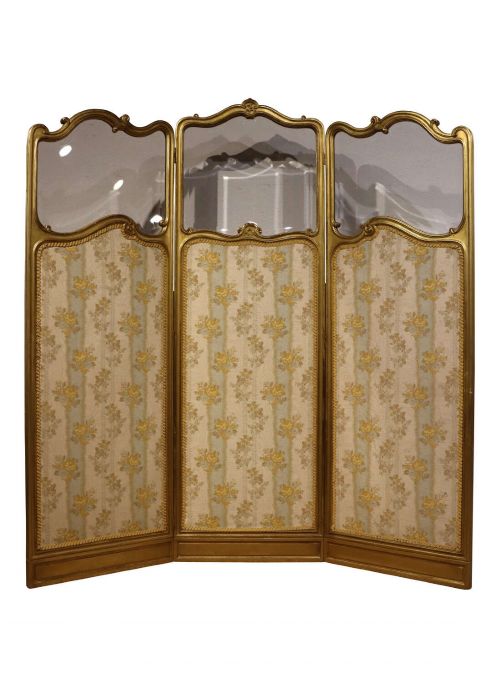
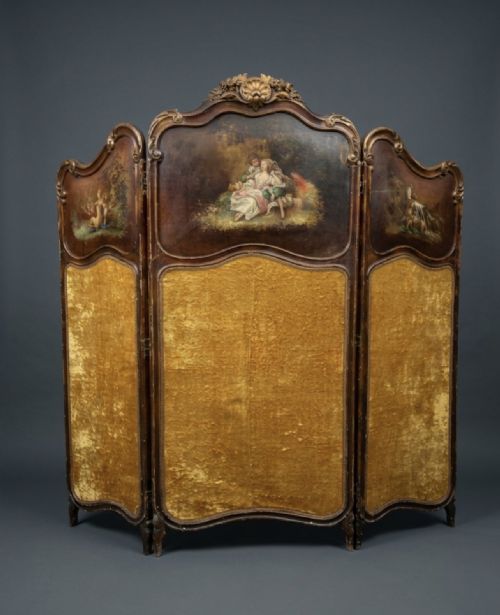
The primary formats range from tall privacy and dressing screens to smaller modesty and fire screens. Walnut, giltwood, and painted wood provide the structural framework, while glazed sections, silk, needlepoint, and painted leather fill the individual folds.
How they were made
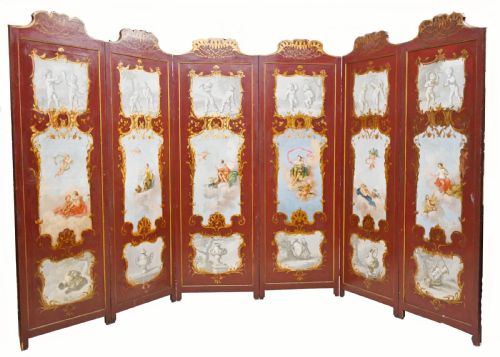
Makers utilised timber frames of walnut or carved giltwood, joined with hinges to allow multi-directional folding across three, four, or six panels. Giltwood surfaces received layers of gold leaf applied over gesso, while wood frames were often painted or left in their natural grain.
Infill materials demanded specialised artisan skills, from hand-painted pastoral scenes on canvas and leather to Aubusson tapestry and needlepoint stitching. Bevelled glass panes and glazed upper sections were integrated into wooden frames to let light filter through while maintaining separation.
The selection here spans from mid eighteenth-century origins through the height of Victorian and Edwardian production.
What varies in quality
The distinction between standard production and exceptional work rests on the depth of the carving and the fidelity of the decorative arts applied to the panels. Hand-painted pastoral scenes or fine Aubusson needlework elevate a piece far beyond simple stamped or printed textiles.
Structural integrity relies on the quality of the original hinges and the stability of the timber panels, which must support heavy glass or leather without sagging. Maker attribution, such as work originating from established workshops, marks the upper tier of surviving examples.
Paul Sormani·Jean Corot
The Antique French Room Divider Glossary
- Giltwood
- Wood that has been coated with a thin layer of gold leaf. This finish was widely applied to nineteenth-century salon furniture.
- Aubusson
- A type of tapestry woven in the French town of the same name. These panels frequently feature pastoral or floral designs.
- Napoleonic
- A stylistic period spanning the mid nineteenth century under Napoleon III, known for lavish revivalism. It often incorporates rich gilt surfaces and painted panels.
- Modesty screen
- A low folding screen originally designed to shield a person from the direct heat of an open fireplace or to provide privacy. They sit lower than full room dividers.
Antique French Room Divider: Frequently Asked Questions
How were room dividers used?
These screens divided large rooms into intimate spaces, blocked drafts near doors, and provided privacy for dressing.
They also served as decorative backdrops in nineteenth-century salons, often positioned to frame seating areas.
How do I clean painted leather?
Painted leather panels require a dry, soft cloth to remove surface dust without disturbing the aged pigments.
Moisture and modern cleaning solvents must be avoided to prevent cracking the historical paint layers.
Can these screens block light?
Solid wooden panels and thick painted leather or tapestry infills block light entirely and ensure complete privacy.
Screens featuring bevelled glass, silk, or glazed upper sections allow ambient light to filter through while separating spaces.
How many folds are standard?
Three and four fold configurations appear most frequently across the surviving nineteenth-century examples.
Six panel variations exist for larger spaces, whilst smaller fire or modesty screens often utilise three hinged sections.