






Three Fold Screen
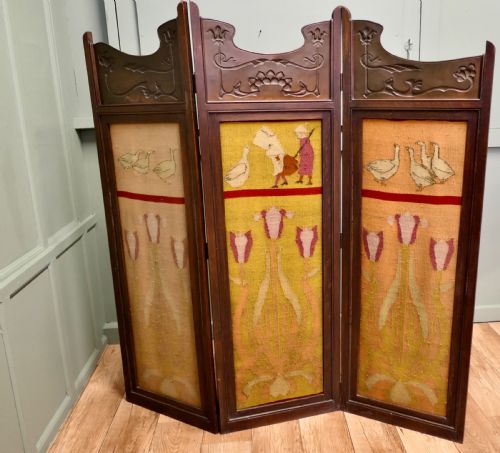
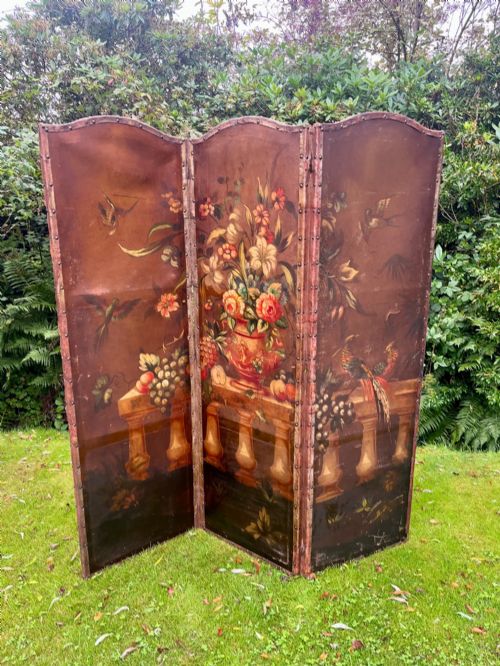
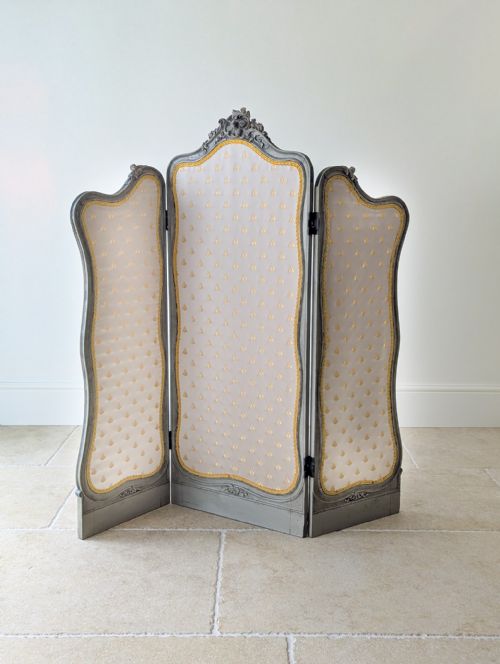
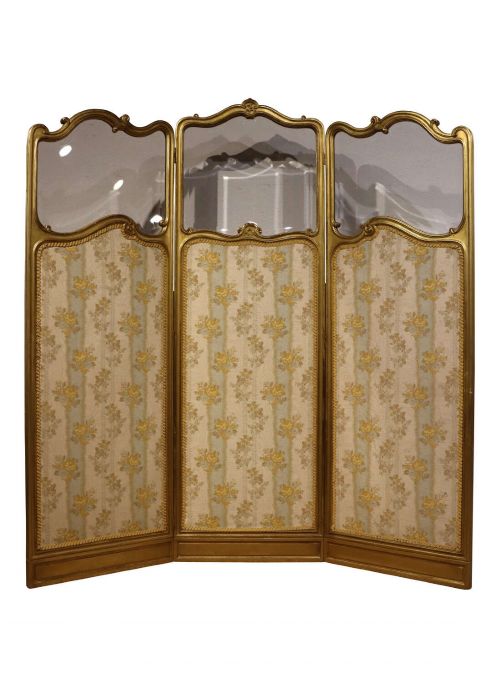
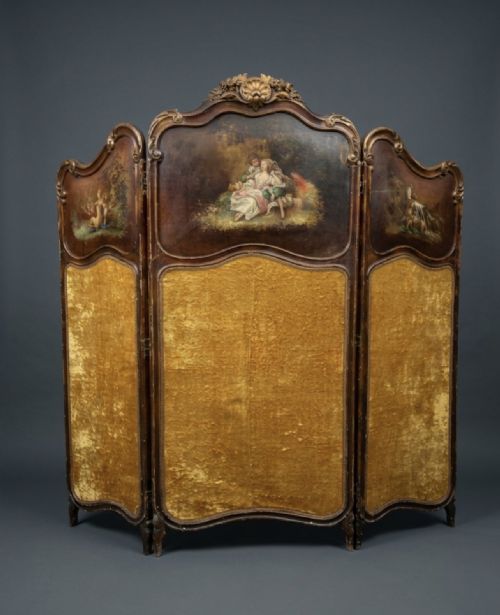
A three fold screen partitions a space or protects a room, bringing carved wood, painted leather, or glazed panels into an interior.
Three Fold Screen
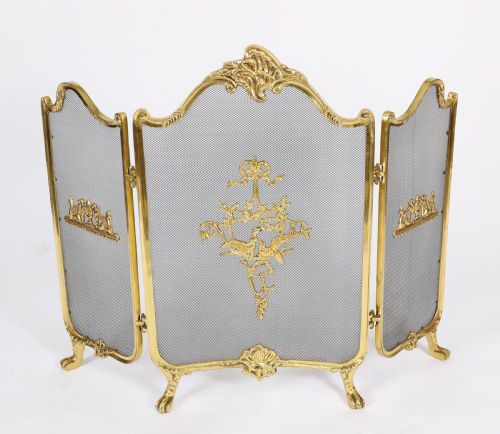
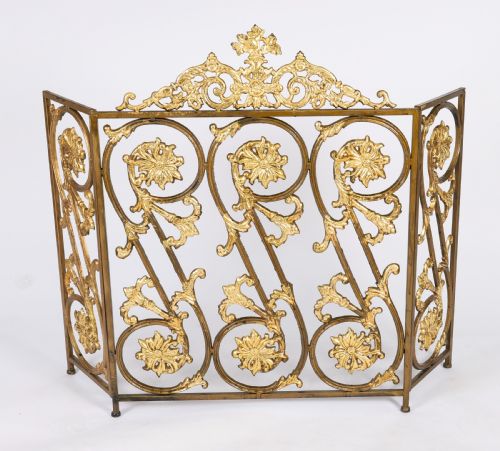
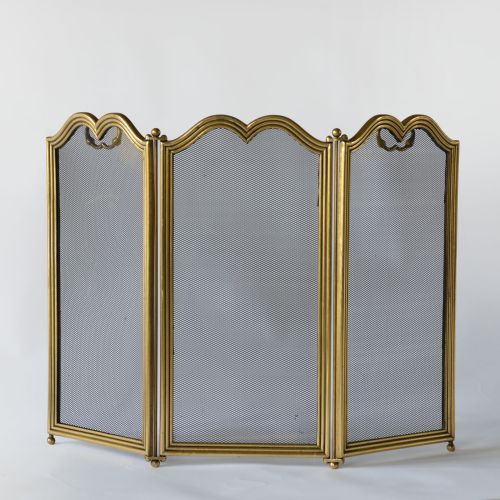
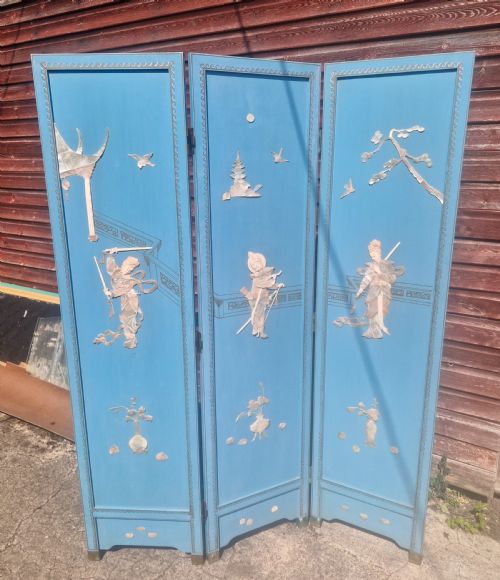
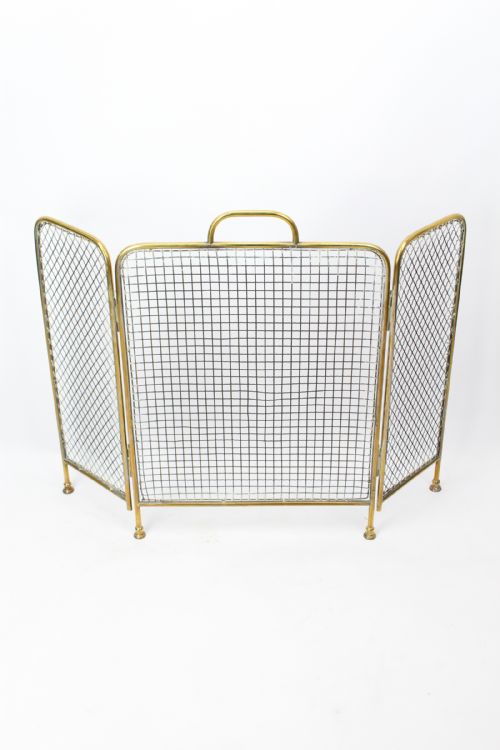
A three fold screen serves multiple domestic duties, appearing as a tall room divider for privacy or a low brass spark guard positioned before an open hearth.
The most common examples on this page are nineteenth century French giltwood designs with painted or silk panels, alongside Edwardian mahogany frames and practical brass spark guards.
Makers adapted these folding partitions for dressing rooms, boudoirs, and drawing rooms, utilising three hinged leaves to alter the geometry of an interior.
How they were made
Carpenters constructed the structural frames from timbers such as mahogany, oak, walnut, and giltwood, joining three leaves with metal hinges for articulation.
Infill materials vary from hand painted leather, silk, and wool panels to bevelled glass, wire mesh, and intricate scrap work decoupage.
Decorative flourishes incorporate carved gesso, bronze mounts, lacquer, and bone inlay applied to both European and Oriental frameworks.
Debating societies and literary figures occasionally left their mark on these humble folding panels.
What varies in quality
The distinction between ordinary and exceptional pieces rests upon the crispness of the wood carving and the integrity of the original gilt surfaces.
Artisanal execution determines value, separating standard domestic partitions from fine French giltwood frames set with Aubusson tapestry or hand painted pastoral scenes.
The Three Fold Screen Glossary
- Tripartite
- Composed of three parts or divisions. This term describes folding screens formed of three hinged leaves.
- Verdure
- A type of tapestry weaving depicting lush green landscape foliage. These textile panels frequently fill antique screen frames.
- Vernis Martin
- A European simulation of Asian lacquerwork named after the Martin brothers. It produces a glossy, polished decorative surface on furniture.
- Spark guard
- A low protective mesh or brass screen placed before a fireplace. It stops embers from spitting onto a room's flooring.
Three Fold Screen: Frequently Asked Questions
How were three fold screens used?
These folding partitions created private spaces within larger rooms, blocked draughts near doorways, or acted as dressing room vanity screens.
Smaller brass variations served as hearth accessories to guard interiors against stray sparks from open fires.
Which periods are most common?
Nineteenth century examples dominate the selection, particularly Victorian and Edwardian pieces originating from English and French workshops.
Earlier Georgian items appear alongside later twentieth century iterations influenced by oriental and continental styles.
What materials make up the frames?
Carved timber forms the backbone of most partitions, with mahogany, walnut, oak, and giltwood appearing frequently across the inventory.
Brass and copper also feature extensively, particularly in fire screens and spark guards fitted with wire mesh.
How do panel materials differ?
Panels range from hand painted leather and silk embroidery to bevelled glass, wool, and decoupage scrap work.
Some exceptional instances incorporate Aubusson tapestry or lacquer with bone inlay.