


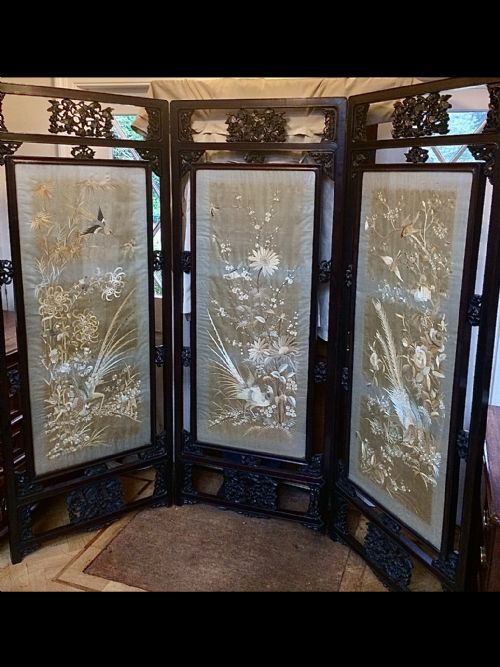


Embroidery Panel Screen
An embroidery panel screen brings needlework and textile art into an interior, offering functional division or hearth protection through framed silk, wool, and needlepoint.
Embroidery Panel Screen
When you search for an embroidery panel screen, you are looking at items designed to shield a room from fireplace heat or to divide space with textile artistry. These pieces combine wooden or metal frames with hand-worked fabric inserts.
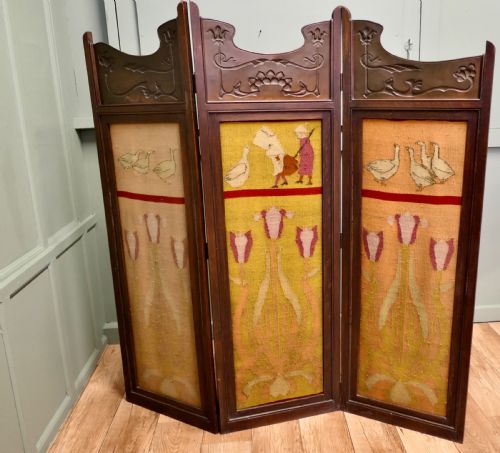
The versions you meet on this page span Victorian, Regency, and Art Nouveau periods alongside traditional Chinese, Japanese, and Indian examples. Forms range from pole screens and folding panels to metamorphic tables and tabletop designs.
Materials vary from rosewood, walnut, oak, and mahogany to brass and copper framing textile panels of silk, wool, and needlepoint. Origins stretch across English, Irish, Japanese, Chinese, and Indian workshops.
How they were made
Makers constructed the structural frames using hardwoods such as walnut, mahogany, rosewood, and oak, alongside metal elements in copper and brass. Joinery and carving support the weight of the central glazed or open panels.
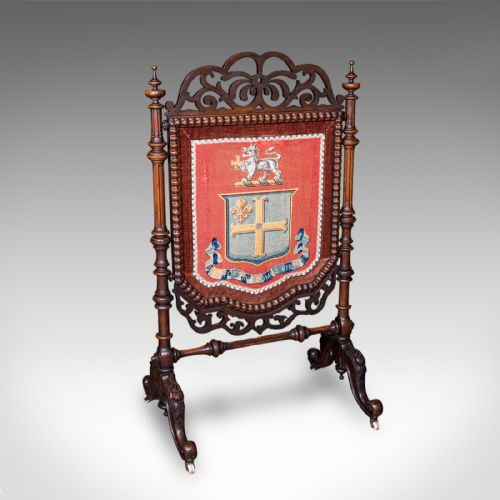
The textile components involve hand-worked needlepoint, wool, and silkwork, sometimes enhanced with silver and gold thread. Artisans mounted these delicate embroideries within protective wooden surrounds or behind glass.
Some screens double as occasional tables, proving that Victorians loved furniture that could multitask while keeping ankles cool by the fire.
What varies in quality
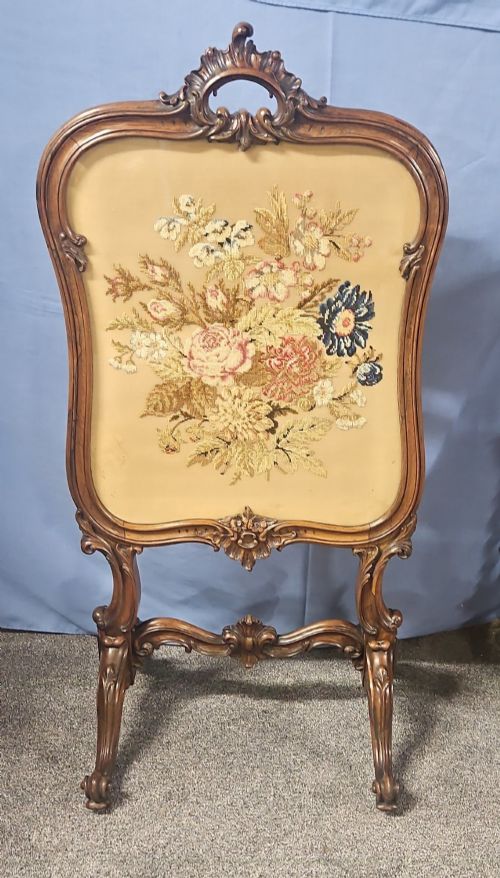
Quality rests on the depth of the carving in the wooden frame and the precision of the needlework within the panel. Finer examples display intricate hand-carved stands, substantial hardwoods like palisander, and complex pictorial embroidery.
Secondary pieces show simpler joinery and naive wool panels or standard framing. The integration between the textile insert and the main structure dictates the overall stability and presence of the piece.
The Embroidery Panel Screen Glossary
- Pole screen
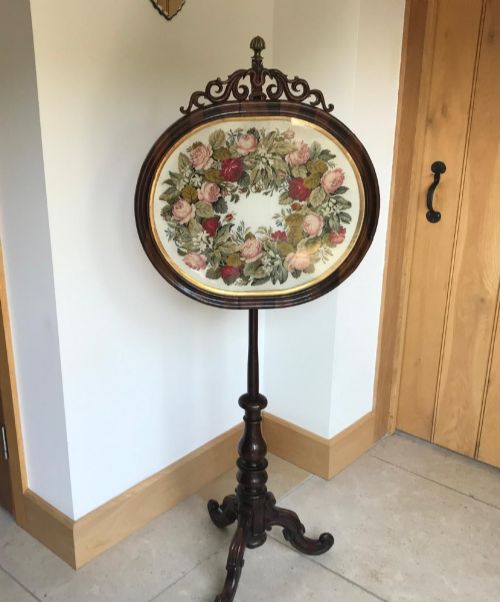
- A vertical screen mounted on a slender stand with an adjustable panel designed to block radiant heat from a fireplace. The panel slides up and down on its vertical shaft.
- Needlepoint
- A type of canvas work embroidery stitched with yarn, frequently seen in Victorian panels. It provides a durable and colourful decorative surface.
- Silkwork
- Embroidery executed using silk thread on a fine ground fabric, often creating detailed pictorial scenes. These delicate works appear behind glass in framed screens.
- Palisander
- A dense, dark timber resembling rosewood, utilised in finer Regency frames. It takes a high polish and shows rich grain patterns.
Embroidery Panel Screen: Frequently Asked Questions
What is a pole screen?
A pole screen is a vertical textile panel mounted on a slender wooden stand that slides up and down to block radiant heat from an open fire.
Victorian rooms utilised these adjustable pieces near hearths to protect complexions from excessive heat.
How were fire screens used?
Fire screens stood before unlit hearths during warmer months to hide the grate or placed strategically to shield occupants from fireplace flames.
Over time, many transformed into decorative room dividers or static wall art.
What woods are typical?
Frames employ hardwoods including mahogany, walnut, rosewood, palisander, and oak, alongside occasional brass or copper mounts.
These durable timbers support the heavy textile panels and intricate carved stands.
How do I date a screen?
Dating relies on stylistic clues like Regency classical lines, Victorian baroque revival carving, or Art Nouveau metalwork, combined with wood types.
Needlework techniques and framing methods also align with specific nineteenth and twentieth-century periods.