


Art Nouveau Screen
An art nouveau screen divides a space or shields a hearth with sweeping floral lines and beaten metal.
Art Nouveau Screen
When you search for an art nouveau screen, you encounter domestic dividers and hearth guards dating from the Victorian era into the early twentieth century. The selection encompasses low fire screens, fireplace reflectors, folding room dividers, and tall privacy screens.
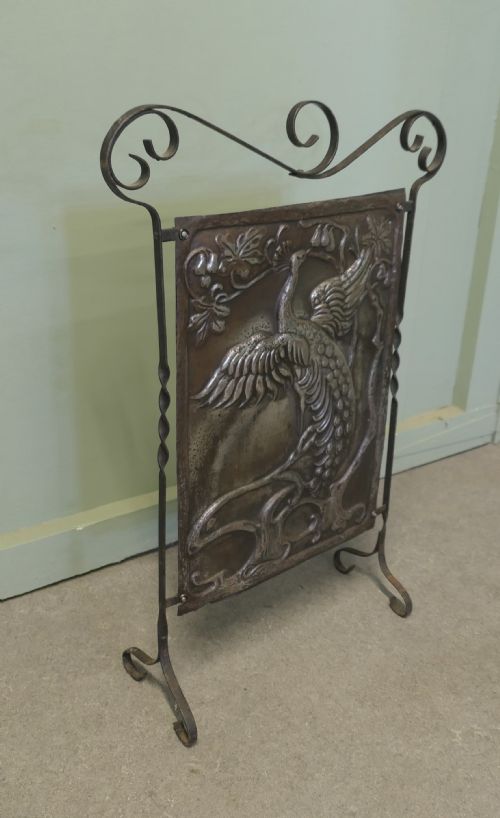
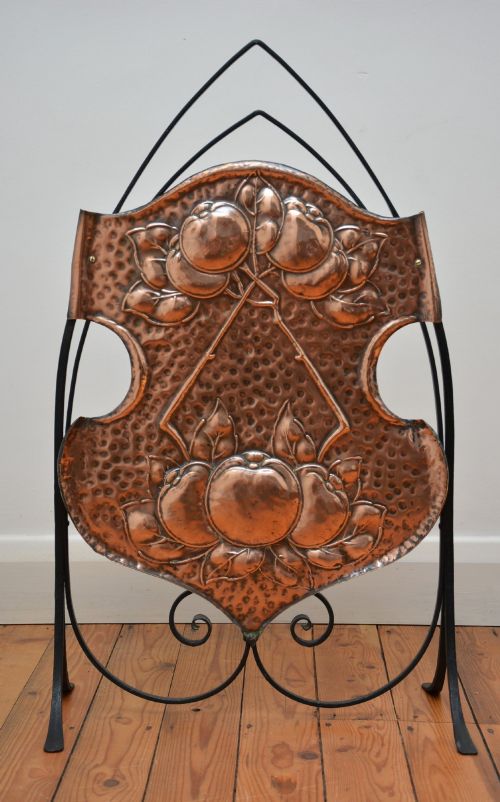
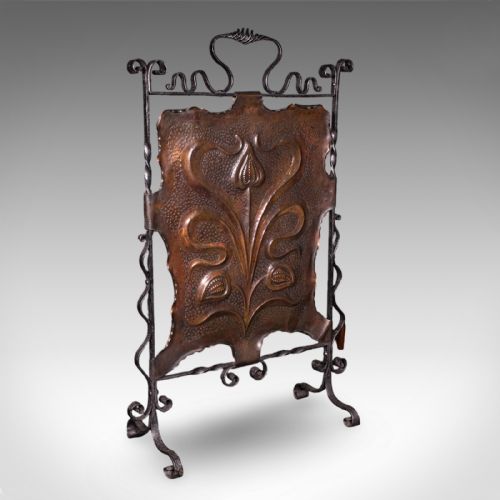
Fire screens predominate on this page, frequently rendered in beaten copper, polished brass, or wrought iron. These hearth pieces often incorporate glass panels, mirrors, tapestries, or naive wool embroidery.
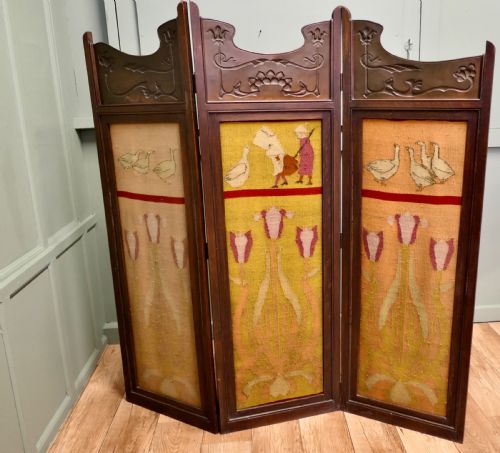
Folding room dividers and privacy screens appear in wood such as oak, walnut, or mahogany, sometimes spanning multiple hinged panels. These larger pieces introduce the characteristic whiplash curves and organic motifs into larger domestic interiors.
How they were made
Metalwork forms the backbone of these pieces, utilising beaten copper, sheet brass, wrought iron, and cast metal. Artisans shaped these materials into sinuous frames, stylized floral motifs, and peacock designs.
Timber frames in oak, walnut, and mahogany provide structural support for folding room dividers and screen panels. Joinery accommodates inset elements such as cut glass, painted glass, mirrors, and embroidered wool or silk tapestry panels.
Peacocks strut across the metalwork with surprising frequency, reminding everyone that nineteenth-century birds possessed formidable interior design ambitions.
What varies in quality
Quality rests on the depth of hand-worked detail in the metal and the integrity of the integrated panels. Heavy gauge copper with expressive repoussé work sits far above thin, pressed sheet metal.
The choice of secondary materials separates standard productions from finer examples. Hand-embroidered tapestries, leaded glass, and beveled mirrors elevate a piece beyond simple stamped brass frames and plain glass.
Liberty of London
The Art Nouveau Screen Glossary
- Repoussé
- Metalworking technique where the design is hammered into relief from the reverse side. This method defines the tactile surface of many copper fire screens.
- Fire screen
- A decorative guard placed in front of an unlit fireplace to hide the grate or reflect the room light. Many examples double as fire reflectors.
- Arts and Crafts
- A design movement emphasising handcraftsmanship and simple forms that heavily influenced the aesthetic of these screens. It shares close ties with the art nouveau style.
- Jugendstil
- The continental European manifestation of the art nouveau movement, emphasising organic and floral lines. Pieces bearing this descriptor often originate from German-speaking regions.
Art Nouveau Screen: Frequently Asked Questions
What is a fire screen?
A fire screen is a decorative barrier placed in front of a fireplace when a fire is not burning. It serves to conceal the dark hearth and adds ornamentation to the room.
Many period examples also function as reflectors, using polished copper or brass surfaces to bounce light back into the space.
How do I use a folding screen?
Folding screens create temporary partitions within larger rooms to divide living spaces or create private areas. Tall multi-panel wooden versions work well in bedrooms and sitting rooms.
Smaller three-fold screens sit across room corners or serve as decorative backdrops against plain walls.
How do I date these screens?
Dating relies on stylistic markers combined with materials and construction methods. Pieces from the Victorian period often blend historic revival elements with emerging organic motifs.
Items from around nineteen hundred typically display fully developed art nouveau or Jugendstil curves, often paired with beaten copper and leaded glass.
How do I care for copper and brass?
Metal frames and panels require gentle dusting with a soft cloth to prevent the accumulation of grime. Harsh chemical cleaners strip away desirable historical patinas.
Preserving the aged surface protects the character of the hand-beaten metalwork.