



Edwardian Folding Room Divider
An edwardian folding room divider organises a floor plan with hinged panels, offering practical division and decorative presence.
Edwardian Folding Room Divider
When searching for an edwardian folding room divider, buyers encounter hinged multi-panel screens designed to partition interior spaces. These pieces emerge primarily from the Edwardian period and adjacent decades around nineteen hundred, alongside Victorian and later examples.
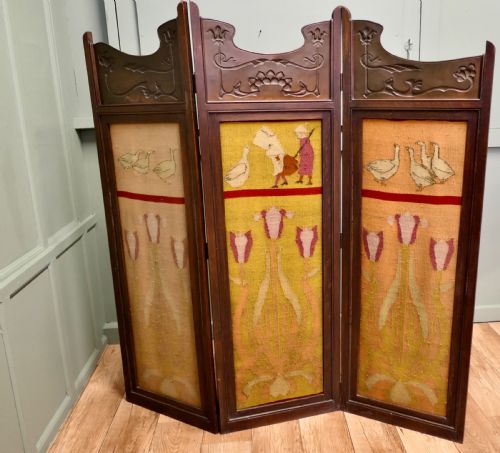
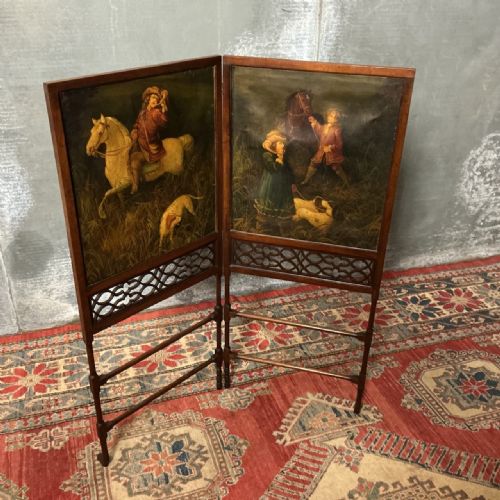
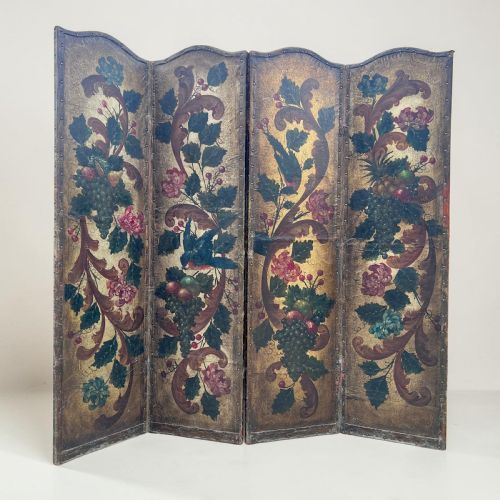
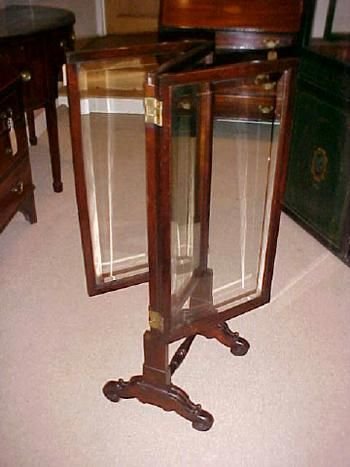
The construction typically involves three or four folds, though examples span from smaller dressing screens to larger partitions. Timber frames house diverse infills, ranging from fabric and glass to painted panels and carved fretwork.
How they were made
Makers utilised timber frameworks primarily in mahogany, oak, and walnut to construct the hinged panels. These wooden structures were frequently polished, inlaid, or ebonised to suit the interior tastes of the era.
Panels incorporated varied decorative techniques, including oil paintings, hand-painted leather, lacquer work, and applied textiles such as William Morris velvet. Metal elements like brass hardware supported the folding mechanism, while glass and hardstone added further textural contrast.
The listings show frames built in mahogany, oak, and walnut, paired with infills of fabric, glass, lacquer, and oil paint.
What varies in quality
Quality rests in the execution of the panel infills and the structural integrity of the timber framing. Hand-painted artistry, detailed fretwork, and superior textile selection distinguish finer iterations from simpler utilitarian partitions.
The calibre of the joinery and the durability of the folding hinges determine how smoothly the panels operate. Superior pieces maintain balance across multiple folds without sagging or straining the connecting hardware.
The Edwardian Folding Room Divider Glossary
- Bergere
- A wooden-framed armchair or panel insert featuring woven cane work. This technique appears in partition panels to create lighter, semi-translucent sections.
- Chinoiserie
- European decorative motifs inspired by Chinese art and design. These designs often feature black lacquer and gilded landscapes on room divider panels.
- Fretwork
- Ornamental design created by cutting patterns through wood using a fretsaw. This technique adds delicate light filtering and decorative detail to screen panels.
- Scrap screen
- A folding screen decorated with layered paper cutouts and prints. Makers sealed these collages beneath varnish to protect the paper surface.
- Inlay
- A technique where contrasting materials are set into the surface of the wood to form patterns. Mahogany frames frequently incorporate lighter wood stringing.
Edwardian Folding Room Divider: Frequently Asked Questions
How do you use a folding room divider?
These screens partition large rooms, create private dressing areas, or conceal specific zones within a domestic interior.
They stand independently and adjust to various angles depending on the floor space available.
What woods were used for these screens?
Cabinet makers predominantly selected mahogany, oak, and walnut for the structural framework of the panels.
Ebonised finishes and alternative timbers also appear across different stylistic movements.
How many panels do these dividers have?
Most examples comprise three or four folding panels linked by hinges.
Larger configurations with five or more folds exist for spanning wider areas.
What panel materials are common?
Infill materials vary widely and include fabric, glass, leather, oil paintings, and lacquer.
Some screens feature intricate wooden fretwork or paper collages instead of solid panels.