
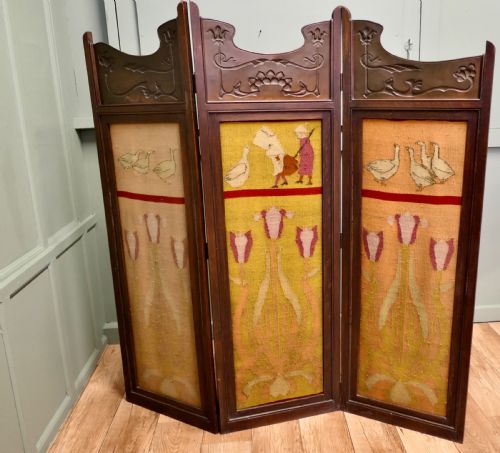

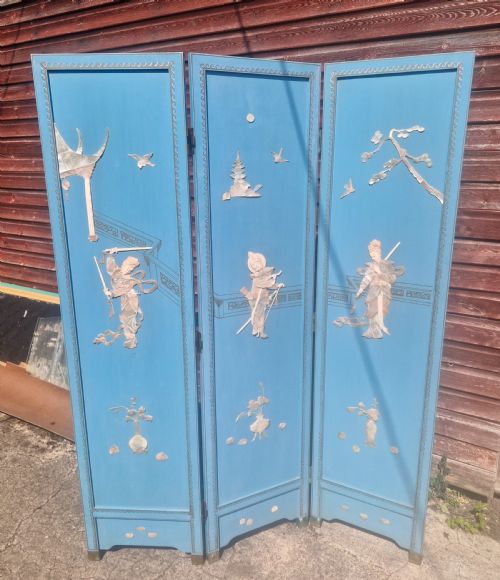


Antique 3 Fold Screen
When you handle an antique 3 fold screen, you are looking at a portable architectural divider shaped by centuries of changing interior habits.
Antique 3 Fold Screen
An antique 3 fold screen functions as a mobile division of space, traditionally deployed to manage draughts or create privacy in large rooms. These pieces appear in domestic settings as room dividers, dressing screens, or decorative fire guards.
The materials recorded in the evidence range from carved walnut and mahogany to leather, brass, and lacquer. Surviving examples reflect both grand drawing room furnishings and functional hearth accessories from the eighteenth to the early twentieth century.
Buyers seeking an antique 3 fold screen will encounter variations spanning French Rococo Revival, Chinoiserie, and Edwardian styles. The tripartite structure provides a stable footprint while allowing the wings to angle according to the room.
How They Were Made
Makers constructed the primary frames of these screens using solid hardwoods such as mahogany, walnut, oak, and giltwood, joined by hinges that permitted multi-directional movement. Panel inserts relied on diverse craft traditions, incorporating oil paintings, hand-painted leather, bevelled glass, and silk.
Surface decoration frequently involved intricate techniques including deep bone carving, polychrome painting, and gilt embossing. Metal components utilised brass and ormolu, particularly evident in folding fan fire screens and spark guards.
Some Victorian examples feature lively scrap-work panels composed entirely of clipped paper prints and illustrations, creating early collage art.
What Varies in Quality
The calibre of an antique screen rests heavily on the integrity of the joinery and the execution of the decorative surface. Hand-painted panels, finely tooled leather, and deep relief carving distinguish workshop pieces from simpler domestic utilities.
Original hinges and hardware contribute significantly to the piece's structural coherence. The refinement of the timber framing and the depth of the gilding separate standard production items from exceptional commissions.
The Antique 3 Fold Screen Glossary
- Chinoiserie
- European decorative style reflecting Chinese artistic influences. This aesthetic appears frequently on lacquered and painted room dividers.
- Ormolu
- Gilded bronze mounting applied to furniture and decorative objects. It provides ornate detailing on nineteenth-century frames and fire guards.
- Cordoban leather
- Heavily embossed and painted leather traditionally produced in Spain. It is associated with rich seventeenth and eighteenth-century panels.
- Bevelled glass
- Glass panes with angled edges set into wooden frames. This technique adds depth and light reflection to dressing screens.
Antique 3 Fold Screen: Frequently Asked Questions
What is an antique 3 fold screen?
It is a movable hinged partition comprising three distinct panels designed to divide interior spaces or shield occupants from hearth heat.
These objects combine functional utility with decorative artistry, utilising materials like painted leather, carved wood, and brass.
How were these screens used originally?
Historically, households utilised them to block draughts near doors, create private dressing areas, or manage radiant heat from open fireplaces.
Their portability allowed inhabitants to adapt room layouts and thermal comfort rapidly throughout the day.
Where should I place a screen at home?
You can position one against a blank wall as a decorative backdrop or use it to subtly zone open-plan living spaces.
They also function effectively at the foot of a bed or to soften the corner of a room.
How do I identify the period of a screen?
Dating relies on examining the timber species, hinge construction, and stylistic motifs such as Rococo revival curves or Edwardian inlay.
Material choices like papier-mâché, brass fan mounts, and hand-painted canvas often point to specific nineteenth or early twentieth-century decades.