


Antique Wooden Partition
An antique wooden partition divides a room with folding panels of mahogany, oak, and lacquer, bringing warmth and structure to an open interior.
Antique Wooden Partition
When you search for an antique wooden partition, you are looking at folding screens, room dividers, and architectural screens designed to segment spaces or frame interiors. These pieces rely on hinged panels that open and close to alter the flow and function of a room.
The versions you are most likely to meet on this page span the Victorian, Edwardian, and early twentieth century periods, taking forms from Chinese coromandel lacquer and Japanese folding screens to British mahogany and oak frames.
Makers and workshops across Britain, China, Japan, and India produced these dividers using regional timbers and distinct ornamental traditions, incorporating glass, brass, and hand-painted panels into domestic and institutional settings.
How they were made
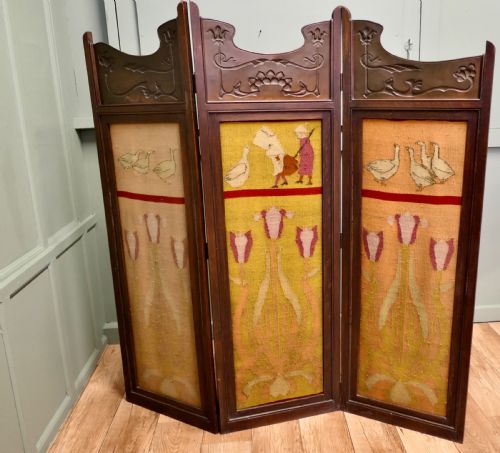
Cabinetmakers and joiners constructed these partitions using solid timbers such as mahogany, oak, padauk, and assorted hardwoods, joining panels with sturdy hinges to allow smooth folding action. Frames often housed secondary materials, including glass panes, oil paintings, and naive wool panels.
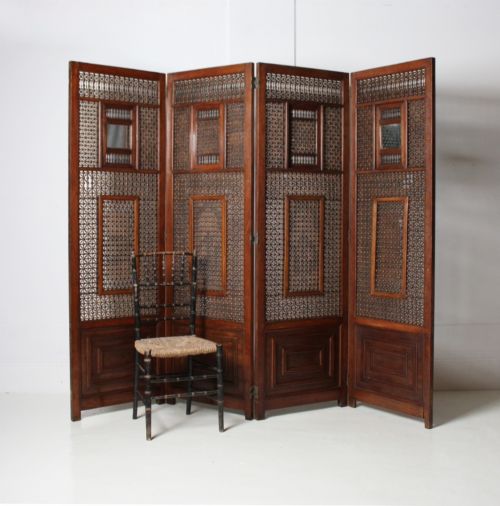
Surface decoration required specialised techniques, from deep wood carving and inlaid mahogany to black lacquer, coromandel incision, and applied brass fittings. Some architectural examples incorporate intricate turned woodwork and mashrabiya lattice work to filter light through the panels.
An Eton College debating society utilised one listed oak frame panel for political meetings in the 1920s.
What varies in quality
Quality in an antique wooden partition rests upon the selection of timber and the precision of the joinery within the folding hinges and frame joints. Denser hardwoods and substantial oak or mahogany structures offer greater stability across multiple folding panels.
The execution of surface ornament dictates the distinction between standard production and finer examples, whether through deeply carved dragon motifs, layered coromandel lacquer, or the integration of original oil paintings and hand-worked textiles.
The Antique Wooden Partition Glossary
- Coromandel
- A type of Chinese lacquer work where the design is incised into a dark ground, filled with colours, and sealed. This technique appears on multi-fold screens from the late nineteenth and early twentieth centuries.
- Mashrabiya
- An architectural element of turned wooden lattice work used to create decorative screens that permit air circulation and filtered light. These panels form intricate geometric patterns within room dividers.
- Padauk
- A dense tropical hardwood prized for its rich reddish-brown colour and durability. It provides a heavy, stable foundation for carved Oriental screens.
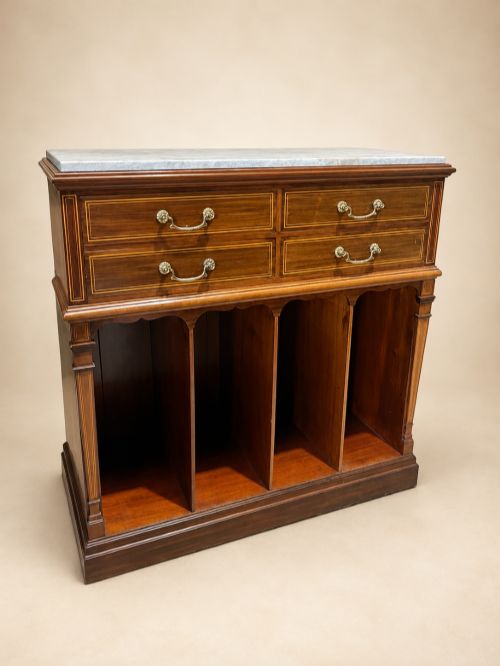
- Sheraton Revival
- A late nineteenth and early twentieth century style drawing inspiration from eighteenth-century neoclassical furniture. Pieces in this style utilise mahogany, delicate inlay, and balanced proportions.
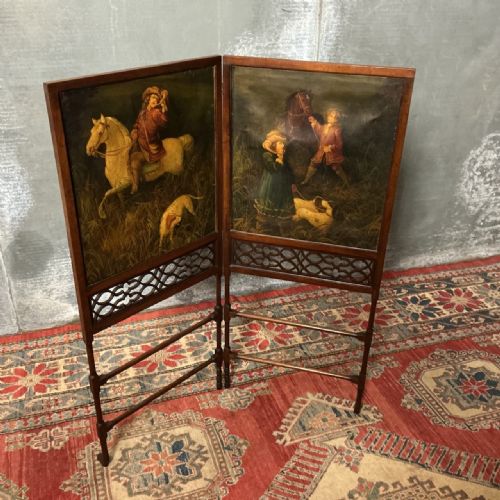
- Fire screen
- A smaller domestic screen placed in front of a fireplace when not in use to block radiant heat. These items share construction methods with larger room dividers but scale down for hearthside placement.
Antique Wooden Partition: Frequently Asked Questions
How do I use a partition in a modern room?
An antique wooden partition works well to zone large open-plan spaces, create a dressing area, or simply soften an empty corner with texture and historic detail.
Position the folding panels at an angle to ensure stability and allow the natural grain or lacquer work to catch the light.
What is the difference between a folding screen and a room divider?
In practical terms, the two titles often describe the same hinged panel construction used to separate space within an interior. Larger architectural examples may be referred to as dividers, while multi-fold panels are commonly called screens.
Both types rely on connected leaves that fold flat for storage or extend to create a physical barrier.
How do I date an antique wooden partition?
Dating relies on examining the timber, the style of carving or lacquer, and the hardware used for the hinges. Periods represented range from Victorian mahogany to Edwardian inlaid frames and 1920s lacquer work.
Construction details, such as hand-cut joints or period brass fastenings, help narrow down the decade of manufacture.
Can these partitions be folded regularly?
Most antique partitions feature hinged joints designed for movement, but older brass or iron hinges require gentle handling. Frequent folding should be done with care to protect the wood edges and any delicate lacquer or painted surfaces.
Keeping the screen in a stable position reduces unnecessary wear on the connecting joints.