



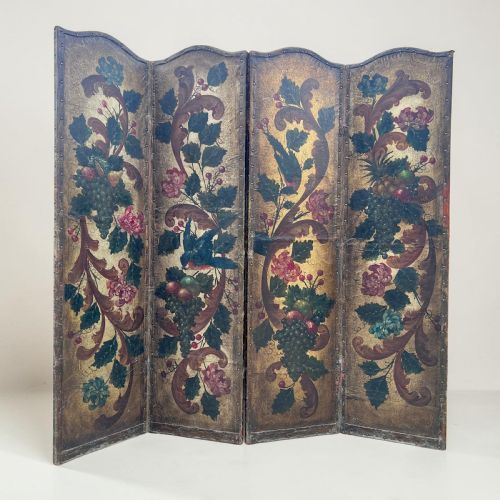
Folding Room Divider Screen
When sourcing a folding room divider screen, you choose from centuries of hinged panels designed to divide space and frame interiors with mobility.
Folding Room Divider Screen
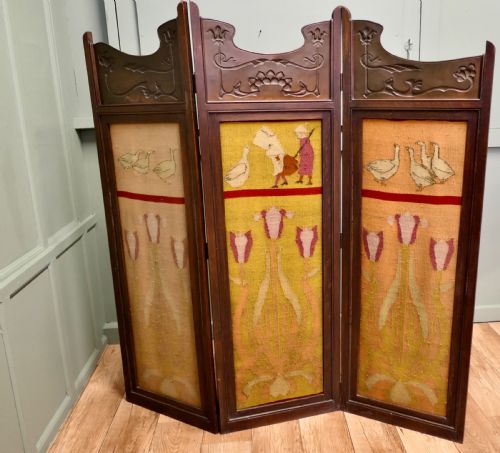
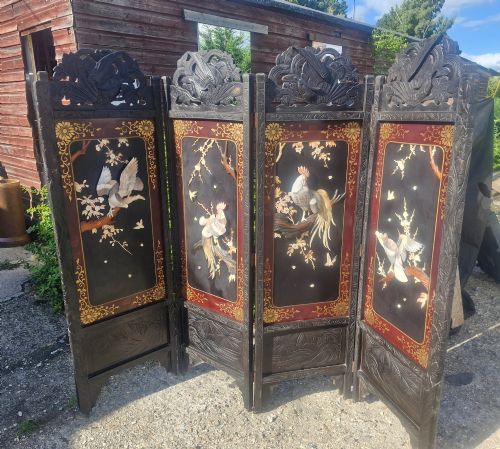
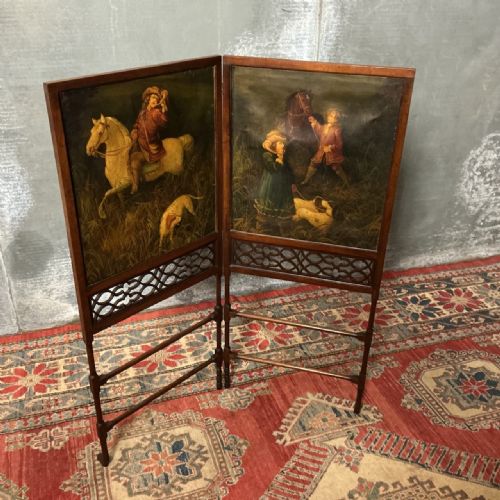
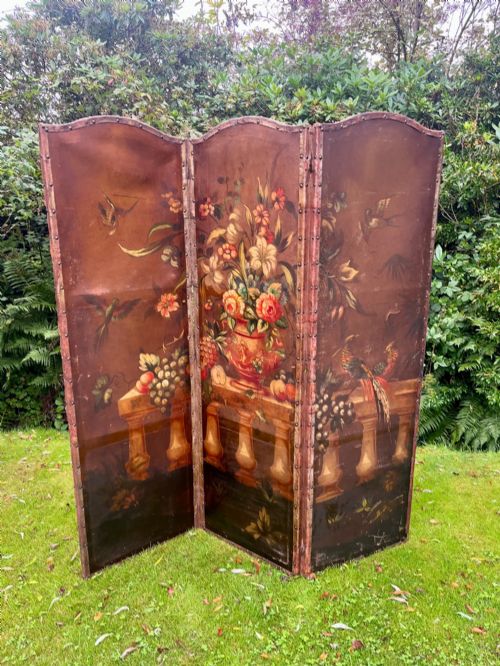
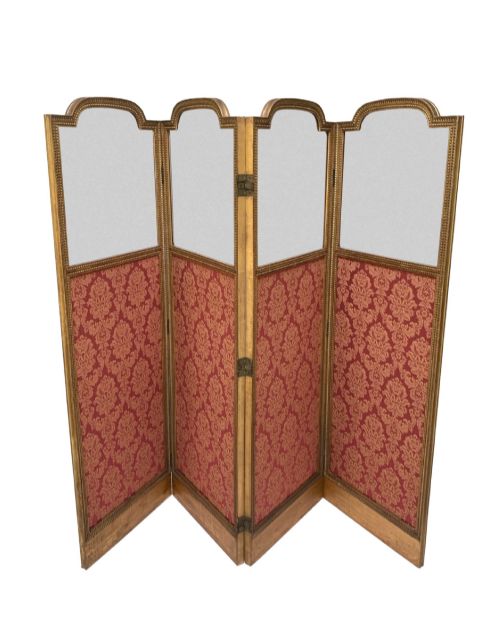
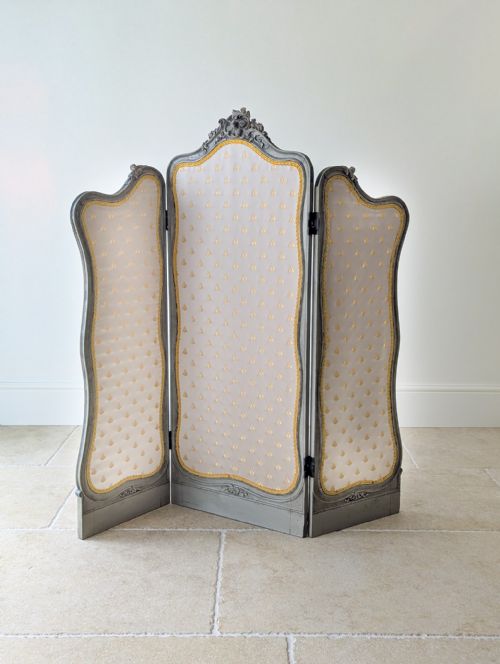
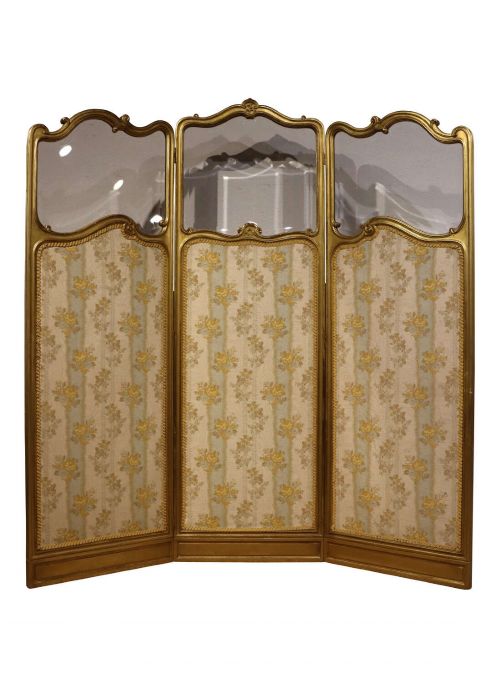
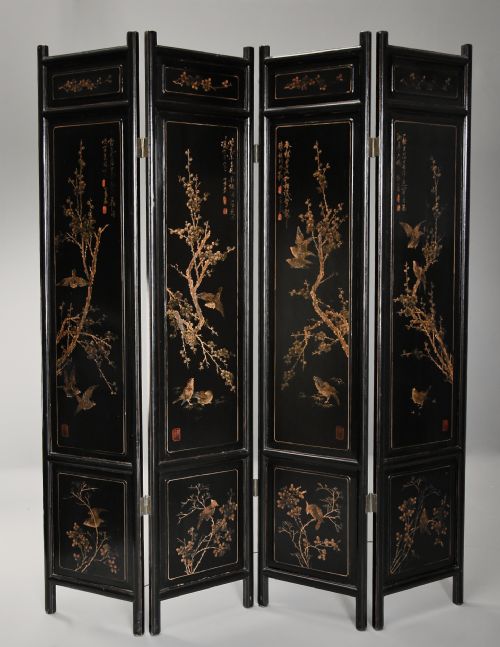
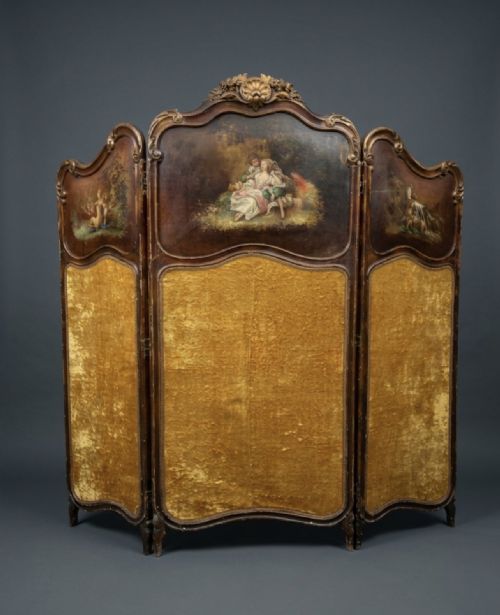
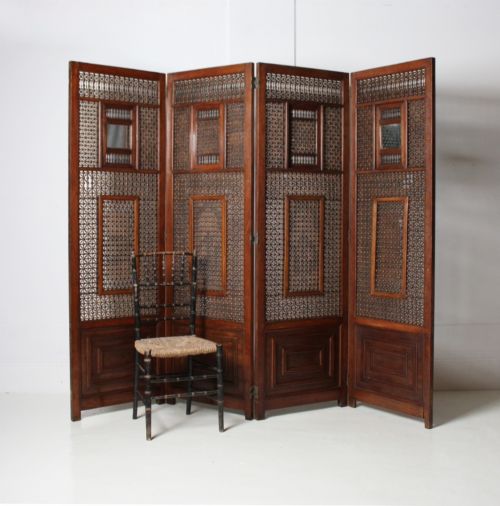
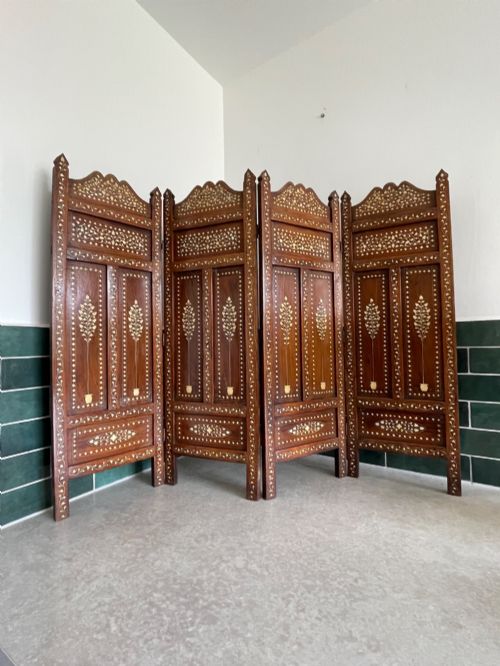
A folding room divider screen functions as a mobile partition, deployed across domestic spaces to create privacy, block draughts, or define zones within large rooms. The examples gathered here span multi-panel configurations in three, four, six, and eight folds, originating from varied European, British, and Asian workshops.
The selection ranges from tall freestanding room dividers and dressing screens down to low modesty screens and table screens. Formats shift between structural timber frames holding painted leather, needlepoint, silk, or canvas panels, and substantial carved wooden or lacquered assemblies hinged for daily movement.
Materials and Construction
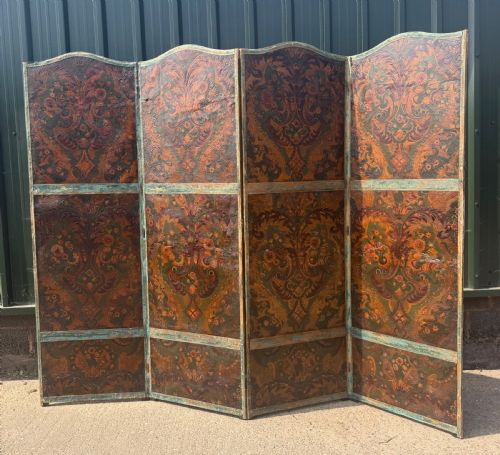
Construction relies on timber frames of mahogany, walnut, oak, and hardwood joined by hinges to support flexible panels of leather, fabric, canvas, or paper. Makers applied oil paint, lacquer, giltwood, and gesso directly to these surfaces, frequently building up deep relief carvings in bone or wood.
Textile elements incorporate woolwork, needlepoint, tapestry, and silk panels secured within wooden or brass channels. Lacquered pieces utilise layered resin grounds finished with hand-painted polychrome scenes, incised coromandel techniques, or applied mother-of-pearl inlay.
Several Victorian screens are covered entirely in layered paper scraps, turning childhood collections into permanent architectural partitions.
Evaluating Craft and Condition
Quality rests in the precision of the joinery and the stability of the hinges connecting multiple heavy leaves. Superior items exhibit robust timber frames that prevent warping across wide spans, allowing panels to fold flat in both directions without straining the joints.
Surface execution dictates the upper tier, distinguishing hand-painted oils, finely tooled Cordoban leather, and deep-incised coromandel work from mass-produced transfer printing or thin veneer. Original painted details, intact gilt embossing, and authentic period textiles retain their structural integrity and visual depth over centuries of handling.
William Morris
The Folding Room Divider Screen Glossary
- Coromandel
- A type of Chinese lacquered screen where the wooden ground is covered in dark lacquer, incised with designs, and filled with colours and gold before polishing.
- Verdure
- A style of tapestry or painted wall hanging featuring lush botanical foliage, trees, and occasionally animals or distant landscapes.
- Scrap work
- A Victorian decorative technique involving the systematic application of numerous printed paper cut-outs, engravings, and scraps onto a folding panel surface before varnishing.
- Mashrabiya
- An architectural wooden screen formed of turned bobbins and interlocking wooden elements, providing ventilation and screened visibility.
- Modesty screen
- A low freestanding panel historically used to shield a person from view while dressing, washing, or sitting near a hearth.
Folding Room Divider Screen: Frequently Asked Questions
How were folding room divider screens used historically?
These panels partitioned large rooms to create private dressing areas, block draughts from doorways, and alter the proportions of domestic interiors.
Their mobility allowed residents to reconfigure spaces throughout the day without altering permanent architecture.
How do I care for an antique screen?
Keep wooden frames and leather panels away from direct sunlight and sudden temperature shifts to prevent warping and cracking.
Dust surfaces gently with a dry, soft cloth, avoiding commercial cleaning liquids that damage historic lacquer and oil paint.
What is the difference between a dressing screen and a fire screen?
Dressing screens stand tall with multiple folding panels to conceal a person or divide a room.
Fire screens are smaller, single-panel items placed near a hearth to shield occupants from the radiant heat of an open fire.
How can I identify the period of a screen?
Examine the underlying timber, hinge construction methods, and stylistic motifs like Chinoiserie, Art Nouveau, or Victorian needlepoint.
Material composition and pigment application methods also align with specific manufacturing decades recorded across the evidence.