



Carved Wood Folding Screen
A carved wood folding screen brings architectural division and intricate texture to an interior, shaped by global traditions from Anglo-Indian to Japanese design.
Carved Wood Folding Screen
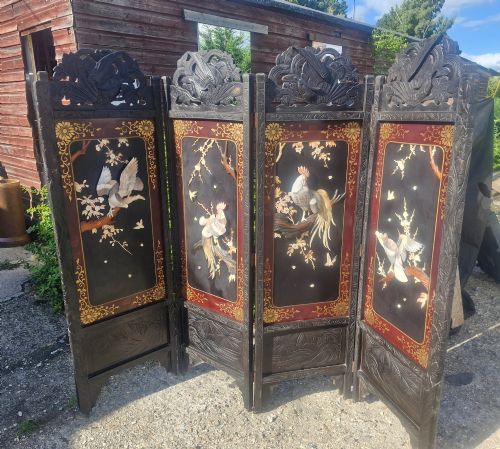
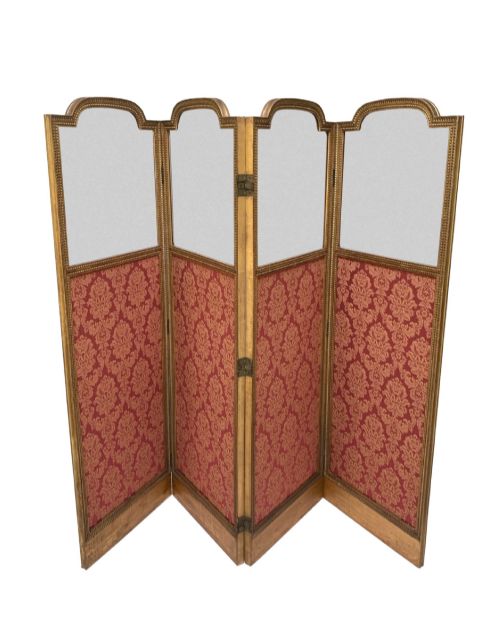
A carved wood folding screen acts as a movable partition, creating intimate zones within larger spaces or serving as a decorative backdrop. The pieces gathered here range from substantial four-fold room dividers down to smaller table screens and fire screens.
Most examples you encounter date from the nineteenth and early twentieth centuries, spanning stylistic revivals and traditional regional craftsmanship. The forms include multi-panel dressing screens, modesty screens, and privacy dividers utilising hinged wooden frames.
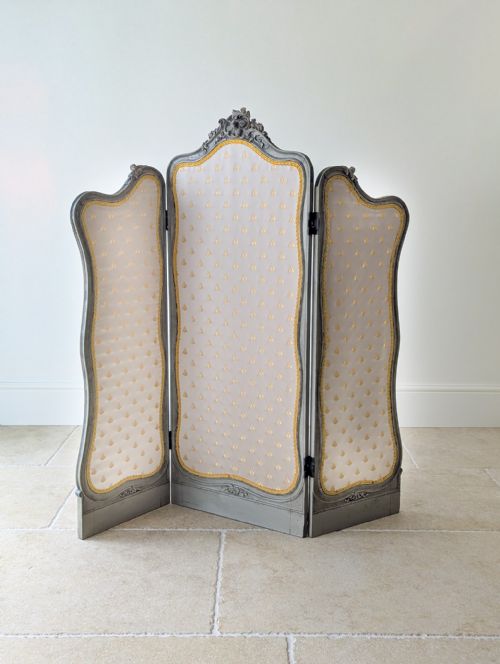
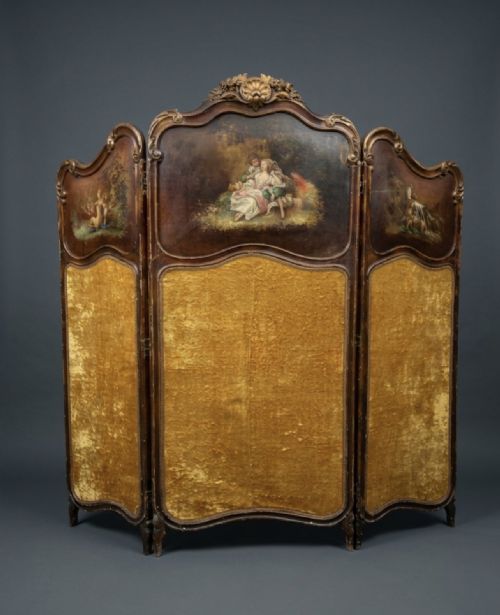
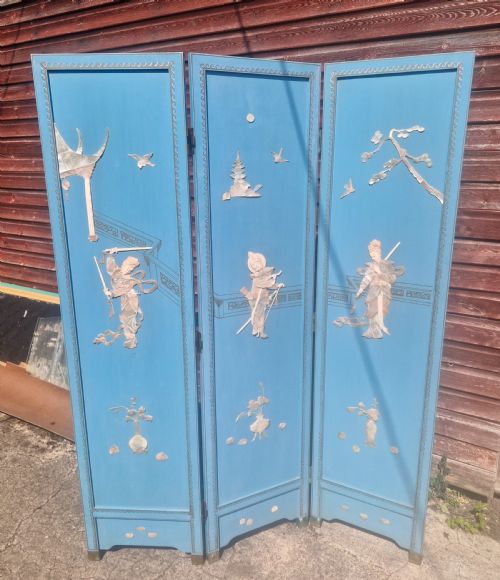
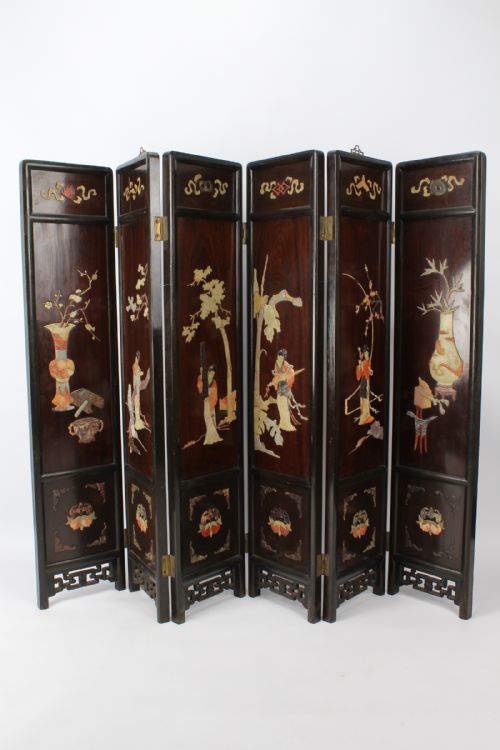
Origins stretch across diverse cultural traditions, featuring Anglo-Indian woodwork, French rococo revival giltwood, and East Asian lacquerwork. Each regional variation employs specific joinery and decorative programmes suited to its original domestic function.
Materials and construction
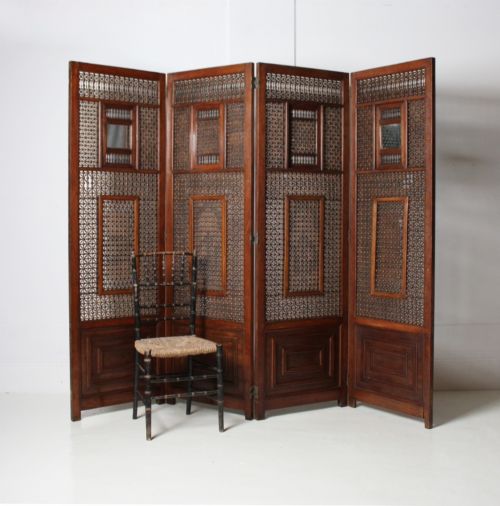
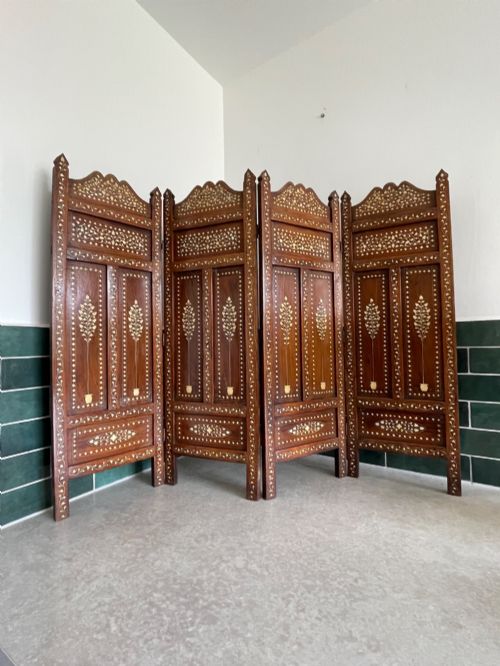
Hardwood structures form the foundation of these pieces, often manipulated through deep carving, fretwork, or mashrabiya lattice techniques. Craftsmen combined timber frames with secondary materials such as bone, ivory, silk, glass, and fabric panels.
Surface decoration frequently involves intricate lacquer work, gilding, and hand-painted motifs layered onto the wooden panels. Metal hinges connect the folds, allowing the screens to articulate smoothly while supporting heavy multi-panel configurations.
Materials recorded across the inventory include hardwood, brass, lacquer, bone, giltwood, glass, fabric, and silk cotton.
Distinguishing quality
Depth and precision of the carving separate standard production from superior craftsmanship, particularly in heavily ornamented sections. Relief work with undercut details and crisp linework demonstrates a higher level of artisanal skill.
The integration of mixed materials, such as finely inlaid bone figures or meticulously applied lacquer, indicates a finer grade of manufacture. Original hardware and sound structural joinery across the hinges ensure the multi-panel folds operate correctly over time.
The Carved Wood Folding Screen Glossary
- Mashrabiya
- An architectural element of turned wood woodwork forming a lattice screen, used to control light and airflow. This technique appears in panels designed for privacy and room division.
- Giltwood
- Timber that has been coated with gold leaf or a gold-coloured metallic finish. This treatment surfaces on revival and decorative European frames.
- Meiji
- A period in Japanese history spanning the late nineteenth and early twentieth centuries, known for intricate decorative arts. Pieces from this era often incorporate deep carvings and bone inlay.
- Chinoiserie
- European decorative style reflecting Chinese artistic influences, popular across furniture and screens. It employs painted or lacquered motifs depicting traditional Eastern scenes.
- Fire screen
- A decorative panel placed before a fireplace when not in use, distinct from large room dividers. These smaller items protect against heat or simply conceal an empty hearth.
Carved Wood Folding Screen: Frequently Asked Questions
How were folding screens used historically?
Historically, folding screens partitioned large rooms to create private areas, block draughts, or serve as dressing backgrounds. They offered a flexible way to alter interior spaces without permanent walls.
Smaller variations functioned as table screens or protected inhabitants from the direct heat of an open fire. Their portability meant they moved easily between rooms according to daily domestic needs.
How do I care for a carved wooden screen?
Keep wooden screens away from direct sunlight and dramatic temperature shifts to prevent timber splitting or lacquer cracking. Regular dusting with a soft, dry cloth preserves the carved details and surface finishes.
Avoid liquid polishes, particularly on lacquered or gilt surfaces, which can damage the historical materials. Handle the hinges gently when repositioning the folds to maintain the structural integrity of the joints.
What distinguishes an Anglo-Indian screen?
Anglo-Indian screens typically feature dense, geometric piercing and intricate foliage carving executed in dense hardwoods. These pieces reflect the cross-cultural design exchange during the nineteenth century.
They often utilise techniques like mashrabiya lattice work alongside deep relief carving, creating strong patterns of light and shadow when placed near windows.
Are these screens stable enough for daily use?
Most multi-fold screens stand securely when arranged in a zig-zag or curved position rather than pulled completely flat. The weight of the hardwood panels helps anchor them in place across a room.
However, because of their hinged construction and historical nature, they function best as decorative partitions rather than heavy-duty architectural barriers.