





Carved Wood Room Screen
A carved wood room screen divides a space with deep relief and regional character, offering privacy and visual weight to an interior.
Carved Wood Room Screen
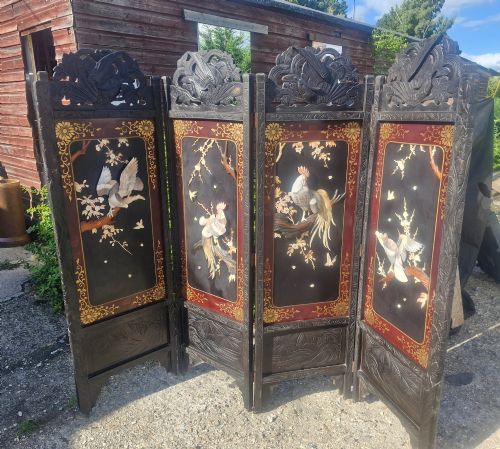
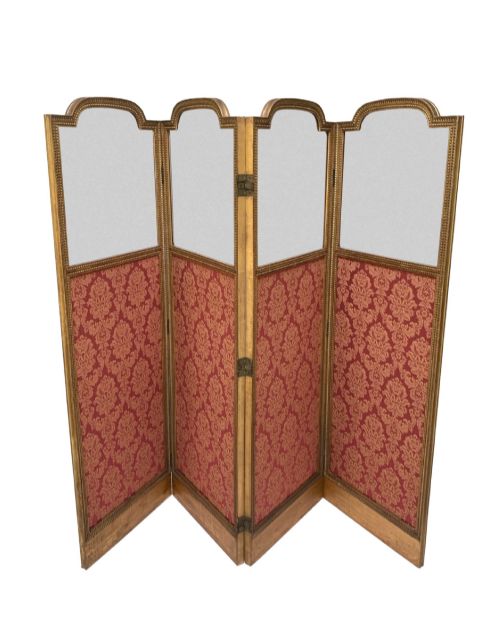
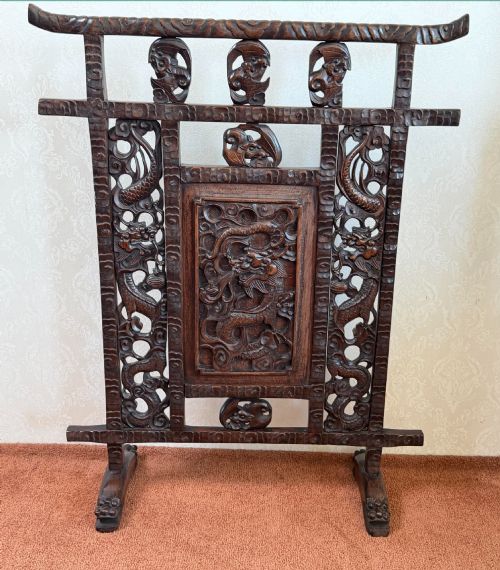
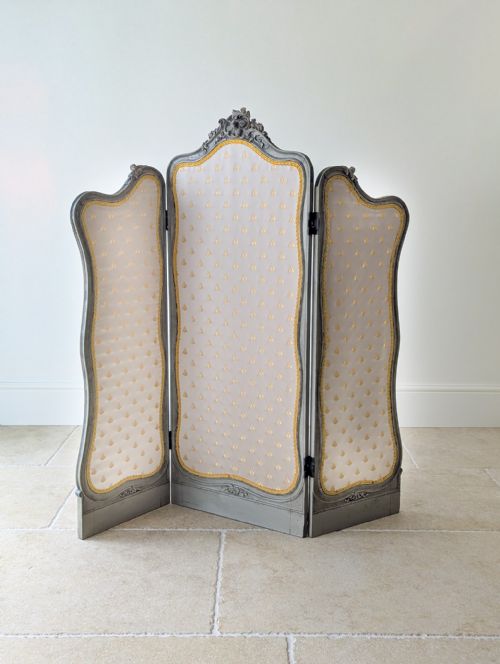
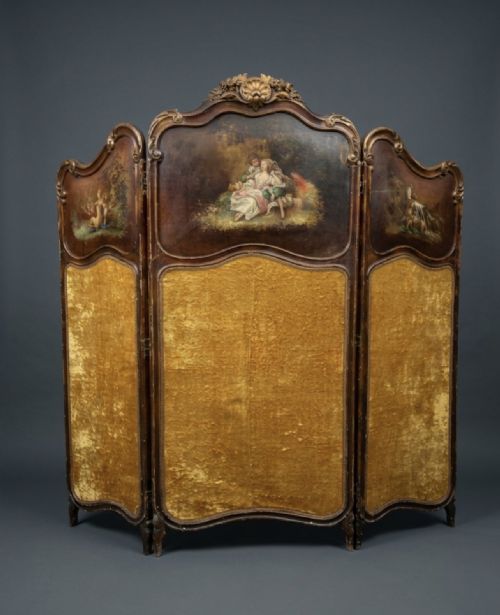
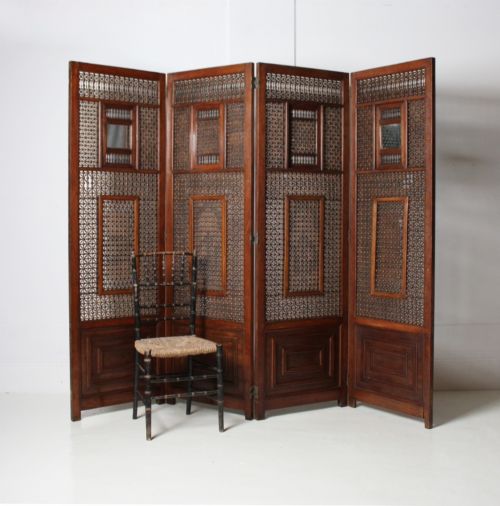
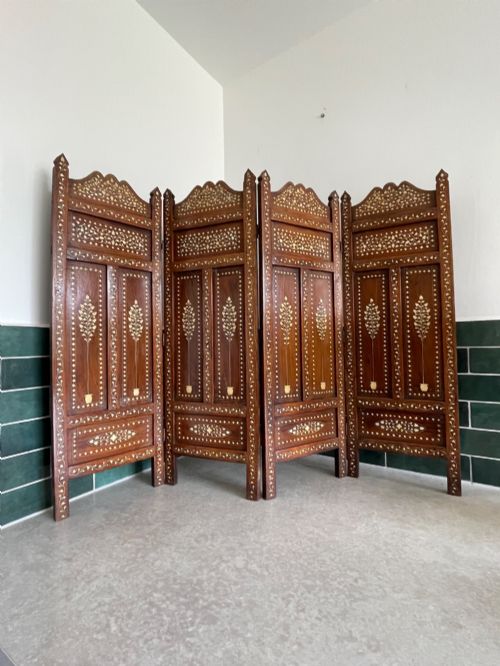
A carved wood room screen takes multiple forms on this page, ranging from grand folding room dividers to compact table screens and domestic fire screens. These panels define areas within a room, utilising hinged folds to stand upright and shape the floor plan.
Originating across diverse global traditions, the pieces span Anglo-Indian, Chinese, Japanese, and European workshops. Buyers encounter everything from tall four-fold privacy barriers to smaller dressing screens and modesty panels.
The selection covers periods from the Regency era and Victorian times through the nineteenth century and into the early twentieth century. Each piece relies on timber frameworks, often augmented with lacquer, silk, bone, or brass, to achieve its decorative purpose.
What varies in quality
Quality rests in the depth and execution of the carving, where sharply defined figures and intricate fretwork separate standard production from finer work. The choice of materials dictates the baseline, with solid hardwoods and skilled bone inlay representing higher craftsmanship than simple painted softwoods.
The complexity of the folding mechanism and the condition of integrated panels, whether silk, lacquer, or glass, influence the overall integrity of the piece. Proportion, balance, and the crispness of regional styles like Anglo-Indian piercing or Japanese deep relief define the upper tier of the range.
The inventory includes diverse regional forms such as Anglo-Indian mashrabiya panels, Chinese dragon-carved dividers, and Japanese folding screens.
The Carved Wood Room Screen Glossary
- Mashrabiya
- A traditional wooden architectural screen characterised by intricate turned or carved lattice work. It filters light and provides ventilation while maintaining privacy.
- Fire screen
- A small decorative panel placed before a fireplace when not in use. These items protect a room from stray embers while adding a decorative element to the hearth.
- Modesty screen
- A low folding panel historically used in dressing areas or drawing rooms. It offered a degree of privacy during personal grooming.
- Giltwood
- Timber that has been coated with a thin layer of gold leaf or gold paint. This technique adds a reflective, luminous quality to frames and panels.
- Table screen
- A miniature version designed to sit atop furniture rather than rest on the floor. These decorative objects often feature detailed carving or inlay work.
Carved Wood Room Screen: Frequently Asked Questions
How do I use a room screen?
Position a folding screen to partition a large room into distinct zones or to conceal storage areas. They stand independently when angled correctly.
Ensure the hinges move freely before placing the screen where it receives frequent movement or traffic.
Are these screens heavy?
Weight depends entirely on the timber used and the number of folds in the assembly. Hardwood panels and those with glass or bone inserts require sturdy placement.
Larger four-fold dividers need careful handling when moving between rooms due to their size and timber density.
How do I clean carved wooden panels?
Dust the deep recesses regularly with a soft brush to prevent dirt accumulation within the carved details. Avoid liquid polishes that can damage lacquer or unsealed wood surfaces.
Treat inset elements like silk or bone with separate, appropriate conservation methods depending on the specific material.
How do I date a wooden screen?
Examine the construction methods, hinge types, and joinery visible on the frame and reverse side. Period styles often reflect prevailing nineteenth-century or early twentieth-century design movements.
Compare the decorative motifs, such as specific regional carving styles or lacquering techniques, against documented examples from similar periods.