


Gold Room Divider
These gold room divider pieces bring architectural structure and gilded warmth to a floor plan.
Gold Room Divider
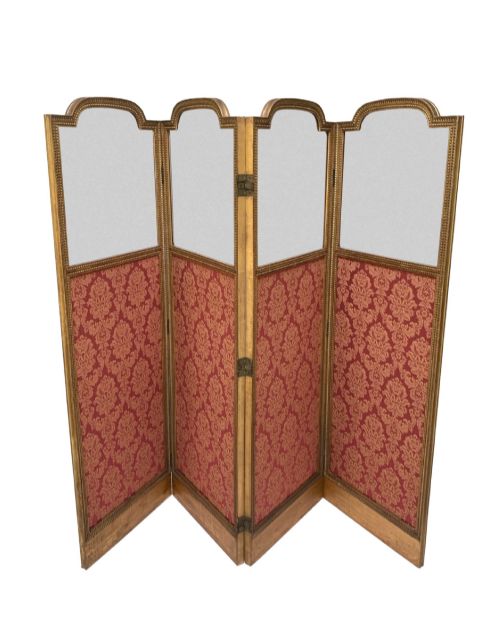
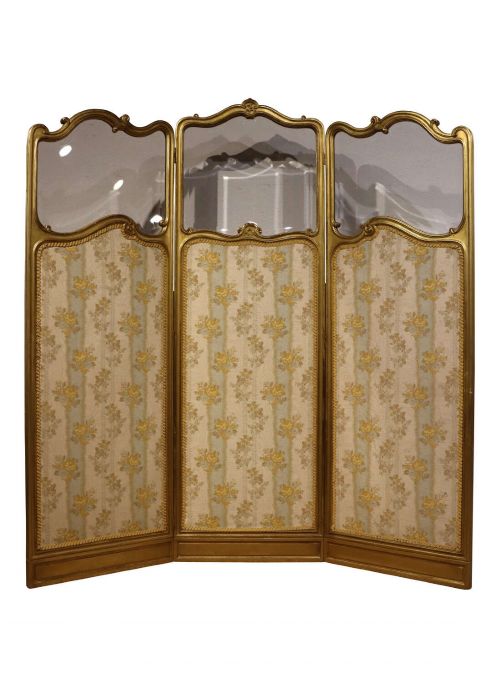
A gold room divider creates functional zones within an interior whilst adding decorative presence through folding panels. The selection spans multi-fold folding screens, dressing screens, modesty screens, and fire screens originating from various nineteenth and twentieth-century periods.
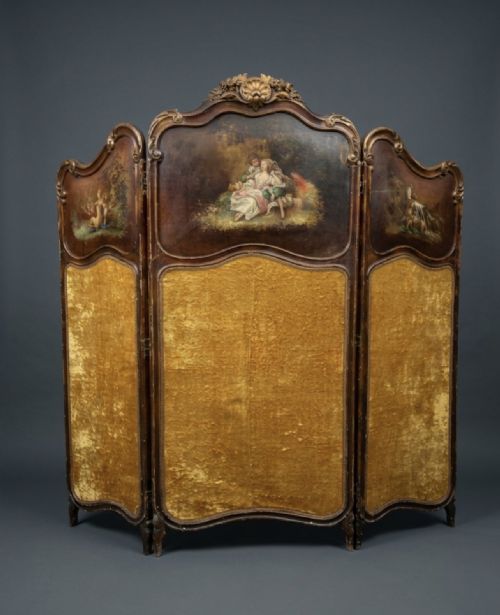
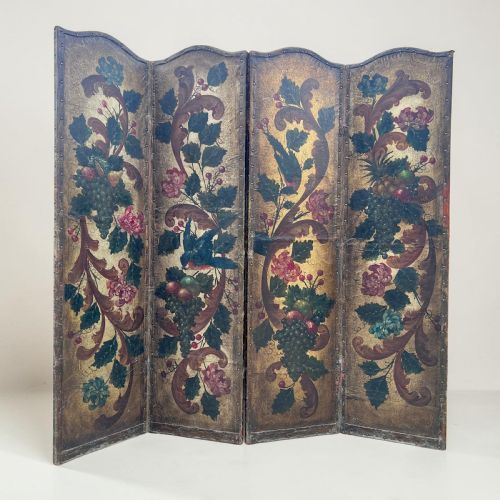
Continental examples often showcase carved giltwood frames and French Rococo Revival or Chinoiserie aesthetics. Visitors will frequently encounter three-fold and four-fold configurations featuring painted leather, bevelled glass, or silk panels.
Larger Chinese and Japanese lacquer screens also appear alongside traditional European formats. These items serve equally to partition a space or stand as decorative wall art.
Materials and Construction
Construction relies upon robust timber frames supporting panels of leather, silk, paper mâché, or glass. Artisans applied gold leaf, giltwood, or oil paint to create elaborate surface decoration across the folding sections.
Traditional joinery links multiple folds with hinges to ensure smooth articulation. Surface finishes involve meticulous hand painting, lacquering, and gilt embossing executed by skilled craftspeople.
Periods represented across the items span the eighteenth century, the Victorian era, and the early twentieth century up to the nineteen-thirties.
Distinguishing Quality
Quality rests upon the depth of the carving, the integrity of the gilding, and the preservation of hand-painted or lacquered details. Superior examples exhibit refined execution in the pictorial panels and sturdy construction of the supporting frame.
The complexity of the fold structure and the originality of materials such as antique silk or Cordoban leather elevate the piece. Finer items maintain their original glass panels, hand-applied gold leaf, and stable hinge connections.
The Gold Room Divider Glossary
- Giltwood
- Timber that has been coated with gold leaf or a gold-coloured finish. This material is characteristic of ornate European furniture and decorative screens.
- Chinoiserie
- European artistic style reflecting Chinese motifs and techniques. It appears frequently on lacquered furniture and folding screens from the nineteenth century.
- Cordoban Leather
- Embossed and painted leather traditionally produced in Spain. It offers a rich, tactile surface utilised in high-status historical screens.
- Bevelled Glass
- Glass panes featuring an angled edge cut around the perimeter. This technique adds depth and light reflection within glazed screen panels.
Gold Room Divider: Frequently Asked Questions
How were these screens used historically?
Historically, folding screens managed draughts, created private dressing areas within larger chambers, and divided grand reception rooms into intimate spaces.
Fire screens served the specific purpose of shielding occupants from the intense heat of an open hearth whilst not in use.
How do I place a room divider in a modern home?
A folding screen works effectively to zone open-plan living areas, partition a home office corner, or act as a striking backdrop behind furniture.
Position the panels at slight angles to ensure stability and to catch natural light across the gilded or painted surfaces.
How do I distinguish French Rococo Revival from Chinoiserie styles?
French Rococo Revival pieces display asymmetric scrollwork, carved giltwood frames, and pastoral painted scenes or silk panels.
Chinoiserie screens rely upon dark lacquered backgrounds, gilt motifs inspired by Asian art, and figures or landscapes executed in flat perspective.
What maintenance do antique screens require?
Maintain antique screens by keeping them away from direct sunlight and excessive moisture to protect delicate gilt leaf and painted leather.
Dust the frames gently with a soft, dry cloth and avoid chemical cleaning agents on the lacquered or textile surfaces.