

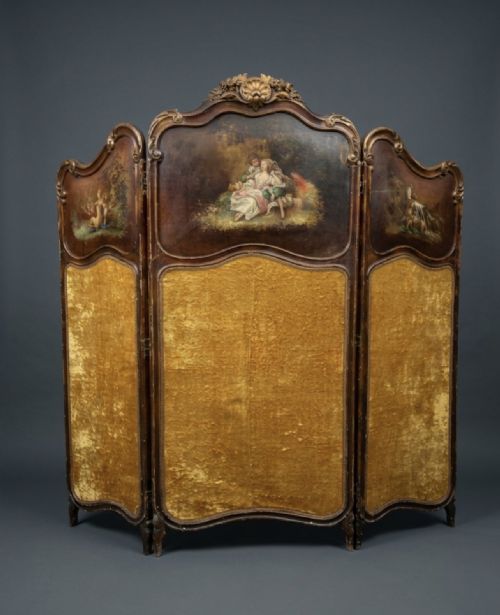


French Three Fold Screen
A French three fold screen divides a room or frames a hearth with the theatrical flair of the nineteenth century.
French Three Fold Screen
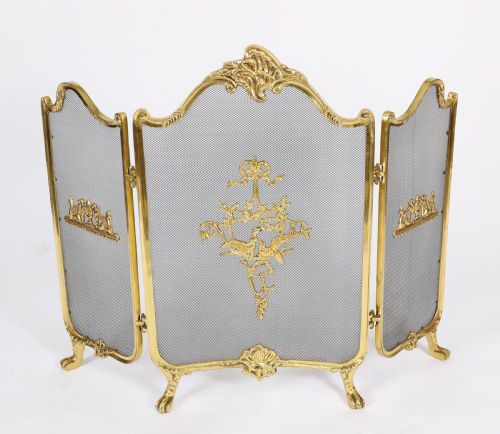
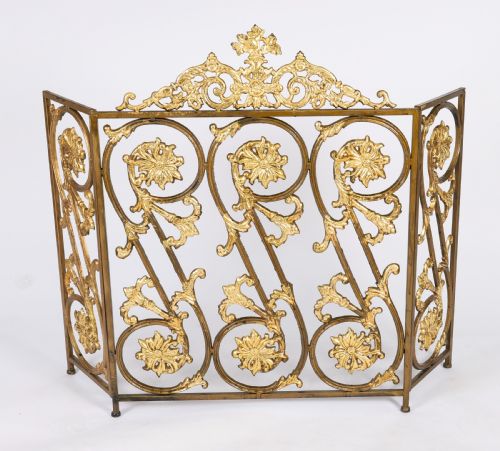
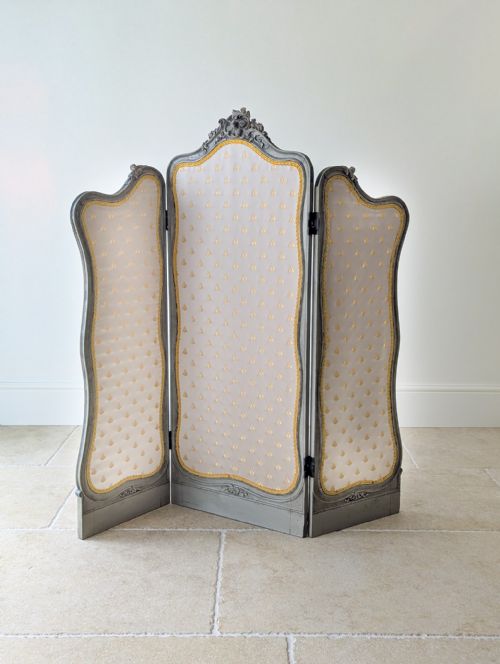
When you search for a french three fold screen, you encounter hinged panels designed for privacy, dressing, or guarding a fireplace. These pieces serve as room dividers, vanity screens, and fire guards across nineteenth-century interiors.
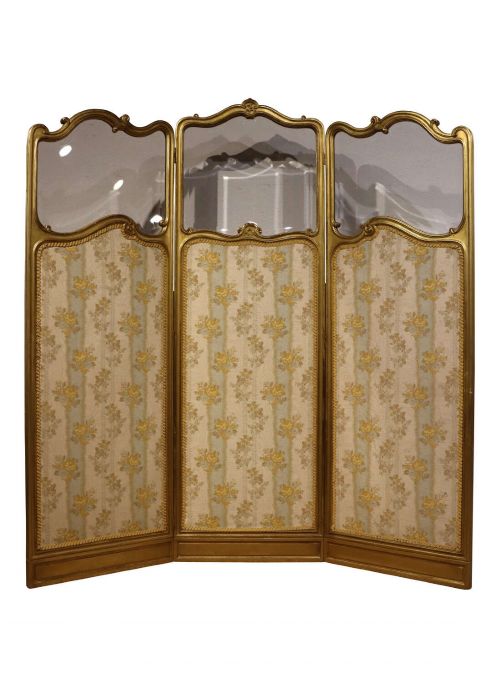
The version most commonly met on this page is the giltwood or walnut three-panel screen, often decorated with painted scenes, silk panels, or bevelled glass. They originate from periods spanning the Victorian era through to the turn of the twentieth century, reflecting revival styles like French Rococo and Louis XIV.
Makers and craftsmen of the period utilised folding frames to manipulate light and space within boudoirs, grand reception rooms, and salons. Each panel is linked by hinges to allow flexible placement across a floor.
How they were made
Frames are constructed from carved walnut or giltwood, sometimes accented with gilt bronze or brass fittings and wire mesh. These wooden frameworks provide the sturdy skeleton necessary to support multiple hinged sections without warping.
Panels incorporate oil paint on canvas or wood, Aubusson tapestry, inset glass, and stretched silk to create decorative surfaces. Artisans applied gilt embellishments and scroll motifs to match popular revival aesthetics of the nineteenth century.
Some screens served primarily to protect delicate complexions from the blistering glare of coal fires.
What varies in quality
The distinction between standard examples and finer items lies in the depth of the wood carving and the sophistication of the painted or glazed panels. Elaborate Rococo scrollwork and hand-painted pastoral scenes demand greater artisan skill than plain wooden frames.
Materials also dictate the tier of the piece, with heavy gilt bronze fittings, bevelled glass, and antique Aubusson textiles representing higher craftsmanship than simple fabric inserts or wire mesh.
The French Three Fold Screen Glossary
- Giltwood
- Wood that has been coated with gold leaf or a gold-coloured finish. This technique highlights the carved ornamentation on nineteenth-century frames.
- Aubusson
- A style of hand-woven tapestry traditionally produced in the French town of Aubusson. These woven panels frequently appear within antique folding screens.
- Modesty screen
- A small portable screen historically used by women to shield their faces from the intense heat of an open fire, preventing makeup from melting.
- Rococo Revival
- A nineteenth-century design movement characterised by asymmetrical C-scrolls, shell motifs, and naturalistic floral carvings.
- Bevelled glass
- Glass panes featuring an angled edge cut around the perimeter. This treatment refracts light and adds a decorative depth to glazed screen panels.
French Three Fold Screen: Frequently Asked Questions
How were folding screens used?
These screens partitioned large rooms to create private dressing areas or blocked draughts near hearths and doors.
In domestic settings, they directed foot traffic and framed decorative corners within boudoirs and salons.
How do I date a screen?
Dating relies on identifying the underlying revival style, such as Louis XIV or Napoleon III, alongside construction materials like walnut and gilt bronze.
Nineteenth-century pieces often exhibit hand-carved frames and period textiles that distinguish them from later reproductions.
Are the panel inserts original?
Many screens retain their original oil paintings, silk panels, or Aubusson tapestries fitted during the nineteenth century.
Inspecting the joinery and the attachment of the hinges helps determine whether the panels match the age of the frame.